

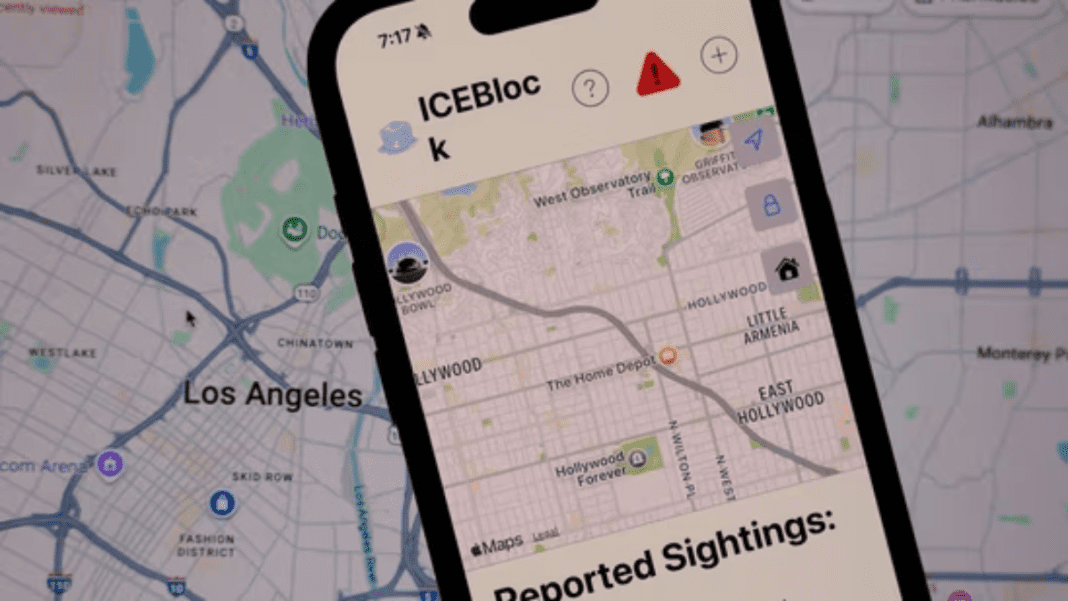
Apple Bows to Trump Administration, Pulls ICEBlock App After DOJ and FBI Pressure

Apple has removed a widely used app called ICEBlock from its App Store after pressure from the U.S. government. The app, often described as a “Waze for ICE sightings”, allowed people to report sightings of Immigration and Customs Enforcement (ICE) agents in real time. Its removal has sparked debate and strong reactions online.

What ICEBlock Did

ICEBlock was launched earlier this year by developer Joshua Aaron and quickly gained popularity, reaching over a million users. The app allowed people to share the locations of ICE agents with others, essentially alerting users if agents were nearby. This function made it similar to navigation apps like Waze, which show traffic and road incidents in real time.

Supporters of ICEBlock said it helped people avoid ICE enforcement actions and stay informed about immigration raids. Critics, however, argued that it could put ICE agents at risk by making their locations public. The timing of the app’s launch also added to the controversy, as it came shortly after Donald Trump announced a crackdown on immigration.

The privacy-first app that just blew past 350,000 new users a day

The app’s tracking feature allowed users to mark sightings of ICE officers, which would then be shared with other users in the area. While the developers claimed the app was intended purely for information sharing and safety, authorities argued that it could make ICE agents vulnerable.

Why the App Was Removed

Government agencies, including the Department of Justice and the FBI, raised concerns about the app. Officials said that publicly sharing ICE agents’ locations endangered their safety, particularly after incidents of attacks on ICE facilities were reported. Attorney General Pam Bondi stated that ICEBlock put agents at risk and that any action that could lead to violence against law enforcement crossed an “intolerable red line”.

Following this, Apple removed ICEBlock from the App Store, citing “objectionable content”. The company confirmed that it had received information from law enforcement suggesting that the app could harm ICE agents, though the developers strongly disputed this.

Watch ‘F1: The Movie’ online today on Prime Video and Apple TV

Apple has a history of removing apps that involve tracking individuals, particularly when authorities or safety guidelines are concerned. In this case, the company acted after pressure from multiple government agencies, showing the influence of law enforcement in app regulation.

Reactions and Impact

The removal of ICEBlock drew immediate reactions online. Joshua Aaron, the app’s developer, expressed disappointment and said that the app was designed to share information, not to harm law enforcement. He also indicated that he plans to challenge Apple’s decision.

Project Veritas drops Epstein nuke — DOJ distances itself as claims of Trump cover-up go viral

Users of ICEBlock, numbering over a million, also voiced frustration on social media, arguing that the app was a tool for staying informed and safe. The removal highlights the broader debate about the role of technology in sensitive areas such as immigration and law enforcement. Apps that allow people to report or track government officials are likely to face close scrutiny and potential removal if they are considered dangerous.

The decision also illustrates Apple’s position on balancing user tools with safety. While the app offered a new form of information sharing, the company emphasized the need to prevent potential harm to law enforcement officers. The move has reignited discussions about freedom of information, digital safety, and accountability in tech platforms, particularly when politically sensitive topics like immigration are involved.

ICEBlock’s removal is yet another example of how governments can influence app availability on major platforms, and it underscores the complex intersection of technology, policy, and safety in the digital age.
T U Deshmukh
T U Deshmukh
T U Deshmukh is the leading voice on the subject of Jobs, AI, Data and layoffs and she regularly contributes a column on Jobs for Newsinterpretation.

TOP 10 TRENDING ON NEWSINTERPRETATION

Cyber Attacks on Space Infrastructure: Satellites, GPS and the Ground Systems Behind Them

From the Viasat KA-SAT hack to GPS jamming over the Baltic, a research guide to how attackers target satellites, navigation signals and ground stations, and why it matters on Earth.

How AI Agents Are Used in Cyber Attacks: From Assisted Hacking to AI-Orchestrated Espionage

Attackers now use AI agents to scan networks, write exploits and run extortion campaigns. A research guide to documented cases, including the first reported AI-orchestrated espionage campaign, and what defenders should do.

Cyber Attacks on AI and LLMs: How Attackers Target Large Language Models

Prompt injection, data poisoning, model theft and jailbreaks: a research guide to how attackers target AI systems and large language models, with real cases and defences.

French Supermarket Refrigeration Cyberattack: How Hacking the Cold Chain Can Endanger Lives

In October 2026 attackers heated refrigeration cabinets in hundreds of French supermarkets to as much as 50°C. No one was hurt, but the attack shows how hacking the cold chain can endanger lives through fire, food poisoning and spoiled medicines.

Cyberattacks on Nuclear Facilities: Stuxnet, Kudankulam and the Limits of Air Gaps

Stuxnet, the Davis-Besse worm and malware at India’s Kudankulam plant: what they show about cyber risk at nuclear facilities and the limits of air gaps.

Triton: When Hackers Target the Safety Systems That Prevent Industrial Disasters

The 2017 Triton attack targeted the safety systems that prevent industrial disasters. What happened, who was charged, and how plants protect their last line of defence.

Cybersecurity Risks in Smart Cities: When Connected Infrastructure Fails

How connecting traffic control, emergency alerts and utilities concentrates cyber risk in cities, what the Dallas and Atlanta incidents showed, and what governments recommend.

Weaponized Drones: Hijacking, GPS Spoofing and Emerging Cyber Warfare Risks

How drones can be hijacked, jammed or misled by GPS spoofing, what researchers have demonstrated, and why governments treat drone fleets as a security risk.

Ransomware Attacks on Hospitals: How Healthcare Cyberattacks Put Patients at Risk

How ransomware against hospitals and their suppliers delays care and endangers patients, what the Düsseldorf and WannaCry cases show, and what research says about deaths.

Operational blunder exposes massive Russian cyber espionage attack on Ukrainian prosecutors

A major cyberattack has compromised the email accounts of...

Cyber Attacks on Space Infrastructure: Satellites, GPS and the Ground Systems Behind Them

From the Viasat KA-SAT hack to GPS jamming over the Baltic, a research guide to how attackers target satellites, navigation signals and ground stations, and why it matters on Earth.

French Supermarket Refrigeration Cyberattack: How Hacking the Cold Chain Can Endanger Lives

In October 2026 attackers heated refrigeration cabinets in hundreds of French supermarkets to as much as 50°C. No one was hurt, but the attack shows how hacking the cold chain can endanger lives through fire, food poisoning and spoiled medicines.

Cyberattacks on Nuclear Facilities: Stuxnet, Kudankulam and the Limits of Air Gaps

Stuxnet, the Davis-Besse worm and malware at India’s Kudankulam plant: what they show about cyber risk at nuclear facilities and the limits of air gaps.

Triton: When Hackers Target the Safety Systems That Prevent Industrial Disasters

The 2017 Triton attack targeted the safety systems that prevent industrial disasters. What happened, who was charged, and how plants protect their last line of defence.

Cybersecurity Risks in Smart Cities: When Connected Infrastructure Fails

How connecting traffic control, emergency alerts and utilities concentrates cyber risk in cities, what the Dallas and Atlanta incidents showed, and what governments recommend.

Ransomware Attacks on Hospitals: How Healthcare Cyberattacks Put Patients at Risk

How ransomware against hospitals and their suppliers delays care and endangers patients, what the Düsseldorf and WannaCry cases show, and what research says about deaths.

FBI warns of AVrecon malware targeting outdated routers linked to proxy based cybercrime

A serious cybersecurity warning has been issued regarding commonly...

Related Articles

Popular Categories
