

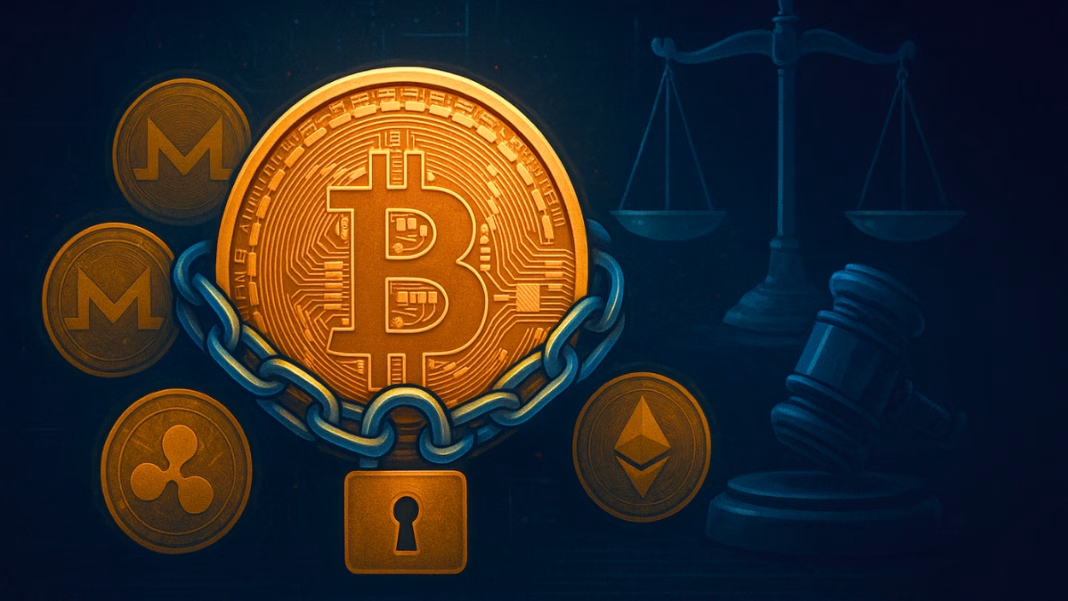
U.S. government takes $2.8 million in cryptocurrency from alleged ransomware operator

Massive Seizure of Digital Assets

The U.S. Justice Department has announced the seizure of more than $2.8 million in cryptocurrency in a major case linked to ransomware activity. Authorities said that the digital assets were found inside a crypto wallet used to move and hide the profits of cybercrime.

Officials also seized about $70,000 in cash and a luxury car. They carried out these seizures under six warrants. The warrants showed that the money, crypto, and car were linked to illegal ransomware operations.

Ransomware is a cyberattack where hackers lock a victim’s computer system. They then demand money to unlock it. Hackers often take payment in cryptocurrency because it is harder to trace. The Justice Department said the seized funds came from these crimes or were used for money laundering linked to ransomware.

Laundering Through Crypto Mixing Services

The investigation showed how the seized cryptocurrency was moved to look legitimate. Authorities said some of the funds went through a crypto mixing service called ChipMixer. A mixing service shuffles cryptocurrency from many users. This makes it very hard to track where the money first came from.

How Cyber Attacks on Industrial Control Systems Can Endanger Lives ?

An international operation shut down ChipMixer in 2023. Before that, criminals used it often to hide their ransomware money. The Justice Department said the suspect also turned some of the cryptocurrency into cash. He then put the cash into banks in small amounts to avoid detection. This method is called “structuring.”

These laundering methods are not new. Criminal groups move money between crypto wallets. They change digital assets into cash. They also use mixing services to hide their tracks. But this case shows that law enforcement is watching closely. Agencies are taking action when they find links to ransomware crimes.

US Crypto Stockpile Grows with Seizures

This seizure comes at a time when the U.S. government is increasingly adding to its national cryptocurrency reserve. The stockpile, created under an executive order, is built from assets that were originally taken from criminals in different cases.

Earlier this week, the Justice Department also announced another seizure of about $1 million in cryptocurrency from a ransomware group known as BlackSuit. In April, federal officials also moved to claim $2.4 million in Bitcoin that had been seized by the FBI in Dallas.

Cyberattack Catastrophe: How Hackers Can Endanger Human Lives ?

U.S. Treasury officials confirmed that the government’s Bitcoin holdings come only from these types of seizures. They clarified that the government is not directly buying Bitcoin from the market. Instead, it builds its reserve through confiscated assets, which are added after victims of crimes are compensated.

As of Thursday, the value of the government’s Bitcoin stockpile was estimated to be around $20 billion. Based on current prices, this represents nearly 198,012 BTC, worth more than $23 billion.

The continued actions against ransomware operators show how cryptocurrency tied to illegal activities is being pursued and recovered. Each seizure not only weakens the financial base of cybercriminals but also adds to the United States’ growing reserve of digital assets.


Renuka Bangale
Renuka Bangale
Renuka is a distinguished Chartered Accountant and a Certified Digital Threats Analyst from Riskpro, renowned for her expertise in cybersecurity. With a deep understanding of cybercrimes, malware, cyber warfare, and espionage, she has established herself as an authority in the field. Renuka combines her financial acumen with advanced knowledge of digital threats to provide unparalleled insights into the evolving landscape of information security. Her analytical prowess enables her to dissect complex cyber incidents, offering clarity on risks and mitigation strategies. As a key contributor to Newsinterpretation’s information security category, Renuka delivers authoritative articles that educate and inform readers about emerging threats and best practices.

TOP 10 TRENDING ON NEWSINTERPRETATION

Cyber Attacks on Space Infrastructure: Satellites, GPS and the Ground Systems Behind Them

From the Viasat KA-SAT hack to GPS jamming over the Baltic, a research guide to how attackers target satellites, navigation signals and ground stations, and why it matters on Earth.

How AI Agents Are Used in Cyber Attacks: From Assisted Hacking to AI-Orchestrated Espionage

Attackers now use AI agents to scan networks, write exploits and run extortion campaigns. A research guide to documented cases, including the first reported AI-orchestrated espionage campaign, and what defenders should do.

Cyber Attacks on AI and LLMs: How Attackers Target Large Language Models

Prompt injection, data poisoning, model theft and jailbreaks: a research guide to how attackers target AI systems and large language models, with real cases and defences.

French Supermarket Refrigeration Cyberattack: How Hacking the Cold Chain Can Endanger Lives

In October 2026 attackers heated refrigeration cabinets in hundreds of French supermarkets to as much as 50°C. No one was hurt, but the attack shows how hacking the cold chain can endanger lives through fire, food poisoning and spoiled medicines.

Cyberattacks on Nuclear Facilities: Stuxnet, Kudankulam and the Limits of Air Gaps

Stuxnet, the Davis-Besse worm and malware at India’s Kudankulam plant: what they show about cyber risk at nuclear facilities and the limits of air gaps.

Triton: When Hackers Target the Safety Systems That Prevent Industrial Disasters

The 2017 Triton attack targeted the safety systems that prevent industrial disasters. What happened, who was charged, and how plants protect their last line of defence.

Cybersecurity Risks in Smart Cities: When Connected Infrastructure Fails

How connecting traffic control, emergency alerts and utilities concentrates cyber risk in cities, what the Dallas and Atlanta incidents showed, and what governments recommend.

Weaponized Drones: Hijacking, GPS Spoofing and Emerging Cyber Warfare Risks

How drones can be hijacked, jammed or misled by GPS spoofing, what researchers have demonstrated, and why governments treat drone fleets as a security risk.

Ransomware Attacks on Hospitals: How Healthcare Cyberattacks Put Patients at Risk

How ransomware against hospitals and their suppliers delays care and endangers patients, what the Düsseldorf and WannaCry cases show, and what research says about deaths.

Operational blunder exposes massive Russian cyber espionage attack on Ukrainian prosecutors

A major cyberattack has compromised the email accounts of...

Cyber Attacks on Space Infrastructure: Satellites, GPS and the Ground Systems Behind Them

From the Viasat KA-SAT hack to GPS jamming over the Baltic, a research guide to how attackers target satellites, navigation signals and ground stations, and why it matters on Earth.

French Supermarket Refrigeration Cyberattack: How Hacking the Cold Chain Can Endanger Lives

In October 2026 attackers heated refrigeration cabinets in hundreds of French supermarkets to as much as 50°C. No one was hurt, but the attack shows how hacking the cold chain can endanger lives through fire, food poisoning and spoiled medicines.

Cyberattacks on Nuclear Facilities: Stuxnet, Kudankulam and the Limits of Air Gaps

Stuxnet, the Davis-Besse worm and malware at India’s Kudankulam plant: what they show about cyber risk at nuclear facilities and the limits of air gaps.

Triton: When Hackers Target the Safety Systems That Prevent Industrial Disasters

The 2017 Triton attack targeted the safety systems that prevent industrial disasters. What happened, who was charged, and how plants protect their last line of defence.

Cybersecurity Risks in Smart Cities: When Connected Infrastructure Fails

How connecting traffic control, emergency alerts and utilities concentrates cyber risk in cities, what the Dallas and Atlanta incidents showed, and what governments recommend.

Ransomware Attacks on Hospitals: How Healthcare Cyberattacks Put Patients at Risk

How ransomware against hospitals and their suppliers delays care and endangers patients, what the Düsseldorf and WannaCry cases show, and what research says about deaths.

FBI warns of AVrecon malware targeting outdated routers linked to proxy based cybercrime

A serious cybersecurity warning has been issued regarding commonly...

Related Articles

Popular Categories
