

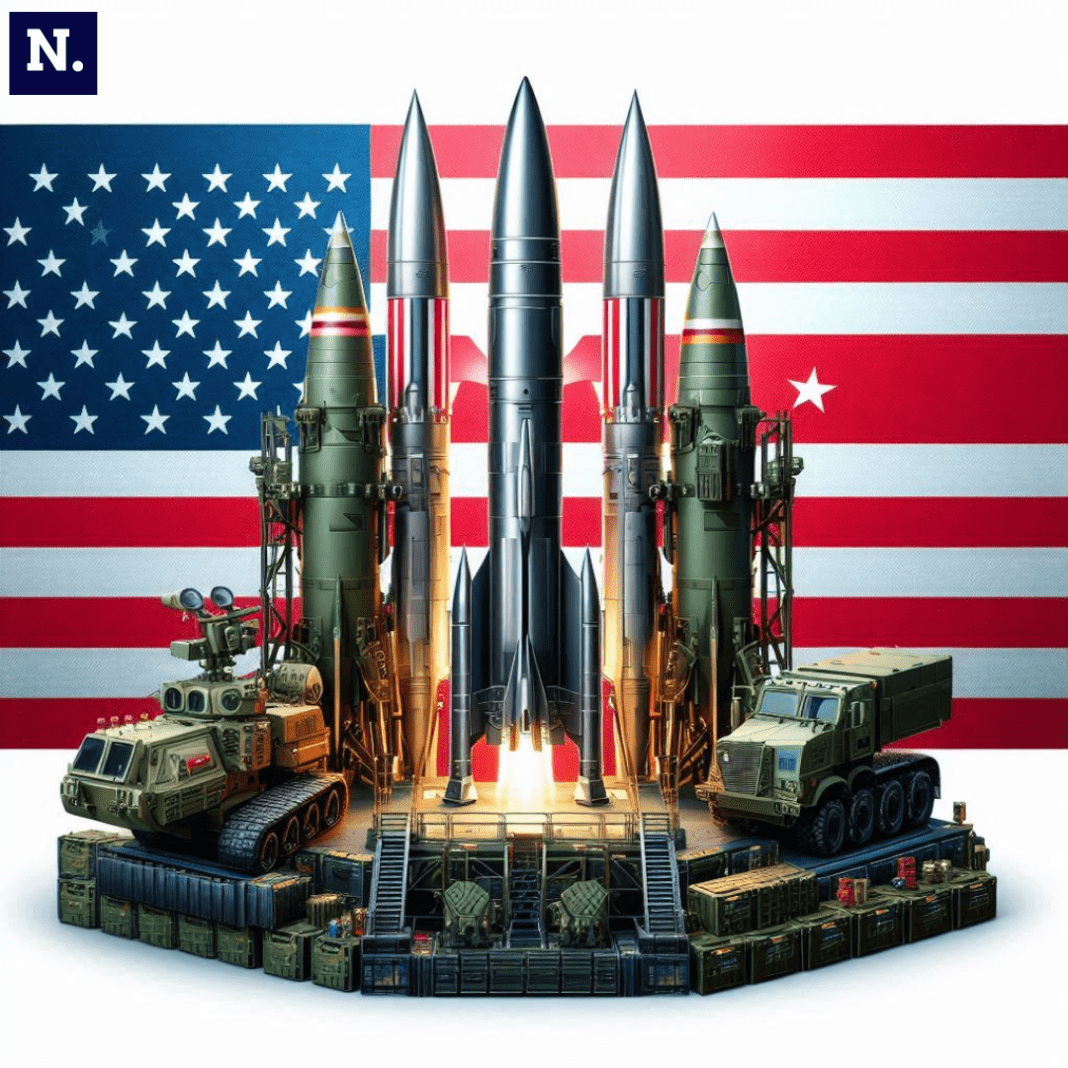

US Approves $1.2B Arms Deal with UAE

On Friday, the United States announced a significant arms deal with the United Arab Emirates (UAE), worth $1.2 billion. This deal involves the sale of precision munitions designed for multiple launch rocket systems. The U.S. government is providing this support to enhance the security of the UAE, which is an important partner in the Middle East. The proposed sale includes advanced weapons systems, such as Guided Multiple Launch Rocket Systems (GMLRS) and Army Tactical Missile Systems (ATACMS).

Details of the Arms Deal

The proposed arms deal comprises 259 GMLRS pods, totaling 1,554 missiles, alongside 203 ATACMS munitions. These weapons are crucial for the UAE to defend itself against potential threats in the region. The U.S. Defense Security Cooperation Agency (DSCA) stated that this transaction aligns with U.S. foreign policy and national security objectives by boosting the capabilities of a key regional ally.

This arms deal is part of a broader strategy to modernize the armed forces of the UAE, enabling them to address both current and future challenges. The sale is expected to not only enhance military preparedness but also strengthen the cooperative relationship between the United States and the UAE. By investing in the UAE’s defense capabilities, the U.S. aims to contribute to political stability and economic progress in the Middle East.

Importance of the UAE as a Partner in the Arms Deal

The United States has recognized the UAE as a vital partner for many years. The two nations have built their relationship on shared interests. These interests include regional security, counterterrorism, and economic collaboration. The UAE plays a significant role in maintaining stability in a region that often faces conflicts and uncertainties.

The U.S. government emphasizes that the proposed arms deal will improve the UAE’s ability to respond to various threats. This arms deal will provide the UAE with advanced weaponry, ensuring that it can effectively defend its interests as regional dynamics evolve. The sale will also involve training and support from the U.S., which is essential for the UAE to utilize these advanced systems effectively.

Congressional Approval and Support

The sale has received approval from the State Department, but before the deal is complete, the U.S. Congress must also approve it. This process ensures that there is oversight and transparency in foreign military sales. If approved, the U.S. will provide not only the munitions but also crucial training, software, and logistical support to the UAE.

The primary contractor for this deal will be Lockheed Martin, a well-known defense company. Their expertise in manufacturing advanced weapons systems will be critical in fulfilling the contract. The partnership with Lockheed Martin underscores the United States’ commitment to enhancing the UAE’s defense capabilities.

The U.S. arms deal with the UAE marks a significant step in strengthening military ties between the two nations. This partnership is vital for regional stability. It reflects the ongoing commitment of the United States to support its allies in the Middle East. By equipping the UAE with advanced military technology, the U.S. aims to enhance security in the region. This region often faces various threats.


TOP 10 TRENDING ON NEWSINTERPRETATION

Cyber Attacks on Space Infrastructure: Satellites, GPS and the Ground Systems Behind Them

From the Viasat KA-SAT hack to GPS jamming over the Baltic, a research guide to how attackers target satellites, navigation signals and ground stations, and why it matters on Earth.

How AI Agents Are Used in Cyber Attacks: From Assisted Hacking to AI-Orchestrated Espionage

Attackers now use AI agents to scan networks, write exploits and run extortion campaigns. A research guide to documented cases, including the first reported AI-orchestrated espionage campaign, and what defenders should do.

Cyber Attacks on AI and LLMs: How Attackers Target Large Language Models

Prompt injection, data poisoning, model theft and jailbreaks: a research guide to how attackers target AI systems and large language models, with real cases and defences.

French Supermarket Refrigeration Cyberattack: How Hacking the Cold Chain Can Endanger Lives

In October 2026 attackers heated refrigeration cabinets in hundreds of French supermarkets to as much as 50°C. No one was hurt, but the attack shows how hacking the cold chain can endanger lives through fire, food poisoning and spoiled medicines.

Cyberattacks on Nuclear Facilities: Stuxnet, Kudankulam and the Limits of Air Gaps

Stuxnet, the Davis-Besse worm and malware at India’s Kudankulam plant: what they show about cyber risk at nuclear facilities and the limits of air gaps.

Triton: When Hackers Target the Safety Systems That Prevent Industrial Disasters

The 2017 Triton attack targeted the safety systems that prevent industrial disasters. What happened, who was charged, and how plants protect their last line of defence.

Cybersecurity Risks in Smart Cities: When Connected Infrastructure Fails

How connecting traffic control, emergency alerts and utilities concentrates cyber risk in cities, what the Dallas and Atlanta incidents showed, and what governments recommend.

Weaponized Drones: Hijacking, GPS Spoofing and Emerging Cyber Warfare Risks

How drones can be hijacked, jammed or misled by GPS spoofing, what researchers have demonstrated, and why governments treat drone fleets as a security risk.

Ransomware Attacks on Hospitals: How Healthcare Cyberattacks Put Patients at Risk

How ransomware against hospitals and their suppliers delays care and endangers patients, what the Düsseldorf and WannaCry cases show, and what research says about deaths.

Operational blunder exposes massive Russian cyber espionage attack on Ukrainian prosecutors

A major cyberattack has compromised the email accounts of...

Cyber Attacks on Space Infrastructure: Satellites, GPS and the Ground Systems Behind Them

From the Viasat KA-SAT hack to GPS jamming over the Baltic, a research guide to how attackers target satellites, navigation signals and ground stations, and why it matters on Earth.

French Supermarket Refrigeration Cyberattack: How Hacking the Cold Chain Can Endanger Lives

In October 2026 attackers heated refrigeration cabinets in hundreds of French supermarkets to as much as 50°C. No one was hurt, but the attack shows how hacking the cold chain can endanger lives through fire, food poisoning and spoiled medicines.

Cyberattacks on Nuclear Facilities: Stuxnet, Kudankulam and the Limits of Air Gaps

Stuxnet, the Davis-Besse worm and malware at India’s Kudankulam plant: what they show about cyber risk at nuclear facilities and the limits of air gaps.

Triton: When Hackers Target the Safety Systems That Prevent Industrial Disasters

The 2017 Triton attack targeted the safety systems that prevent industrial disasters. What happened, who was charged, and how plants protect their last line of defence.

Cybersecurity Risks in Smart Cities: When Connected Infrastructure Fails

How connecting traffic control, emergency alerts and utilities concentrates cyber risk in cities, what the Dallas and Atlanta incidents showed, and what governments recommend.

Ransomware Attacks on Hospitals: How Healthcare Cyberattacks Put Patients at Risk

How ransomware against hospitals and their suppliers delays care and endangers patients, what the Düsseldorf and WannaCry cases show, and what research says about deaths.

FBI warns of AVrecon malware targeting outdated routers linked to proxy based cybercrime

A serious cybersecurity warning has been issued regarding commonly...

Related Articles

Popular Categories
