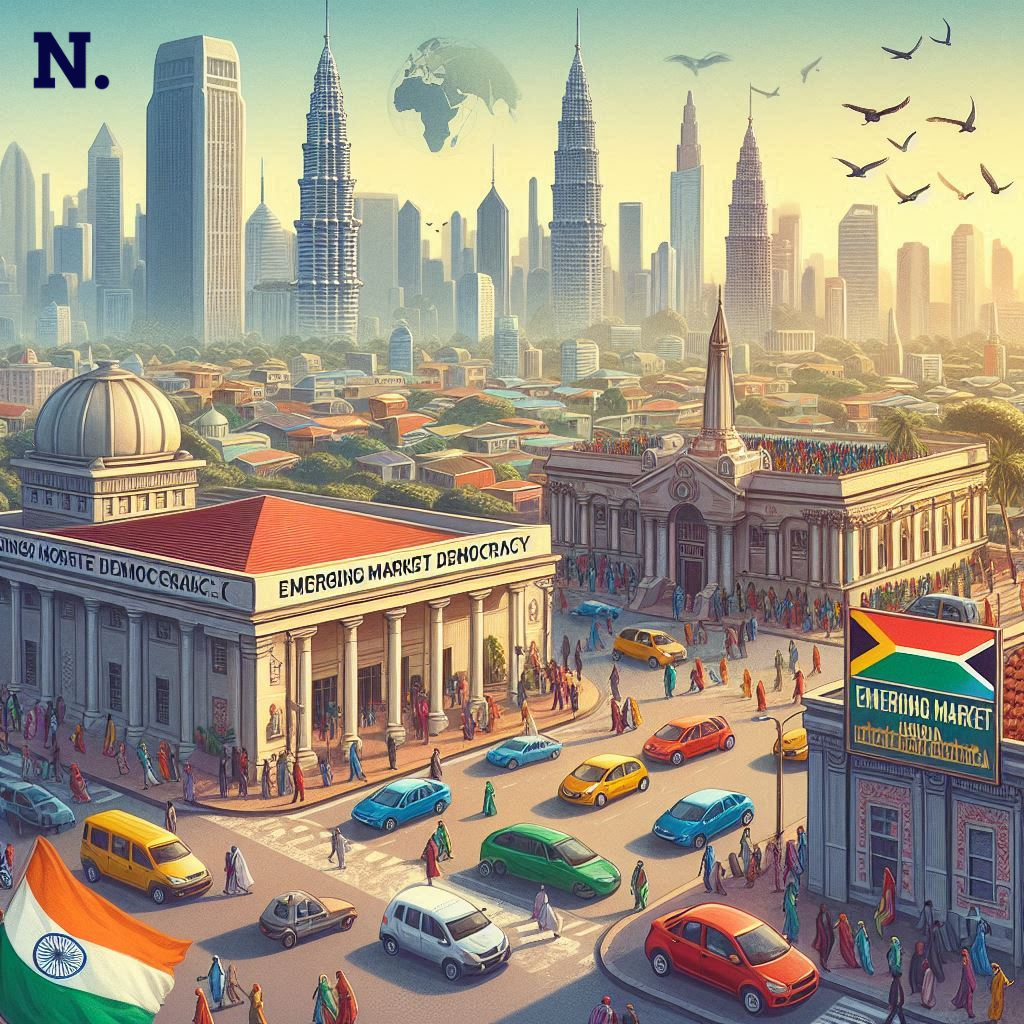

A festival of Democracy- ‘Elections’ were held in the emerging economies of the world. India, Mexico and South Africa all had unexpected electoral results although the previous parties would still be in power. Over the past week, significant election results from three important emerging markets have been inundated.These electoral results have had a whopping effect on the financial markets.
Democracy Wins
In India, Prime Minister Narendra Modi is likely to continue the third term of his elections, in coalition as the Bharatiya Janata Party failed to gain a majority in the lower house of Parliament. But would scarcely reign over the most populated country on the planet with the domination he had dreamed of.
Mexican president Lopez Obrador seemed to emerge as a victor in this democratic cycle. Although he has to step back from being the resident due to the single constitutional mandate. Claudia Sheinbaum, his candidate of choice has written history by being the first female and Jewish President of Mexico.
The electoral results in South Africa were unexpected as the African National Congress (ANC) failed to get a majority since the end of apartheid regime in 1994. It has to consider coalition with the pro-business and while lead parties.
All these results have shown the people’s choice and gave a reality check to all the power holders that people yield the real power. These contrasting situations across the regions of the world do have some common threads.
Market Reactions to Election Outcomes
Firstly the Indian markets pounced on Indian stocks as exit polls showed a landslide victory. They had anticipated a strengthened Modi after India’s protracted election. Days later, when the iShares MSCI India exchange-traded fund fell 6%, they were forced to disgorge them.
With 40% of the vote, the ANC in South Africa performed worse than anticipated. The major surprise, though, was the return of former president Jacob Zuma, who, while serving a jail sentence for corruption, gained 15% of the vote with his newly established MK Party. Markets would prefer that as a serious challenge to the ANC-DA cooperation.
Livelihood Corners Drive Voter Priorities
Secondly is the livelihood issue. When more than half of the votes from the April election were counted, Prime Minister Modi appeared to be losing his majority. This raised concerns about whether the new alliance he leads would have to spend more money on welfare programs rather than politicizing religion and infrastructure projects. It has appeared that the voters prioritized issues such as high inflation and double digit youth unemployment.
The African National Congress has been sailing through victory over the years, claiming the significant contributions done to fight the Apartheid. The young voters consider these claims as ancient history. They are more focused on the stagnant economic growth, 45% youth unemployment, remedies for extreme nationalism etc.
The electorate in Mexico ignored Lopez Obrador’s appalling criminal record. Which is related to his “hugs not bullets” policy that has not helped to mitigate the issues. The voters did recall that he raised social payments like pensions and the minimum wage by thrice. This played a vital role in Sheinbaum’s decisive victory, with hope of continuation of these welfare policies.
Market Reactions Reflect Disconnect with Citizen Concerns
Thirdly the market investors were more concerned about the emerging markets rather than actual needs of the citizens at the ground level. The Indian companies and investors focused on profits while considering the minority middle class. However the people living in villages and informal urban suburbs acted as a silent majority. This majority spoke at the electoral polls, leading the market to fall. With their biggest decline since the COVID meltdown, Indian equities fell about 6% on Tuesday. This was an unexpected move given that they had reached new highs on Monday.
In Mexico, a different dynamic was at work. Investor sentiment toward AMLO, as the outgoing leader is known, has been ambivalent. He is a corporate basher who, among other alleged market transgressions, supported the state’s monopolies on power and oil. Clearly, the electorate didn’t care about it much. The peso fell 1.5% to just shy of 18 to the U.S. dollar at one point as traders continued to fret about the ramifications of the resounding win for the Claudia Sheinbaum-led MORENA party and its allies in Sunday’s Mexican election.
After the ruling ANC party’s dismal performance in the election, the rand in South Africa, which has also been impacted by the possibility of a possibly unstable coalition administration, dropped an additional 1.3%, bringing its weekly decline to almost 3.5%.
Conclusion
In conclusion, the recent elections in the democracy of India, Mexico, and South Africa have underscored the dynamic nature of emerging markets. This also highlighted the impact of elections on global politics and economics. These electoral outcomes offer valuable insights into the evolving socio-political landscapes of these nations Additionally providing key takeaways for investors and policymakers alike.
These nations continue to play a pivotal role in shaping the future of the global economy. It is crucial to understand the implications of the electoral processes is to foster stability and prosperity in an ever-changing world.
Elections throughout these three continents pointed out the multifaceted nature of democracy. It also pointed towards the correlation between elections and emerging markets. The upcoming elections of the oldest democracy, USA in November will also determine the future of the global market and economy.