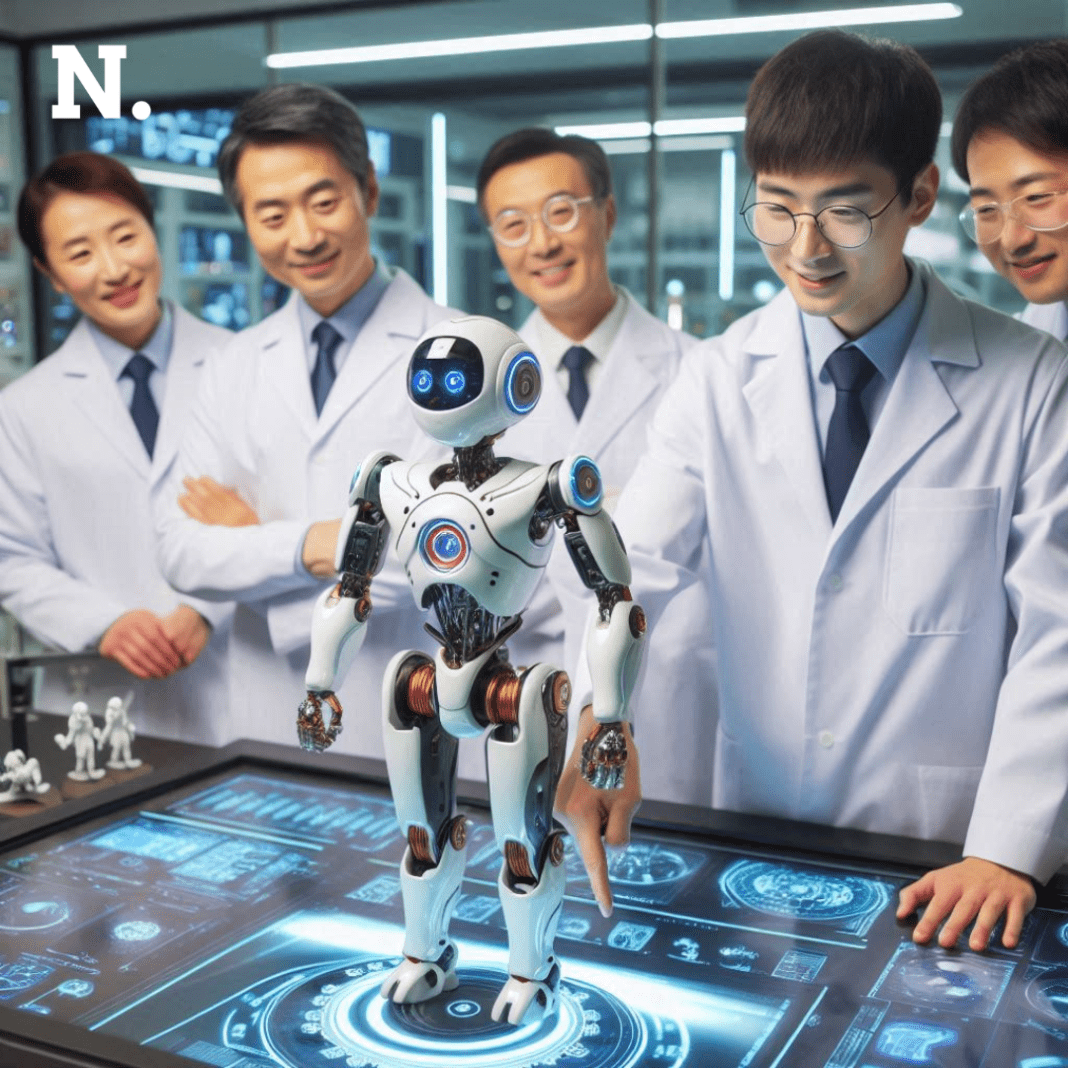

China has appointed the first AI Commander to the People’s Liberation Army, a big important step in military technology. An AI Commander is selected from China’s own developed AI systems and is a strategic move toward integrating cutting-edge technologies into defense operations. With real-time data processing and quick decision-making, efficiency in PLA operations and battlefield effectiveness would enhance manifold. The milestone underscores how China has committed itself to pushing the limits of AI. In strengthening its military capabilities and adapting to asect security challenges.
The Chinese military shows, through the deployment of AI, its commitment to superiority in 21st-century warfare. AI is said to be capable of improving PLA command functions, logistics, and tactical decision-making. This effort not only signals China’s leading role in the global AI arms race but also resonates with innovation in military affairs. Readiness to rise against new security challenges. The integration of AI into the command structures of the PLA has set a lead for other nations. That can therefore chart the course for future warfare and probably greatly alter international geopolitics.
The Birth of an AI Commander:
The emergence of an AI Commander within the People’s Liberation Army (PLA). Represents a watershed moment in the evolution of military technology and strategy. Developed through China’s extensive investment in artificial intelligence. The AI Commander embodies a new era of warfare where computational power and algorithmic decision-making redefine command structures. This AI-driven innovation signifies China’s ambition to modernise its military capabilities, integrating advanced technologies to enhance operational efficiency, strategic planning, and battlefield adaptability.
The PLA’s decision to introduce an AI Commander underscores its strategic intent to leverage technological superiority for national defence. By harnessing AI’s capabilities, such as rapid data analysis, predictive modelling, and autonomous decision-making, the AI Commander promises to revolutionise military operations. It symbolises China’s proactive approach in embracing AI. A force multiplier, aiming to maintain a competitive edge in future conflicts and assert its position in global military dynamics. As AI continues to evolve, the PLA’s pioneering step in appointing an AI Commander sets a precedent for how nations may integrate artificial intelligence into their defence strategies, shaping the future landscape of warfare and international security paradigms
The Unveiling of a Game-Changer: AI commander
The emergence of the world’s first AI commander represents. A paradigm shift in military affairs, offering a glimpse into the future of warfare. Equipped with advanced algorithms and machine learning capabilities, this AI entity possesses the potential to revolutionise military operations by optimising resource allocation. Minimising human casualties, and outmanoeuvring adversaries on the battlefield.
Key Features and Capabilities: Ethical Implications
Powered by state-of-the-art AI algorithms, the newly created commander exhibits a wide array of capabilities. Including real-time data analysis, predictive modelling, and adaptive decision-making. Furthermore, its ability to integrate seamlessly with existing military systems enables. It to coordinate diverse assets, ranging from unmanned aerial vehicles (UAVs) to ground forces, in synchronised operations.
While the development of an AI commander promises to enhance military effectiveness and efficiency, it also raises profound ethical concerns and uncertainties. Chief among these is the potential for autonomous AI systems. To make life-or-death decisions without human intervention, leading to unintended consequences and unforeseen escalation on the battlefield. Moreover, the prospect of AI commanders operating in contested environments raises questions about accountability, transparency, and the laws of armed conflict.
International Response and Strategic Implications:
The revelation of China’s achievement in AI military technology has sparked international debate and speculation regarding its strategic implications. As nations grapple with the implications of AI-driven warfare. There is growing pressure to establish norms, regulations, and safeguards to prevent the proliferation of autonomous weapons systems and mitigate the risks of unintended conflict escalation.
As the PLA continues to advance its research and development efforts in AI and military technology. The unveiling of the world’s first AI commander underscores China’s determination to assert its technological prowess on the global stage. However, the path ahead is fraught with challenges, as policymakers, ethicists, and military leaders wrestle with the profound implications of AI in warfare and strive to strike a delicate balance between innovation and ethical responsibility.
Conclusion: Navigating Ethical challenges in AI warfare
“The creation and confinement of the world’s first AI commander in a PLA laboratory represents a watershed moment in the evolution of military technology. While heralding unprecedented opportunities for enhancing military capabilities. This milestone also raises complex ethical dilemmas and strategic uncertainties that demand careful consideration and international cooperation. As the world navigates the uncharted territory of AI-driven warfare, it is imperative to uphold ethical principles, ensure transparency, and foster dialogue. To shape a future where technology serves humanity’s interests without compromising its values.