
The United States has markedly boosted its military assistance to Israel due to the ongoing conflict in Gaza. Since the conflict escalated, the U.S. has reportedly spent at least $17.9 billion (£13.6 billion) on military support for Israel. This figure is part of a larger effort to respond to rising tensions and conflict in the Middle East. The research from Brown University’s Costs of War project highlights the financial aspects of this support and offers insight into the broader implications of U.S. involvement in the region.
Massive Military Aid Costs
The reported spending of $17.9 billion marks the highest amount of military aid sent to Israel in a single year, adjusted for inflation. This aid has been vital in supporting Israel’s military operations during the ongoing conflict. The United States has also allocated an additional $4.86 billion (£3.7 billion) for increased military operations in the region following Hamas’ attacks on Israel on October 7, 2023. These operations include a campaign led by the U.S. Navy to protect commercial shipping routes that have come under threat from Yemen’s Houthi rebels, who are launching attacks in solidarity with Hamas.
The financial assistance is not solely for direct military aid. It includes various forms of support, such as military financing and arms sales. The transfer of equipment from U.S. stockpiles to Israel is also part of this aid. Researchers emphasize that the exact details of military support for Israel are less transparent than those for Ukraine. This lack of transparency makes it challenging to obtain a complete picture of U.S. military shipments to Israel. As a result, understanding the full extent of the support becomes difficult. As a result, the $17.9 billion figure is considered only a partial estimate.
The Impact on the Region
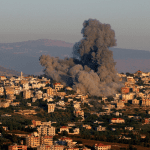
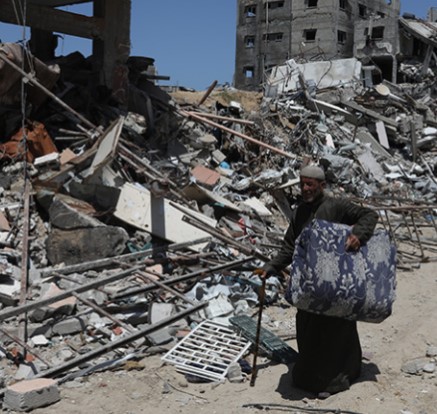
The war in Gaza has not only affected the immediate area but has also led to a broader increase in violence across the Middle East. In the past year, Hamas militants launched attacks that killed over 1,200 people in Israel and took hostages. According to the Health Ministry of the region, Israel’s military assault in retaliation has caused massive casualties in Gaza, with reports suggesting almost 42,000 deaths. This count does not differentiate between civilians and combatants, highlighting the severity of the situation.
In Lebanon, the conflict has also intensified. Since Israel expanded its military operations in late September, around 1,400 people have reportedly lost their lives. This number includes both civilians and Hezbollah fighters. The ongoing violence and conflict have led to a humanitarian crisis in the region. As a result, there is a dire need for assistance to help those affected.
With Israel being the biggest beneficiary of American military assistance in history, the United States has long maintained a military presence in the Middle East. Since 1959, Israel has received an estimated $251.2 billion (£191.4 billion) in military assistance when adjusted for inflation. The Biden administration has been actively involved in supporting Israel amidst the ongoing conflict, aiming to deter attacks from Iran-backed groups in the region and safeguard U.S. forces stationed there.
Escalating Operations and Costs
The $4.86 billion allocated for U.S. military operations in the Middle East includes costs associated with increased naval presence and other military actions aimed at countering threats. This financial burden is described by researchers as an “unexpectedly complicated and asymmetrically expensive challenge.” The U.S. military’s involvement includes responding to threats posed by the Houthis, who control areas in Yemen and have been targeting ships in the Red Sea.
As tensions have escalated, the U.S. military presence in the region has grown. Approximately 34,000 U.S. personnel were stationed in the Middle East on the day that Hamas attacked Israel. This number rose to about 50,000 in August as two aircraft carriers were deployed to the region. The U.S. military aims to deter potential retaliation and protect both Israeli and American forces.
The situation remains fluid, with the ongoing military operations representing a significant expenditure for the U.S. government. Researchers have noted that the ongoing conflict and military responses create a complex environment with far-reaching consequences, not only for the immediate areas involved but also for the broader geopolitical landscape.
The significant financial commitment from the United States supports Israel during the recent conflict in Gaza. This situation underscores the complexity of military aid and its implications for regional stability. Researchers have reported figures that offer insight into the economic costs of the ongoing violence. These figures also shed light on the humanitarian costs faced by those affected. Ultimately, this highlights the challenges encountered by all parties involved in this enduring conflict.