

Backlash erupts as Laura Loomer links Idaho mosques to extremism days after Qatar Airbase deal

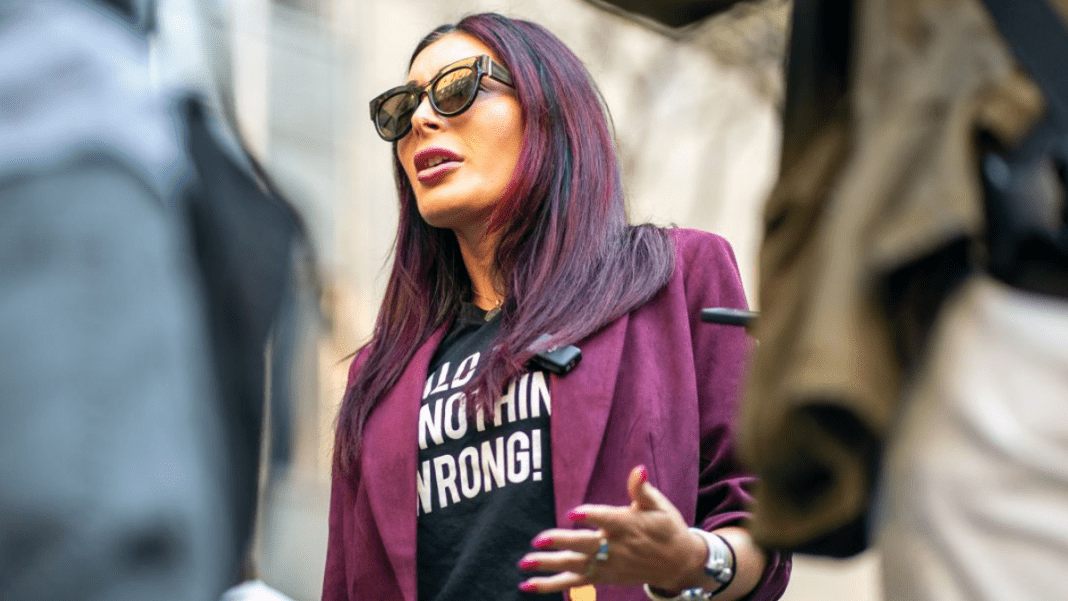
A recent social media post by far-right activist Laura Loomer has sparked strong reactions across the United States. In her post, Loomer claims that certain mosques in Idaho are linked to foreign organizations and could be “militarized”. She questioned what steps the government is taking to prevent such developments, raising concerns about public safety and national security.

Loomer’s post used strong, alarming language, including words like “threat” and “militarized”, which drew immediate attention online. The message implies that these mosques could be dangerous if not addressed. Social media users quickly noticed the post, and it began to circulate widely, sparking heated discussions and debates.

Public Reactions to Laura Loomer’s Post

The post quickly gained traction on social media platforms, with thousands of people sharing and commenting on it. Some users expressed genuine worry, agreeing with Loomer that the mosques could pose a threat. They echoed concerns about potential dangers and questioned whether authorities were aware of the situation.

Trump names Murdoch, Ellison, Dell in social media takeover plan as Newsom warns of censorship

Other users were skeptical, pointing out that there was no official evidence supporting the idea of “militarized mosques”. They cautioned readers not to spread unverified information or jump to conclusions. These differing opinions created a polarized conversation, with supporters of Loomer amplifying her warnings and others urging caution.

Local residents in Idaho have also reacted to the claims. Some community members said they were concerned about the allegations and requested clarification from local authorities. Others emphasized the importance of verifying facts and avoiding panic, stressing that the post alone does not prove any wrongdoing.

Online forums and comment sections became hotbeds for debate. Many participants discussed the potential security risks mentioned in the post, while some analyzed the language used by Loomer, noting that it was deliberately alarming to capture attention.

Social Media’s Role in Spreading Controversy

This incident highlights the power of social media in shaping public opinion. Posts from high-profile figures like Laura Loomer can spread rapidly, reaching thousands of people within hours. The speed and reach of such posts often outpace official responses, creating a mix of concern, confusion, and debate.

Melania Trump’s secret diplomacy with Putin reunites 8 Ukrainian kids

Experts in media studies note that posts containing words like “threat” or “militarized” are more likely to attract attention and provoke strong reactions. Loomer’s post is a clear example of how carefully chosen language can make a message go viral, regardless of whether it is backed by evidence.

Social media allows individuals to influence public perception quickly. Posts questioning government actions or warning of danger can generate widespread discussion, even before authorities have a chance to respond. This can amplify both genuine concern and misinformation, highlighting the need for readers to critically evaluate what they see online.

The post also shows how social media can create pressure on local communities and government agencies. Residents of Idaho, as well as online audiences nationwide, reacted to Loomer’s post, reflecting how digital messages can cross geographic boundaries instantly.


T U Deshmukh
T U Deshmukh
T U Deshmukh is the leading voice on the subject of Jobs, AI, Data and layoffs and she regularly contributes a column on Jobs for Newsinterpretation.

TOP 10 TRENDING ON NEWSINTERPRETATION

Cyber Attacks on Space Infrastructure: Satellites, GPS and the Ground Systems Behind Them

From the Viasat KA-SAT hack to GPS jamming over the Baltic, a research guide to how attackers target satellites, navigation signals and ground stations, and why it matters on Earth.

How AI Agents Are Used in Cyber Attacks: From Assisted Hacking to AI-Orchestrated Espionage

Attackers now use AI agents to scan networks, write exploits and run extortion campaigns. A research guide to documented cases, including the first reported AI-orchestrated espionage campaign, and what defenders should do.

Cyber Attacks on AI and LLMs: How Attackers Target Large Language Models

Prompt injection, data poisoning, model theft and jailbreaks: a research guide to how attackers target AI systems and large language models, with real cases and defences.

French Supermarket Refrigeration Cyberattack: How Hacking the Cold Chain Can Endanger Lives

In October 2026 attackers heated refrigeration cabinets in hundreds of French supermarkets to as much as 50°C. No one was hurt, but the attack shows how hacking the cold chain can endanger lives through fire, food poisoning and spoiled medicines.

Cyberattacks on Nuclear Facilities: Stuxnet, Kudankulam and the Limits of Air Gaps

Stuxnet, the Davis-Besse worm and malware at India’s Kudankulam plant: what they show about cyber risk at nuclear facilities and the limits of air gaps.

Triton: When Hackers Target the Safety Systems That Prevent Industrial Disasters

The 2017 Triton attack targeted the safety systems that prevent industrial disasters. What happened, who was charged, and how plants protect their last line of defence.

Cybersecurity Risks in Smart Cities: When Connected Infrastructure Fails

How connecting traffic control, emergency alerts and utilities concentrates cyber risk in cities, what the Dallas and Atlanta incidents showed, and what governments recommend.

Weaponized Drones: Hijacking, GPS Spoofing and Emerging Cyber Warfare Risks

How drones can be hijacked, jammed or misled by GPS spoofing, what researchers have demonstrated, and why governments treat drone fleets as a security risk.

Ransomware Attacks on Hospitals: How Healthcare Cyberattacks Put Patients at Risk

How ransomware against hospitals and their suppliers delays care and endangers patients, what the Düsseldorf and WannaCry cases show, and what research says about deaths.

Operational blunder exposes massive Russian cyber espionage attack on Ukrainian prosecutors

A major cyberattack has compromised the email accounts of...

Cyber Attacks on Space Infrastructure: Satellites, GPS and the Ground Systems Behind Them

From the Viasat KA-SAT hack to GPS jamming over the Baltic, a research guide to how attackers target satellites, navigation signals and ground stations, and why it matters on Earth.

French Supermarket Refrigeration Cyberattack: How Hacking the Cold Chain Can Endanger Lives

In October 2026 attackers heated refrigeration cabinets in hundreds of French supermarkets to as much as 50°C. No one was hurt, but the attack shows how hacking the cold chain can endanger lives through fire, food poisoning and spoiled medicines.

Cyberattacks on Nuclear Facilities: Stuxnet, Kudankulam and the Limits of Air Gaps

Stuxnet, the Davis-Besse worm and malware at India’s Kudankulam plant: what they show about cyber risk at nuclear facilities and the limits of air gaps.

Triton: When Hackers Target the Safety Systems That Prevent Industrial Disasters

The 2017 Triton attack targeted the safety systems that prevent industrial disasters. What happened, who was charged, and how plants protect their last line of defence.

Cybersecurity Risks in Smart Cities: When Connected Infrastructure Fails

How connecting traffic control, emergency alerts and utilities concentrates cyber risk in cities, what the Dallas and Atlanta incidents showed, and what governments recommend.

Ransomware Attacks on Hospitals: How Healthcare Cyberattacks Put Patients at Risk

How ransomware against hospitals and their suppliers delays care and endangers patients, what the Düsseldorf and WannaCry cases show, and what research says about deaths.

FBI warns of AVrecon malware targeting outdated routers linked to proxy based cybercrime

A serious cybersecurity warning has been issued regarding commonly...

Related Articles

Popular Categories
