

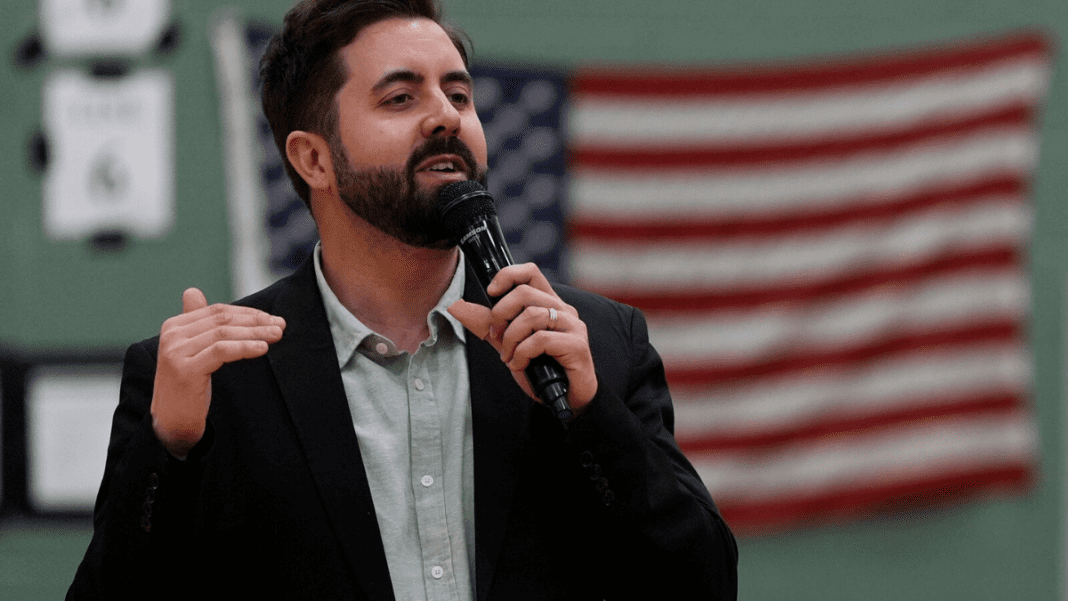
Bowman’s ballot controversy rattles Cincinnati race — and tests JD Vance’s political brand

A new controversy has surfaced in Ohio after reports claimed that Cory Bowman, half-brother of Vice President JD Vance and the Republican candidate for mayor of Cincinnati, may have voted using an address that was no longer his primary residence. The matter has drawn attention because it concerns voter fraud, an issue the Republican Party has often highlighted as a major threat to election integrity.

According to The Rooster, an Ohio-based newsletter, Bowman may have voted early on October 7 at the Hamilton County Board of Elections using his former address on Oakwood Avenue in the College Hill neighborhood. Records show that he and his wife, Jordan Bowman, are registered to vote at that address, which he still owns. However, Bowman has publicly stated that his family moved “back downtown” after the May primary, raising doubts about where he actually lives.

Under Ohio law, a voter’s residence must be the place considered a permanent home — where a person intends to return when away. Voting from an outdated address can be considered a violation, even if it is within the same city limits.

Confusion Over Residence and Districts

The situation became more confusing when The Cincinnati Enquirer reported that Bowman’s mailing address is now an apartment on West 4th Street, in downtown Cincinnati. He has also said on social media that he moved to the West End neighborhood right after the primary election, which is separate from West 4th Street. This means Bowman has mentioned at least three different locations — College Hill, the West End, and downtown — since May.

Inside the West Wing visit that has Washington buzzing — Usha Vance quietly reviews Trump’s Ukraine deal

While all these areas are within Cincinnati, they fall under different local judicial districts. That detail matters because if Bowman voted in a district where he no longer lives, his ballot could be considered invalid for certain local races. The Rooster reported that if he voted using his old address instead of filing a provisional ballot, it might amount to a case of voter fraud, according to Ohio’s election rules.

Property listings on Zillow show that the Oakwood Avenue home has been up for sale several times in the past year, adding to speculation that Bowman’s move downtown was permanent.

Despite these reports, no formal complaint has been filed. The Ohio Secretary of State’s office confirmed that its Public Integrity Unit, which investigates election violations, has not received any complaints about the matter. Press Secretary Benjamin Kindel said anyone with information can submit a complaint either to the state or to the Hamilton County Board of Elections.

Political Fallout and Public Reaction

The allegations have created an awkward situation for the Republican Party, which has consistently called for stricter voting laws and penalties for voter fraud. The possibility that a Republican candidate — and the vice president’s brother — could have violated those same rules has caused political embarrassment and national attention.

California erupts as Trump’s DOJ sends federal election monitors — Newsom calls it voter intimidation

On social media, Bowman has described his campaign as an effort to “Flip the ’Nati” and bring change to Cincinnati. He has said his priorities include public safety, infrastructure, and restoring “common-sense leadership.” Bowman is also known locally as a pastor at The River Church Cincinnati and co-owner of Kings Arms Coffee.

Earlier this year, during the May primary, JD Vance publicly endorsed his half-brother, urging Cincinnati residents to support him. Since the allegations surfaced, Vance has not commented further on the issue.

Court documents reviewed by The Cincinnati Enquirer also show that Bowman has previously been late in paying business-related sales taxes. That, along with the current residency confusion, has fueled scrutiny of his record as a candidate.

As of now, Bowman has not responded to questions from Raw Story or other media outlets about whether he voted provisionally or from which address. His campaign has remained silent on social media regarding the allegations.

The case has quickly become a topic of debate in Cincinnati’s mayoral race, where Bowman is running against incumbent Democrat Aftab Pureval. With Republicans across Ohio continuing to push for tighter election rules, this controversy has drawn significant attention both locally and nationally — especially given the candidate’s connection to one of the most prominent political figures in the country.


T U Deshmukh
T U Deshmukh
T U Deshmukh is the leading voice on the subject of Jobs, AI, Data and layoffs and she regularly contributes a column on Jobs for Newsinterpretation.

TOP 10 TRENDING ON NEWSINTERPRETATION

Cyber Attacks on Space Infrastructure: Satellites, GPS and the Ground Systems Behind Them

From the Viasat KA-SAT hack to GPS jamming over the Baltic, a research guide to how attackers target satellites, navigation signals and ground stations, and why it matters on Earth.

How AI Agents Are Used in Cyber Attacks: From Assisted Hacking to AI-Orchestrated Espionage

Attackers now use AI agents to scan networks, write exploits and run extortion campaigns. A research guide to documented cases, including the first reported AI-orchestrated espionage campaign, and what defenders should do.

Cyber Attacks on AI and LLMs: How Attackers Target Large Language Models

Prompt injection, data poisoning, model theft and jailbreaks: a research guide to how attackers target AI systems and large language models, with real cases and defences.

French Supermarket Refrigeration Cyberattack: How Hacking the Cold Chain Can Endanger Lives

In October 2026 attackers heated refrigeration cabinets in hundreds of French supermarkets to as much as 50°C. No one was hurt, but the attack shows how hacking the cold chain can endanger lives through fire, food poisoning and spoiled medicines.

Cyberattacks on Nuclear Facilities: Stuxnet, Kudankulam and the Limits of Air Gaps

Stuxnet, the Davis-Besse worm and malware at India’s Kudankulam plant: what they show about cyber risk at nuclear facilities and the limits of air gaps.

Triton: When Hackers Target the Safety Systems That Prevent Industrial Disasters

The 2017 Triton attack targeted the safety systems that prevent industrial disasters. What happened, who was charged, and how plants protect their last line of defence.

Cybersecurity Risks in Smart Cities: When Connected Infrastructure Fails

How connecting traffic control, emergency alerts and utilities concentrates cyber risk in cities, what the Dallas and Atlanta incidents showed, and what governments recommend.

Weaponized Drones: Hijacking, GPS Spoofing and Emerging Cyber Warfare Risks

How drones can be hijacked, jammed or misled by GPS spoofing, what researchers have demonstrated, and why governments treat drone fleets as a security risk.

Ransomware Attacks on Hospitals: How Healthcare Cyberattacks Put Patients at Risk

How ransomware against hospitals and their suppliers delays care and endangers patients, what the Düsseldorf and WannaCry cases show, and what research says about deaths.

Operational blunder exposes massive Russian cyber espionage attack on Ukrainian prosecutors

A major cyberattack has compromised the email accounts of...

Cyber Attacks on Space Infrastructure: Satellites, GPS and the Ground Systems Behind Them

From the Viasat KA-SAT hack to GPS jamming over the Baltic, a research guide to how attackers target satellites, navigation signals and ground stations, and why it matters on Earth.

French Supermarket Refrigeration Cyberattack: How Hacking the Cold Chain Can Endanger Lives

In October 2026 attackers heated refrigeration cabinets in hundreds of French supermarkets to as much as 50°C. No one was hurt, but the attack shows how hacking the cold chain can endanger lives through fire, food poisoning and spoiled medicines.

Cyberattacks on Nuclear Facilities: Stuxnet, Kudankulam and the Limits of Air Gaps

Stuxnet, the Davis-Besse worm and malware at India’s Kudankulam plant: what they show about cyber risk at nuclear facilities and the limits of air gaps.

Triton: When Hackers Target the Safety Systems That Prevent Industrial Disasters

The 2017 Triton attack targeted the safety systems that prevent industrial disasters. What happened, who was charged, and how plants protect their last line of defence.

Cybersecurity Risks in Smart Cities: When Connected Infrastructure Fails

How connecting traffic control, emergency alerts and utilities concentrates cyber risk in cities, what the Dallas and Atlanta incidents showed, and what governments recommend.

Ransomware Attacks on Hospitals: How Healthcare Cyberattacks Put Patients at Risk

How ransomware against hospitals and their suppliers delays care and endangers patients, what the Düsseldorf and WannaCry cases show, and what research says about deaths.

FBI warns of AVrecon malware targeting outdated routers linked to proxy based cybercrime

A serious cybersecurity warning has been issued regarding commonly...

Related Articles

Popular Categories
