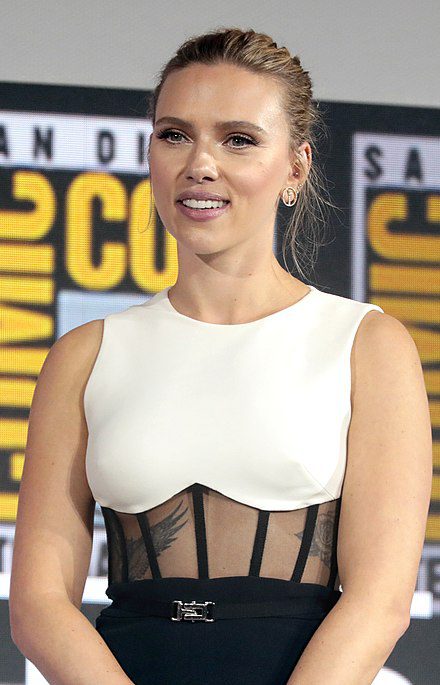

In a recent development, Scarlette Johansson sought an explanation from OpenAI about how the voice was generated if her voice was not used. Media Reports highlighted that documents show OpenAI has not used her voice.
Who is Scarlett Johansson?
Scarlett Johansson is an acclaimed American actress known for her versatile roles in films ranging from indie hits to blockbuster franchises. Born in Manhattan’s Greenwich Village in 1984, she began acting at a young age, making her film debut in North at age eight. Her breakout role came in Sofia Coppola’s Lost in Translation (2003), and she has since starred in a variety of films including *The Avengers* series, *Her*, and *Marriage Story*. Johansson has received multiple awards and nominations for her performances and is recognized as one of the highest-grossing actors of all time. She is also noted for her distinctive voice and has been an advocate for actors’ rights in the digital age.
The Dispute with OpenAI
This week, Johansson claimed that after declining Altman’s offer to provide the voice for his company’s ChatGPT chatbot last September, OpenAI pushed ahead with a new version called Sky that featured a voice so similar to hers, even her closest friends could not tell the difference.
“When I heard the released demo, I was shocked, angered, and in disbelief that Mr. Altman would pursue a voice that sounded so eerily similar to mine,” Johansson wrote in a statement released on Monday. After receiving legal notices from Johansson’s team, Altman removed the voice from Sky and apologized to the actor, saying the voice was not intended to resemble hers. The shockwaves are still reverberating in Hollywood and beyond.
The Broader Impact on the Industry
Despite winning protections from AI in last year’s strikes, actors remain fearful that digital copies of their voices and likenesses will be used without their permission—depriving them of control over their careers and their income. If anything, the episode will deepen their convictions that the mantra of many tech companies—“move fast and break things”—is coming to disrupt the entertainment industry.
Johansson’s conflict with OpenAI opens a new front in the battle between the content industry and the AI leader. Johansson has grounds to argue OpenAI violated her right to publicity, which gives a person the right to control the commercial use of his or her name, image, or likeness.
A Star’s Reluctant Battle
Johansson, the star of critically acclaimed films such as Lost in Translation and billion-dollar-grossing Marvel blockbusters, did not relish the idea of confronting OpenAI. But she knew that her status could draw attention to an issue that also affects others in the industry who have less leverage, say people who have worked with her.
Wikipedia Page of Scarlett Johansson
Confronting Disney: A Precedent
It is a role she has played before. In 2021, the actor made headlines when she took on Disney over another issue tied to a disruptive technology: streaming. She accused the most powerful company in Hollywood of breaching its contract by releasing *Black Widow* on its streaming service at the same time as the film debuted in cinemas—a move that would juice Disney’s stock price and streaming subscriber numbers but depress her bonus.
Disney fired back at Johansson, accusing the actor of “callous disregard” for the pandemic. After a bitter and public fight, she was awarded a multimillion-dollar payout.
Satya Nadella’s Warning Against Anthropomorphizing AI Technology
Early Life and Career
Johansson was born and raised in Manhattan’s Greenwich Village, in what she described as “a middle-income housing development” filled with children whose parents were artists. Her father is a Danish architect while her mother is a producer.
Growing up, she loved old Hollywood movies and admired actors from Judy Garland to Winona Ryder. She started acting early on, appearing in off-Broadway plays before landing her first film role at age 8 in Rob Reiner’s *North*.
The Unique Voice
Her voice, which would later become an asset, was a liability when it came to booking commercials as a child actor. “I sounded like a whiskey-drinking, chain-smoking fool. Wasn’t going to sell Jell-O with that voice, you know?”
Johansson’s big break came at 19 when Sofia Coppola’s *Lost in Translation*, which she starred in, was released. It was the start of a long and successful arc that has made the now-39-year-old one of the highest-grossing actors ever.
Johansson is married to Saturday Night Live comedian Colin Jost, whom she met while hosting the late-night show. She has two children—a son with Jost, and a daughter from a previous marriage.
Pushing Back Against OpenAI
If she felt cornered by the OpenAI situation, she now has the clout to push back. Flanked by her powerful agent, CAA chief Bryan Lourd, and attorney John Berlinski, she has shone a light on a vexing issue in Hollywood and across the creative industries. It is unclear whether her team will pursue legal action. The OpenAI team, meanwhile, say they had more than 400 submissions from actors and chose five voices, including the one for the role of Sky, before Altman approached Johansson in September 2023 “to discuss her potential involvement as a sixth voice actor for ChatGPT.”
Legal Precedents
Singer Bette Midler used California law to reclaim her own voice in a case legal scholars point to as establishing a precedent. She successfully sued Ford’s advertising agency, Young & Rubicam, for hiring a former backup singer to imitate her rendition of “Do You Want to Dance?” in a car commercial after she rejected an offer to perform the song. Tom Waits won a similar suit in 1988 against Frito-Lay for a commercial featuring a performance imitating Waits’ gravelly singing style.
A Misstep for OpenAI
This cannot be the result Altman was hoping for. The AI entrepreneur made no secret of his love of the film that gave Johansson’s voice a starring role. As the story unfolds, it serves as a cautionary tale for tech companies about the potential pitfalls of their rapid advancements in AI technology.