

$13 billion Bitcoin battle: China accuses U.S. of seizing stolen crypto from massive 2020 hack

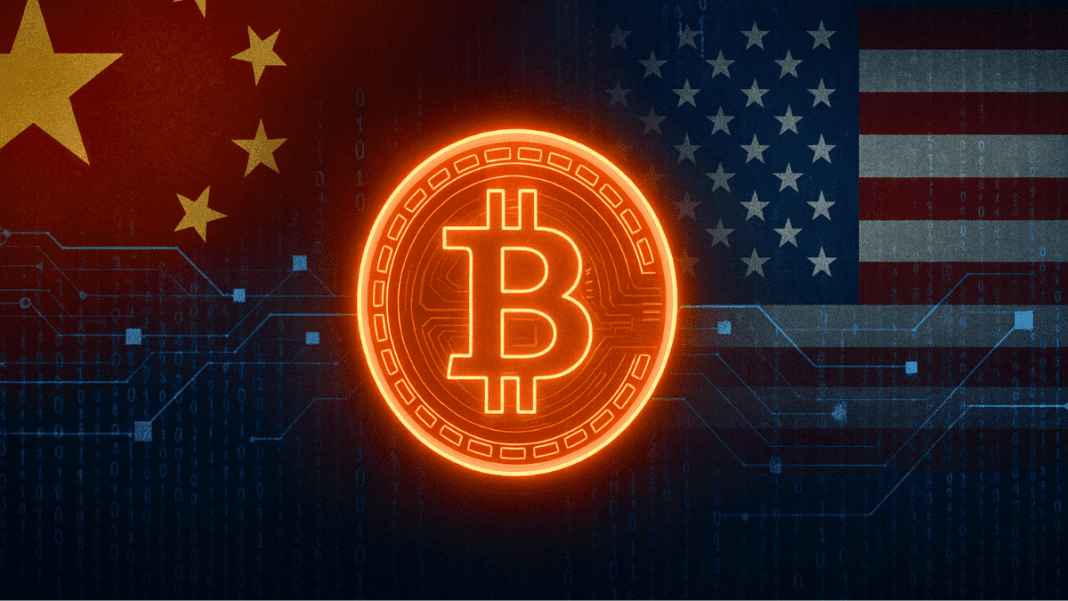
A new cyber dispute has erupted between China and the United States over a huge stash of stolen cryptocurrency. China’s National Computer Virus Emergency Response Center (CVERC) has accused the U.S. government of taking part in a crypto theft involving 127,000 Bitcoin, worth about $13 billion.

According to a report released by CVERC, the U.S. Department of Justice (DOJ) seized Bitcoin that was originally stolen in 2020 from a Chinese cryptocurrency mining pool called LuBian. The center said the hack was conducted by a “state-level hacking organization” and that the later U.S. seizure might have been part of the same operation.

The report was published by the Global Times, a Chinese state-owned newspaper linked to the People’s Daily. It claimed that the hack and the U.S. seizure were connected, suggesting that advanced cyber tools were used in both incidents. The accusation has further strained relations between the two global powers.

Dormant Coins Suddenly Move After Four Years

The 2020 LuBian mining pool hack led to the loss of 127,000 Bitcoin, which remained untouched for nearly four years. For a long time, the stolen funds stayed hidden in digital wallets, and the incident attracted little attention.

Trump’s new money machine — small banks Dominari and Yorkville drive family’s crypto expansion

In mid-2024, however, those same Bitcoin were quietly transferred to new wallets. Soon after, blockchain analysis firms such as Arkham Intelligence identified those wallets as belonging to the U.S. government. This discovery raised questions about how the United States obtained control over such a large amount of Bitcoin linked to the earlier Chinese hack.

CVERC’s report suggested that the movement of these coins was not random. It argued that the same hacking tools used in the original theft may have been involved again when the Bitcoin changed hands. The agency said this shows signs of a coordinated, long-term cyber operation rather than a simple law enforcement seizure.

The U.S. government, on the other hand, has denied all allegations. Officials said the Bitcoin were seized legally as part of an investigation involving Chen Zhi, chairman of Cambodia’s Prince Group, who has been indicted in the U.S. for running a large-scale crypto fraud scheme. According to the DOJ, the seized coins are criminal proceeds, not property belonging to China or the LuBian pool.

U.S. Denies Wrongdoing as Dispute Escalates

The main disagreement centers on who rightfully controls the Bitcoin. China says the U.S. unlawfully took assets stolen from a Chinese company. The U.S. insists the funds were part of a criminal network investigation and that the seizure followed standard legal procedures.

Obama attacks Trump family’s crypto riches — says “White House became a crypto exchange”

CVERC described the case as involving advanced cyber techniques and claimed that the operation used “nation-level infrastructure.” The Global Times further reported that this could indicate direct involvement by a state-backed group, implying that the same organization may have carried out both the 2020 hack and the 2024 Bitcoin transfer.

Meanwhile, the U.S. Department of Justice and the U.S. Treasury have not issued detailed public comments. According to reports, both agencies were contacted for statements but did not respond by press time.

The allegations have drawn global attention because of the scale of the stolen Bitcoin and the suggestion of government-level cyber activity. With 127,000 Bitcoin now reportedly held in wallets linked to the U.S. government, the dispute highlights the growing tension between law enforcement actions and cybersecurity claims in the digital asset world.

The case also underscores how cryptocurrency has become a new front in international disputes, blending elements of finance, technology, and politics. Both countries continue to stand firm in their versions of events, leaving one of the biggest mysteries in crypto history unresolved.

T U Deshmukh
T U Deshmukh
T U Deshmukh is the leading voice on the subject of Jobs, AI, Data and layoffs and she regularly contributes a column on Jobs for Newsinterpretation.

TOP 10 TRENDING ON NEWSINTERPRETATION

Cyber Attacks on Space Infrastructure: Satellites, GPS and the Ground Systems Behind Them

From the Viasat KA-SAT hack to GPS jamming over the Baltic, a research guide to how attackers target satellites, navigation signals and ground stations, and why it matters on Earth.

How AI Agents Are Used in Cyber Attacks: From Assisted Hacking to AI-Orchestrated Espionage

Attackers now use AI agents to scan networks, write exploits and run extortion campaigns. A research guide to documented cases, including the first reported AI-orchestrated espionage campaign, and what defenders should do.

Cyber Attacks on AI and LLMs: How Attackers Target Large Language Models

Prompt injection, data poisoning, model theft and jailbreaks: a research guide to how attackers target AI systems and large language models, with real cases and defences.

French Supermarket Refrigeration Cyberattack: How Hacking the Cold Chain Can Endanger Lives

In October 2026 attackers heated refrigeration cabinets in hundreds of French supermarkets to as much as 50°C. No one was hurt, but the attack shows how hacking the cold chain can endanger lives through fire, food poisoning and spoiled medicines.

Cyberattacks on Nuclear Facilities: Stuxnet, Kudankulam and the Limits of Air Gaps

Stuxnet, the Davis-Besse worm and malware at India’s Kudankulam plant: what they show about cyber risk at nuclear facilities and the limits of air gaps.

Triton: When Hackers Target the Safety Systems That Prevent Industrial Disasters

The 2017 Triton attack targeted the safety systems that prevent industrial disasters. What happened, who was charged, and how plants protect their last line of defence.

Cybersecurity Risks in Smart Cities: When Connected Infrastructure Fails

How connecting traffic control, emergency alerts and utilities concentrates cyber risk in cities, what the Dallas and Atlanta incidents showed, and what governments recommend.

Weaponized Drones: Hijacking, GPS Spoofing and Emerging Cyber Warfare Risks

How drones can be hijacked, jammed or misled by GPS spoofing, what researchers have demonstrated, and why governments treat drone fleets as a security risk.

Ransomware Attacks on Hospitals: How Healthcare Cyberattacks Put Patients at Risk

How ransomware against hospitals and their suppliers delays care and endangers patients, what the Düsseldorf and WannaCry cases show, and what research says about deaths.

Operational blunder exposes massive Russian cyber espionage attack on Ukrainian prosecutors

A major cyberattack has compromised the email accounts of...

Cyber Attacks on Space Infrastructure: Satellites, GPS and the Ground Systems Behind Them

From the Viasat KA-SAT hack to GPS jamming over the Baltic, a research guide to how attackers target satellites, navigation signals and ground stations, and why it matters on Earth.

French Supermarket Refrigeration Cyberattack: How Hacking the Cold Chain Can Endanger Lives

In October 2026 attackers heated refrigeration cabinets in hundreds of French supermarkets to as much as 50°C. No one was hurt, but the attack shows how hacking the cold chain can endanger lives through fire, food poisoning and spoiled medicines.

Cyberattacks on Nuclear Facilities: Stuxnet, Kudankulam and the Limits of Air Gaps

Stuxnet, the Davis-Besse worm and malware at India’s Kudankulam plant: what they show about cyber risk at nuclear facilities and the limits of air gaps.

Triton: When Hackers Target the Safety Systems That Prevent Industrial Disasters

The 2017 Triton attack targeted the safety systems that prevent industrial disasters. What happened, who was charged, and how plants protect their last line of defence.

Cybersecurity Risks in Smart Cities: When Connected Infrastructure Fails

How connecting traffic control, emergency alerts and utilities concentrates cyber risk in cities, what the Dallas and Atlanta incidents showed, and what governments recommend.

Ransomware Attacks on Hospitals: How Healthcare Cyberattacks Put Patients at Risk

How ransomware against hospitals and their suppliers delays care and endangers patients, what the Düsseldorf and WannaCry cases show, and what research says about deaths.

FBI warns of AVrecon malware targeting outdated routers linked to proxy based cybercrime

A serious cybersecurity warning has been issued regarding commonly...

Related Articles

Popular Categories
