

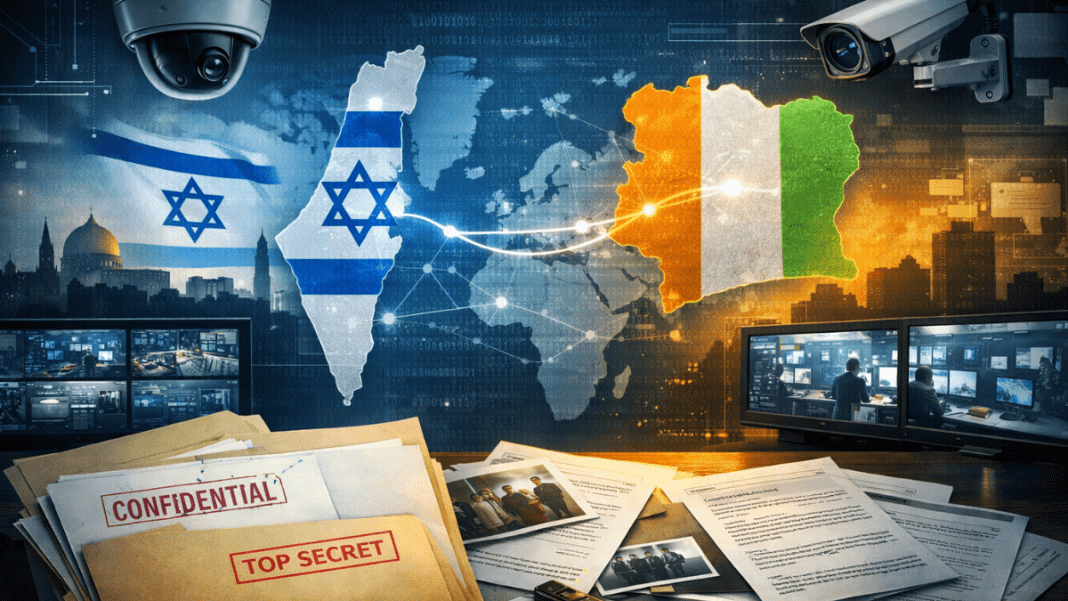

Newly released documents from the United States have drawn attention to the global network of connections linked to Jeffrey Epstein. The files include millions of emails and records that show contacts with political leaders and business figures across countries.
Among the key concerns is whether Epstein helped connect Israeli officials with leaders in Ivory Coast during talks about security and defense cooperation. The documents show meetings, emails, and planned introductions between powerful figures.
The files were released by the United States Department of Justice. They have caused political reactions in several countries.
Israel–Ivory Coast Security Talks
Security discussions between Israel and Ivory Coast began around 2012.
At that time, Ivory Coast was recovering from civil war that followed disputes over election results. Former president Laurent Gbagbo had refused to step down, and violence had killed thousands. Security concerns remained high.
President Alassane Ouattara visited Jerusalem in June 2012 for talks with Israeli leaders, including Prime Minister Benjamin Netanyahu and former Defense Minister Ehud Barak.
Around the same period, Ouattara’s son and niece met Epstein in New York. The niece, Nina Keita, reportedly had a close connection with Epstein and traveled on his private jet. Documents suggest she introduced Epstein to her uncle and other officials.
UK Defence Ministry launches review after Epstein-linked jet appears in RAF flight records
Email records show Epstein later met Barak in New York. He also introduced Barak to Ouattara’s chief of staff and helped arrange meetings between them.
Proposed Security Plan and Agreement
After initial talks, an Israeli delegation visited Abidjan. Ivorian officials reportedly asked about defense systems and cybersecurity solutions.
In late 2012, Ivory Coast’s interior minister traveled to Tel Aviv to discuss cybersecurity cooperation.
In spring 2013, Barak traveled to Abidjan and presented a security proposal worth about $150 million. The plan included:
- Border security systems
- Army training
- Military consulting
- Mobile and internet surveillance centers
- Video monitoring facilities
The system was expected to be developed by a French-Israeli security company specializing in surveillance technology.
Ouattara reportedly showed interest but rejected the proposal because of the high cost. Barak later denied claims that he proposed building an intelligence apparatus.
Despite the rejection, cooperation continued.
In June 2014, Israeli Foreign Minister Avigdor Liberman visited Abidjan with business leaders. Two agreements were signed — one for regular consultations and another covering defense and internal security.
The details of the agreements were not made public. It remains unclear whether the proposed surveillance system was ever implemented.
Later developments showed continued military ties. Ivory Coast purchased equipment and vessels from Israeli defense companies.
A 2016 report by the United Nations said an Israeli firm sold weapons and night vision gear to Ivory Coast during an arms embargo.
In 2018, spyware investigations revealed that phones in Ivory Coast were targeted using Pegasus software developed by NSO Group.
In 2023, Israel Shipyards delivered two offshore patrol vessels to Ivory Coast for maritime security.
Other African Connections in the Files
The documents also show Epstein’s links to other African leaders.
In South Africa, Epstein arranged a private dinner in London in 2010 for then-President Jacob Zuma.
In Senegal, he had long-term contact with Karim Wade, son of former President Abdoulaye Wade. Emails show discussions about travel and legal support after Karim Wade’s corruption conviction. He was pardoned in 2016.
In Zimbabwe, emails show possible plans for Epstein to meet longtime President Robert Mugabe to discuss a new currency proposal during hyperinflation.
In Nigeria, security opportunities were discussed during the Boko Haram crisis under President Goodluck Jonathan. Israeli company Elbit Systems was active in surveillance projects there.
The files show Epstein’s access to high-level meetings and his role in introductions between political and business figures across Africa. They do not prove control over agreements but show involvement in key interactions during security negotiations.