

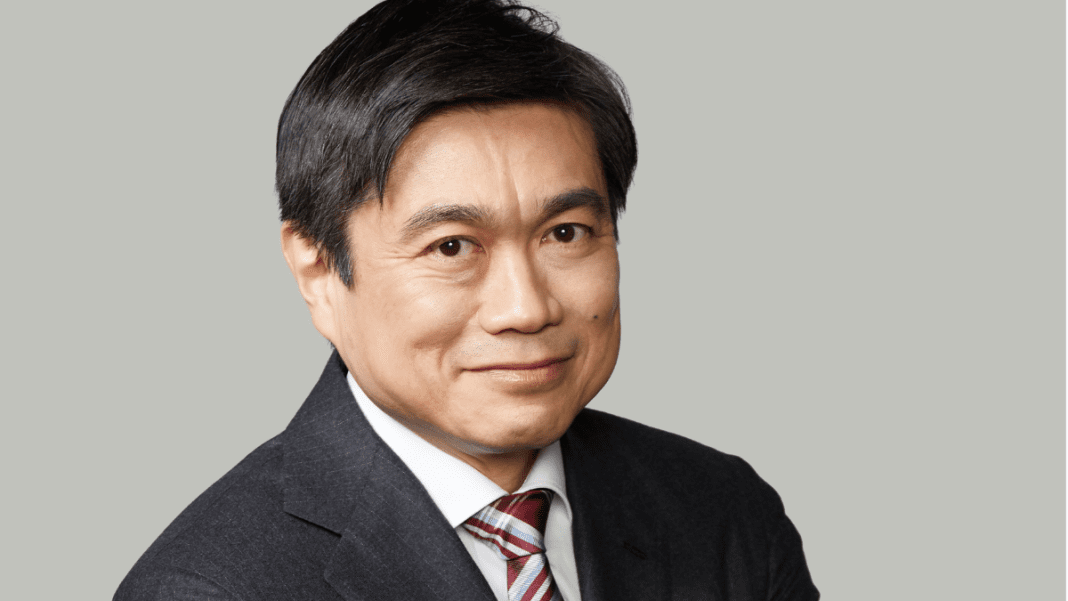

Fresh disclosures connected to Jeffrey Epstein have once again brought global attention to technology entrepreneur Joichi Ito. The renewed focus comes as Japan prepares to take key decisions about a major government-backed innovation project in which Ito plays a leadership role.
The development has placed Japanese officials, university partners, and policymakers in a delicate position. While no criminal charges have been filed against Ito in Japan, his past association with Epstein is raising concern at a critical stage for the country’s Global Startup Campus Initiative.
From Global Tech Leader to Public Controversy
Joichi Ito was once a prominent figure in international technology and academic circles. Born in Kyoto and raised in the United States, he built a strong reputation as an internet entrepreneur and venture investor. He later became director of the Media Lab at the Massachusetts Institute of Technology, widely known as MIT.
However, in 2019, Ito resigned from MIT after reports revealed that he had accepted donations linked to Jeffrey Epstein. The controversy followed an article published by The New Yorker, which described how funds connected to Epstein had been directed to Ito’s lab. After the revelations, Ito also stepped down from roles at Harvard University, the MacArthur Foundation, and The New York Times Company board.
At the time, Ito said he regretted accepting the donations and acknowledged errors in judgment. He stated that he had not been aware of the full extent of Epstein’s criminal behavior. Epstein, a financier who had been convicted in Florida in 2008, later faced federal charges in 2019 before his death in custody.
Recently released documents, including emails and financial records, have added more detail to the relationship between Ito and Epstein. Reports indicate that the two exchanged thousands of emails over several years and that Ito visited Epstein’s private island multiple times. The new information has renewed debate about Ito’s professional standing.
Government Backing and Political Support in Japan
After leaving the United States, Ito returned to Japan and took a leadership position at a private university near Tokyo. In 2024, he became involved in the Global Startup Campus Initiative, a major government-supported effort aimed at building a world-class research and startup hub in central Tokyo.
The initiative was first introduced in 2022 under then–Prime Minister Fumio Kishida. Kishida promoted the idea during meetings with former U.S. President Joseph R. Biden Jr., highlighting Japan’s goal to strengthen collaboration between American and Japanese universities.
U.S. Deploys Advanced F-35C in Japan Amid Growing Tensions with China
The project later received strong backing from current Prime Minister Sanae Takaichi. Influential Liberal Democratic Party figure Akira Amari reportedly circulated internal documents naming Ito as one of the key leaders shaping the initiative’s strategy. Takaichi has described the project as part of her administration’s growth plan.
According to government representatives, Ito serves as an executive adviser and provides expertise in technology and global networking. Officials have stated that they have not confirmed any wrongdoing by him in Japan.
The initiative has been allocated more than $400 million in public funds. However, it still requires formal parliamentary approval to operate as an official corporation.
University Hesitation and Parliamentary Questions
Despite strong political support, Ito’s involvement has caused hesitation among some academic institutions. Emails and internal communications show that universities such as Carnegie Mellon University, Harvard University, and Keio University expressed concerns about partnering with the initiative if Ito holds a significant leadership role. MIT, which was initially expected to be a cornerstone partner, has also reportedly conveyed reservations.
Other institutions listed as pilot partners include the University of Tokyo, Imperial College London, and the National University of Singapore. However, some organizations have clarified that their cooperation is limited and does not involve direct ties with Ito.
In Japan’s parliament, lawmaker Satoshi Honjo raised questions about whether Ito’s past connections to Epstein made him an appropriate figure for a publicly funded national project. During parliamentary discussions, cabinet office vice minister Kiyoto Tsuji responded that Ito provides useful advice and serves in a part-time capacity.
China imposes strong sanctions on former Japanese military chief Shigeru Iwasaki
over Taiwan role
Advocacy voices have also entered the discussion. Chizuko Ueno, chief director of Women’s Action Network and professor emeritus at the University of Tokyo, noted that Japan has sometimes treated the Epstein matter as a foreign issue. However, she suggested that public attitudes toward accountability may be shifting.
As Japan approaches its decision on granting the Global Startup Campus Initiative full legal status, Joichi Ito’s role remains under close examination, with fresh Epstein-related disclosures adding to ongoing scrutiny.