


Drone Threat Looms Over US-UK Airbases

Heightened Security Amid Drone Sightings

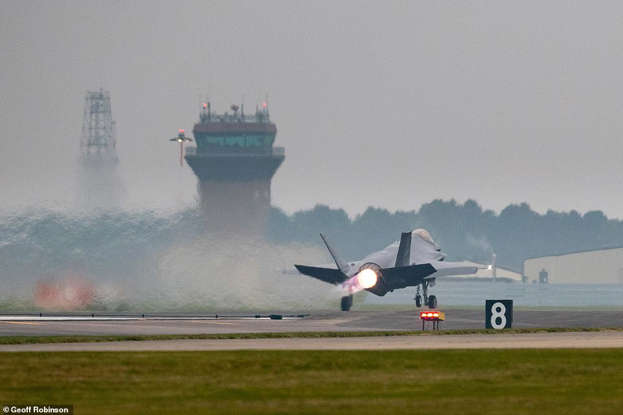
US and British airbases have ramped up their security following reports of suspicious drone activity near key military installations. The Royal Air Force (RAF) deployed sixty highly trained electronic warfare specialists to US-British airbases in East Anglia, including Lakenheath, Mildenhall, and Feltwell, after spotting drones near these top-secret sites on Monday.

The recent activity has raised concerns about potential threats to military aircraft and personnel. The team deployed advanced tools, including thermal imaging cameras, radio frequency sensors, GPS jammers, and long-range anti-drone guns. Their mission is clear: intercept any Unmanned Aerial Vehicles (UAVs) that pose a threat and ensure the continued operational security of these critical sites.

While officials have not yet confirmed the origins of the drones, they emphasize the importance of vigilance. A joint statement by the US Air Force and RAF highlighted the seriousness of the situation and reassured the public of robust measures in place to maintain security.

Recent Escalations in Drone Activities

This increased alert follows heightened tensions after Russian President Vladimir Putin issued threats against Western military facilities. These threats came in response to the deployment of UK and US missiles into Russian territory. Shortly after, Russia retaliated by launching a nuclear-capable hypersonic missile into Ukraine.

Drones have played a significant role in modern conflicts, particularly in the ongoing war in Ukraine, where UAVs dominate the battlefield. Russia launched a record-breaking 188 drones in one operation on Monday alone. The Kremlin has not limited its use of drones to Ukraine; it has recently identified similar UAVs in neighboring regions such as Latvia and Romania.

The activity around the airbases in East Anglia appears to align with these broader patterns. Last week saw an uptick in drone sightings near Lakenheath, Mildenhall, and Feltwell, three strategically important bases for both the US and UK. Although officials have not confirmed any of these drones as hostile, their presence near sensitive locations has raised alarms.

According to US military officials, the drones observed in East Anglia appeared coordinated, ruling out the possibility of civilian hobbyists. However, investigations are still ongoing, and no official determination has been made about their origins.

Coordinated Response to Ensure Safety

The RAF specialists involved in this operation are part of the 34 Squadron, stationed at RAF Leeming in North Yorkshire. This unit is specifically trained to handle drone-related threats, making them a critical asset in the ongoing response. Their advanced equipment allows them to detect, track, and neutralize potential threats with precision.

A US Air Force spokesperson confirmed that the drone sightings occurred during night-time hours and varied across the bases. The statement also assured the public that no harm has come to local residents or infrastructure. The drones, while not currently identified as hostile, continue to be monitored closely to ensure the safety of the bases.

Military experts have pointed out the symbolic and strategic importance of the bases in East Anglia. These sites house advanced aircraft and serve as key hubs for NATO operations. This makes them potential targets for adversaries looking to disrupt Western military capabilities.

In light of the increased drone activity, both the US and UK militaries are working in close coordination to address the potential threat. Officials emphasize that all necessary precautions are being taken to protect the installations and personnel.

As tensions continue to simmer, the deployment of electronic warfare specialists underscores the importance of vigilance in safeguarding critical military infrastructure. With drones becoming an increasingly prevalent tool in modern warfare, their presence near sensitive sites is being treated with the utmost seriousness.

TOP 10 TRENDING ON NEWSINTERPRETATION

Cyber Attacks on Space Infrastructure: Satellites, GPS and the Ground Systems Behind Them

From the Viasat KA-SAT hack to GPS jamming over the Baltic, a research guide to how attackers target satellites, navigation signals and ground stations, and why it matters on Earth.

How AI Agents Are Used in Cyber Attacks: From Assisted Hacking to AI-Orchestrated Espionage

Attackers now use AI agents to scan networks, write exploits and run extortion campaigns. A research guide to documented cases, including the first reported AI-orchestrated espionage campaign, and what defenders should do.

Cyber Attacks on AI and LLMs: How Attackers Target Large Language Models

Prompt injection, data poisoning, model theft and jailbreaks: a research guide to how attackers target AI systems and large language models, with real cases and defences.

French Supermarket Refrigeration Cyberattack: How Hacking the Cold Chain Can Endanger Lives

In October 2026 attackers heated refrigeration cabinets in hundreds of French supermarkets to as much as 50°C. No one was hurt, but the attack shows how hacking the cold chain can endanger lives through fire, food poisoning and spoiled medicines.

Cyberattacks on Nuclear Facilities: Stuxnet, Kudankulam and the Limits of Air Gaps

Stuxnet, the Davis-Besse worm and malware at India’s Kudankulam plant: what they show about cyber risk at nuclear facilities and the limits of air gaps.

Triton: When Hackers Target the Safety Systems That Prevent Industrial Disasters

The 2017 Triton attack targeted the safety systems that prevent industrial disasters. What happened, who was charged, and how plants protect their last line of defence.

Cybersecurity Risks in Smart Cities: When Connected Infrastructure Fails

How connecting traffic control, emergency alerts and utilities concentrates cyber risk in cities, what the Dallas and Atlanta incidents showed, and what governments recommend.

Weaponized Drones: Hijacking, GPS Spoofing and Emerging Cyber Warfare Risks

How drones can be hijacked, jammed or misled by GPS spoofing, what researchers have demonstrated, and why governments treat drone fleets as a security risk.

Ransomware Attacks on Hospitals: How Healthcare Cyberattacks Put Patients at Risk

How ransomware against hospitals and their suppliers delays care and endangers patients, what the Düsseldorf and WannaCry cases show, and what research says about deaths.

Operational blunder exposes massive Russian cyber espionage attack on Ukrainian prosecutors

A major cyberattack has compromised the email accounts of...

Cyber Attacks on Space Infrastructure: Satellites, GPS and the Ground Systems Behind Them

From the Viasat KA-SAT hack to GPS jamming over the Baltic, a research guide to how attackers target satellites, navigation signals and ground stations, and why it matters on Earth.

French Supermarket Refrigeration Cyberattack: How Hacking the Cold Chain Can Endanger Lives

In October 2026 attackers heated refrigeration cabinets in hundreds of French supermarkets to as much as 50°C. No one was hurt, but the attack shows how hacking the cold chain can endanger lives through fire, food poisoning and spoiled medicines.

Cyberattacks on Nuclear Facilities: Stuxnet, Kudankulam and the Limits of Air Gaps

Stuxnet, the Davis-Besse worm and malware at India’s Kudankulam plant: what they show about cyber risk at nuclear facilities and the limits of air gaps.

Triton: When Hackers Target the Safety Systems That Prevent Industrial Disasters

The 2017 Triton attack targeted the safety systems that prevent industrial disasters. What happened, who was charged, and how plants protect their last line of defence.

Cybersecurity Risks in Smart Cities: When Connected Infrastructure Fails

How connecting traffic control, emergency alerts and utilities concentrates cyber risk in cities, what the Dallas and Atlanta incidents showed, and what governments recommend.

Ransomware Attacks on Hospitals: How Healthcare Cyberattacks Put Patients at Risk

How ransomware against hospitals and their suppliers delays care and endangers patients, what the Düsseldorf and WannaCry cases show, and what research says about deaths.

FBI warns of AVrecon malware targeting outdated routers linked to proxy based cybercrime

A serious cybersecurity warning has been issued regarding commonly...

Related Articles

Popular Categories
