

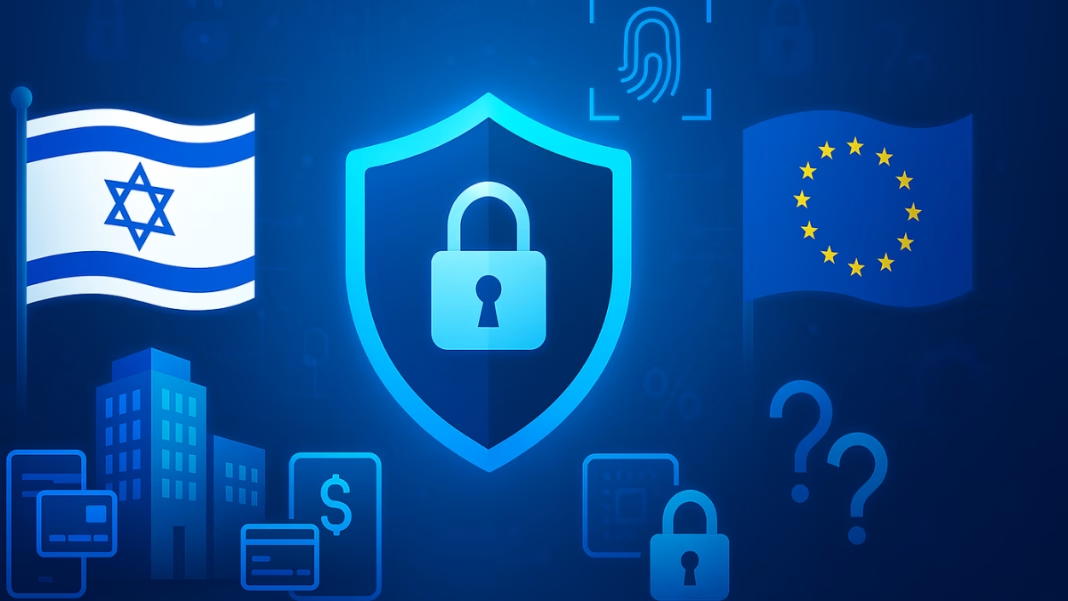
Israel Tightens Data Laws as Europe Flirts with GDPR Rollback

The European Union’s strict privacy law, called the General Data Protection Regulation (GDPR), has been a global model since it was introduced. It was built to protect personal information, especially in a world filled with online apps, smart devices, and growing digital footprints.

Europe Questions Its Own Data Rules

But now, European leaders are asking if GDPR is too strict. Some businesses, especially small ones, feel it slows down innovation. There is also worry that it’s making it harder for European tech companies to compete with giants in the U.S. and China. As a result, talks have begun about possibly loosening some of the rules.

At the same time, real-world examples of data misuse—like apps secretly collecting contacts or sharing fingerprints without permission—show why strong privacy laws matter more than ever.

While Europe debates what to keep and what to change, a different move is happening elsewhere.

Israel Moves in the Opposite Direction

While Europe thinks about relaxing privacy rules, Israel is planning to make its own laws even stronger. The country is updating its Privacy Protection Law, called IPPL, to match GDPR-level standards. These updates are expected to take effect in August 2025.

This move might seem confusing at first. Why would Israel tighten rules just as Europe considers doing the opposite?

The answer lies in how Israeli tech works. Most of Israel’s fintech and software companies serve clients around the world, not just in Israel. That means they’ve already been following international data protection rules like GDPR for many years. In fact, even before Israel decided to change its own laws, many companies were already acting like GDPR was the law.

Israel’s tech sector is a major part of its economy. It employs around 10% of the workforce and brings in nearly 18% of the country’s total income. For fintech companies that work with global banks and platforms in Europe and the U.S., following strong privacy rules isn’t just about local law—it’s about being trusted worldwide.

Interestingly, while Israel’s tech firms have long embraced strict privacy practices, local banks inside the country have been more cautious. They were slower to adopt tools like APIs that allow data sharing. This slow approach may have frustrated innovators, but it helped build public trust.

This trust is becoming more important. In a recent global survey, over 60% of people said that protecting their personal data matters more than speed or convenience when dealing with companies. In today’s world—where fears about online tracking and misuse are common—trust is gold.

Trust Is Becoming a Competitive Advantage

As Israel makes privacy rules tighter, it could actually be giving its tech companies a head start. While Europe could face years of debates and legal changes, Israel is choosing a clearer path.

One big change in the new IPPL law is how it defines personal data. It will now include things like biometric information, location history, genetic data, and even criminal records. For companies, this means handling data more carefully. But for consumers, it means more protection.

$8 Billion Showdown: Meta’s Top Brass Face Explosive Privacy Trial Over Cambridge Analytica Scandal

Strong privacy laws are not just about avoiding fines. They’re about building long-term relationships with users. Companies that protect data, act transparently, and respond quickly when something goes wrong are seen as more trustworthy.

Some fintech companies around the world have already shown how to win customer trust. They make their fees clear, offer real-time updates, and provide fast help when needed. These simple steps go a long way in showing users that their data is safe.

In Israel, this matters more than ever. A recent national survey showed that trust in key institutions is falling. That gives tech companies a rare chance to stand out—by showing they take privacy seriously and by building products that respect people’s data.

While many countries are still figuring out where to draw the line between privacy and innovation, Israel’s message is simple: it’s possible to have both. And in today’s digital economy, choosing trust might just be the smartest move of all.


Renuka Bangale
Renuka Bangale
Renuka is a distinguished Chartered Accountant and a Certified Digital Threats Analyst from Riskpro, renowned for her expertise in cybersecurity. With a deep understanding of cybercrimes, malware, cyber warfare, and espionage, she has established herself as an authority in the field. Renuka combines her financial acumen with advanced knowledge of digital threats to provide unparalleled insights into the evolving landscape of information security. Her analytical prowess enables her to dissect complex cyber incidents, offering clarity on risks and mitigation strategies. As a key contributor to Newsinterpretation’s information security category, Renuka delivers authoritative articles that educate and inform readers about emerging threats and best practices.

TOP 10 TRENDING ON NEWSINTERPRETATION

Cyber Attacks on Space Infrastructure: Satellites, GPS and the Ground Systems Behind Them

From the Viasat KA-SAT hack to GPS jamming over the Baltic, a research guide to how attackers target satellites, navigation signals and ground stations, and why it matters on Earth.

How AI Agents Are Used in Cyber Attacks: From Assisted Hacking to AI-Orchestrated Espionage

Attackers now use AI agents to scan networks, write exploits and run extortion campaigns. A research guide to documented cases, including the first reported AI-orchestrated espionage campaign, and what defenders should do.

Cyber Attacks on AI and LLMs: How Attackers Target Large Language Models

Prompt injection, data poisoning, model theft and jailbreaks: a research guide to how attackers target AI systems and large language models, with real cases and defences.

French Supermarket Refrigeration Cyberattack: How Hacking the Cold Chain Can Endanger Lives

In October 2026 attackers heated refrigeration cabinets in hundreds of French supermarkets to as much as 50°C. No one was hurt, but the attack shows how hacking the cold chain can endanger lives through fire, food poisoning and spoiled medicines.

Cyberattacks on Nuclear Facilities: Stuxnet, Kudankulam and the Limits of Air Gaps

Stuxnet, the Davis-Besse worm and malware at India’s Kudankulam plant: what they show about cyber risk at nuclear facilities and the limits of air gaps.

Triton: When Hackers Target the Safety Systems That Prevent Industrial Disasters

The 2017 Triton attack targeted the safety systems that prevent industrial disasters. What happened, who was charged, and how plants protect their last line of defence.

Cybersecurity Risks in Smart Cities: When Connected Infrastructure Fails

How connecting traffic control, emergency alerts and utilities concentrates cyber risk in cities, what the Dallas and Atlanta incidents showed, and what governments recommend.

Weaponized Drones: Hijacking, GPS Spoofing and Emerging Cyber Warfare Risks

How drones can be hijacked, jammed or misled by GPS spoofing, what researchers have demonstrated, and why governments treat drone fleets as a security risk.

Ransomware Attacks on Hospitals: How Healthcare Cyberattacks Put Patients at Risk

How ransomware against hospitals and their suppliers delays care and endangers patients, what the Düsseldorf and WannaCry cases show, and what research says about deaths.

Operational blunder exposes massive Russian cyber espionage attack on Ukrainian prosecutors

A major cyberattack has compromised the email accounts of...

Cyber Attacks on Space Infrastructure: Satellites, GPS and the Ground Systems Behind Them

From the Viasat KA-SAT hack to GPS jamming over the Baltic, a research guide to how attackers target satellites, navigation signals and ground stations, and why it matters on Earth.

French Supermarket Refrigeration Cyberattack: How Hacking the Cold Chain Can Endanger Lives

In October 2026 attackers heated refrigeration cabinets in hundreds of French supermarkets to as much as 50°C. No one was hurt, but the attack shows how hacking the cold chain can endanger lives through fire, food poisoning and spoiled medicines.

Cyberattacks on Nuclear Facilities: Stuxnet, Kudankulam and the Limits of Air Gaps

Stuxnet, the Davis-Besse worm and malware at India’s Kudankulam plant: what they show about cyber risk at nuclear facilities and the limits of air gaps.

Triton: When Hackers Target the Safety Systems That Prevent Industrial Disasters

The 2017 Triton attack targeted the safety systems that prevent industrial disasters. What happened, who was charged, and how plants protect their last line of defence.

Cybersecurity Risks in Smart Cities: When Connected Infrastructure Fails

How connecting traffic control, emergency alerts and utilities concentrates cyber risk in cities, what the Dallas and Atlanta incidents showed, and what governments recommend.

Ransomware Attacks on Hospitals: How Healthcare Cyberattacks Put Patients at Risk

How ransomware against hospitals and their suppliers delays care and endangers patients, what the Düsseldorf and WannaCry cases show, and what research says about deaths.

FBI warns of AVrecon malware targeting outdated routers linked to proxy based cybercrime

A serious cybersecurity warning has been issued regarding commonly...

Related Articles

Popular Categories