

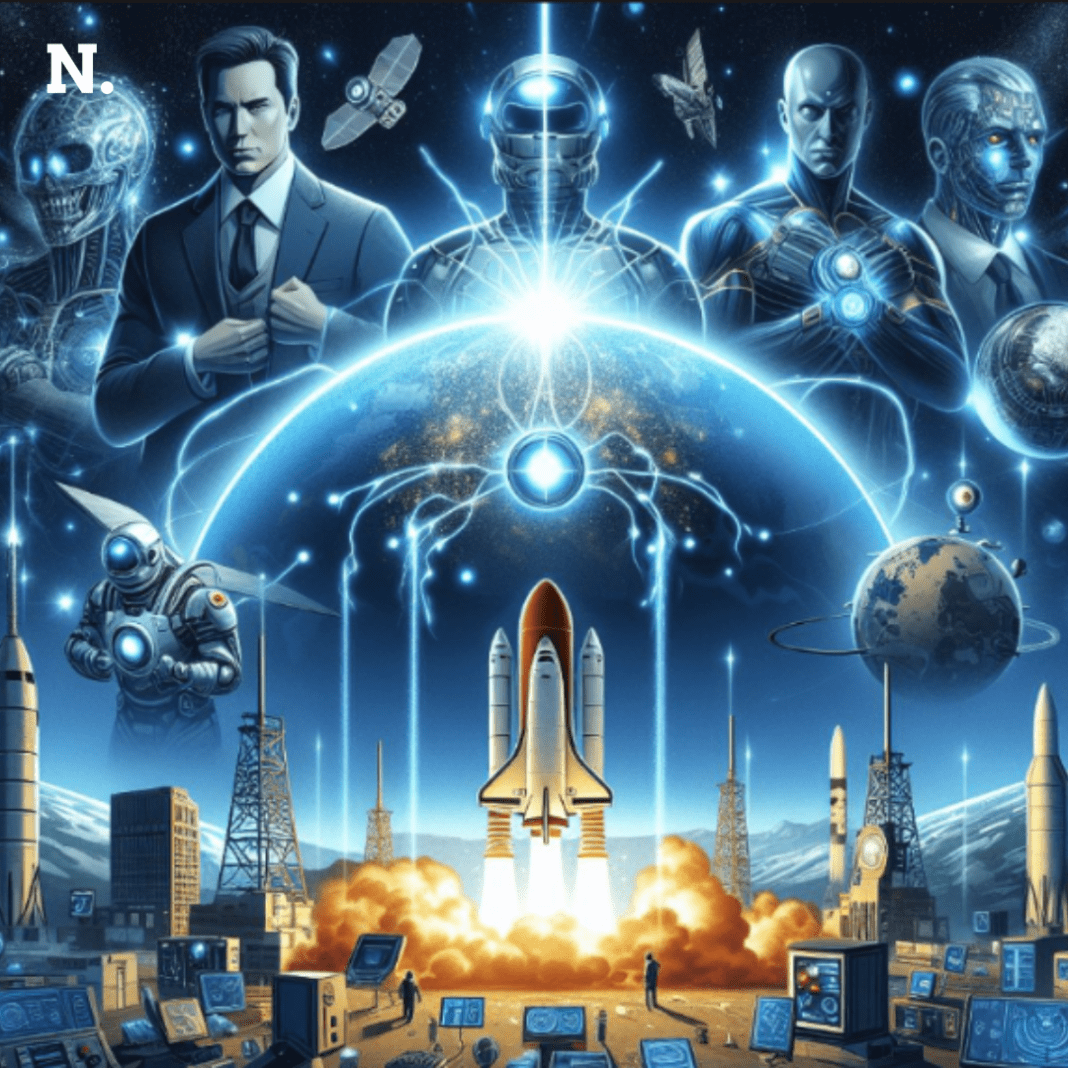

Empowering Space industries: Power Players

SpaceTech has progressed because of the development of government organizations and private companies known as space industries. Many private companies lend a hand in the development. Some power players take development to the next level. But who are these power players and why are they given that title?

SpaceX

Elon Musk founded SpaceX on 14th March 2002. SpaceX has been very helpful in the rapid development of space technology. The ambitious goals, innovative technology and cost-effective technology are the most important qualities of SpaceX.

How has SpaceX helped SpaceTech?

  • Reusable Rockets are rockets designed to be used multiple times. Successful landings and refurbishing the rocket boosters have saved SpaceX a lot of money. As they launched the payloads into space with ease. The falcon9 and Falcon heavy rockets are the names of some of their reusable rockets.
  • In the Commercial Crew Program, SpaceX made history by sending astronauts to the International Space Station (ISS). Their Crew Dragon spacecraft, a marvel of design and operation, serves as a dependable and wallet-friendly spacecraft.
  • As for their Starship Project, SpaceX dreams big. A sleek spacecraft, fully reusable, and bound for Mars and beyond. It’s not just a project; it’s humanity’s ticket to exploring and settling new worlds.

Blue Origin

Jeff Bezos founded Blue Origin in 2000. Planning to create a future where space is accessible to everyone. This is possible through space tourism and scientific exploration.

How is it possible?

  • New Shepard Suborbital Vehicle is a thrilling ride to the edge of space in the suborbital vehicle. Passengers get to experience weightlessness and enjoy the majestic views of our planet Earth.
  • New Glenn Orbital Rocket is capable of launching payloads into orbit. Its reusable design and hefty payload capacity aim to cut the cost of reaching space for satellite launches and commercial missions.
  • Blue Moon Lunar Lander sets our sights on the Moon. This spacecraft aims to launch cargo and eventually humans to the lunar surface, supporting NASA’s Artemis program and laying the base for lunar exploration.

These are the two most big space industries but these companies also have some competition. Who is there competition?

Other Players in the Private Space Industries

  • Richard Branson founded Virgin Galactic. It is all about space tourism. Their SpaceShipTwo spacecraft launches paying customers on suborbital tours.
  • Rocket Lab specializes in small satellite launches, their Electron rocket provides cost-effective access to space for small satellite operators, a new era of satellite launches.
  • Sierra Nevada Corporation’s reusable spacecraft offers shuttle cargo and crew to travel in low Earth orbit which is an affordable solution for various space missions.

Conclusion

SpaceTech has advanced thanks to government organizations and private space industries, with companies like SpaceX playing a major role. SpaceX, founded by Elon Musk, is known for its reusable rockets and achievements in the Commercial Crew Program and Starship Project. Blue Origin, founded by Jeff Bezos, focuses on space tourism and exploration with vehicles like the New Shepard and New Glenn. Other key players include Virgin Galactic, Rocket Lab, and Sierra Nevada Corporation


Aahana M Joshi
Aahana M Joshi
Aahana Joshi is the youngest contributor at News Interpretation, bringing a fresh perspective to the platform. Her writing spans a wide range of topics, with a particular focus on Science and Space Technology. Aahana's insightful articles make complex subjects accessible and engaging for readers, showcasing her talent and passion for Space Technology.

TOP 10 TRENDING ON NEWSINTERPRETATION

Cyber Attacks on Space Infrastructure: Satellites, GPS and the Ground Systems Behind Them

From the Viasat KA-SAT hack to GPS jamming over the Baltic, a research guide to how attackers target satellites, navigation signals and ground stations, and why it matters on Earth.

How AI Agents Are Used in Cyber Attacks: From Assisted Hacking to AI-Orchestrated Espionage

Attackers now use AI agents to scan networks, write exploits and run extortion campaigns. A research guide to documented cases, including the first reported AI-orchestrated espionage campaign, and what defenders should do.

Cyber Attacks on AI and LLMs: How Attackers Target Large Language Models

Prompt injection, data poisoning, model theft and jailbreaks: a research guide to how attackers target AI systems and large language models, with real cases and defences.

French Supermarket Refrigeration Cyberattack: How Hacking the Cold Chain Can Endanger Lives

In October 2026 attackers heated refrigeration cabinets in hundreds of French supermarkets to as much as 50°C. No one was hurt, but the attack shows how hacking the cold chain can endanger lives through fire, food poisoning and spoiled medicines.

Cyberattacks on Nuclear Facilities: Stuxnet, Kudankulam and the Limits of Air Gaps

Stuxnet, the Davis-Besse worm and malware at India’s Kudankulam plant: what they show about cyber risk at nuclear facilities and the limits of air gaps.

Triton: When Hackers Target the Safety Systems That Prevent Industrial Disasters

The 2017 Triton attack targeted the safety systems that prevent industrial disasters. What happened, who was charged, and how plants protect their last line of defence.

Cybersecurity Risks in Smart Cities: When Connected Infrastructure Fails

How connecting traffic control, emergency alerts and utilities concentrates cyber risk in cities, what the Dallas and Atlanta incidents showed, and what governments recommend.

Weaponized Drones: Hijacking, GPS Spoofing and Emerging Cyber Warfare Risks

How drones can be hijacked, jammed or misled by GPS spoofing, what researchers have demonstrated, and why governments treat drone fleets as a security risk.

Ransomware Attacks on Hospitals: How Healthcare Cyberattacks Put Patients at Risk

How ransomware against hospitals and their suppliers delays care and endangers patients, what the Düsseldorf and WannaCry cases show, and what research says about deaths.

Operational blunder exposes massive Russian cyber espionage attack on Ukrainian prosecutors

A major cyberattack has compromised the email accounts of...

Cyber Attacks on Space Infrastructure: Satellites, GPS and the Ground Systems Behind Them

From the Viasat KA-SAT hack to GPS jamming over the Baltic, a research guide to how attackers target satellites, navigation signals and ground stations, and why it matters on Earth.

French Supermarket Refrigeration Cyberattack: How Hacking the Cold Chain Can Endanger Lives

In October 2026 attackers heated refrigeration cabinets in hundreds of French supermarkets to as much as 50°C. No one was hurt, but the attack shows how hacking the cold chain can endanger lives through fire, food poisoning and spoiled medicines.

Cyberattacks on Nuclear Facilities: Stuxnet, Kudankulam and the Limits of Air Gaps

Stuxnet, the Davis-Besse worm and malware at India’s Kudankulam plant: what they show about cyber risk at nuclear facilities and the limits of air gaps.

Triton: When Hackers Target the Safety Systems That Prevent Industrial Disasters

The 2017 Triton attack targeted the safety systems that prevent industrial disasters. What happened, who was charged, and how plants protect their last line of defence.

Cybersecurity Risks in Smart Cities: When Connected Infrastructure Fails

How connecting traffic control, emergency alerts and utilities concentrates cyber risk in cities, what the Dallas and Atlanta incidents showed, and what governments recommend.

Ransomware Attacks on Hospitals: How Healthcare Cyberattacks Put Patients at Risk

How ransomware against hospitals and their suppliers delays care and endangers patients, what the Düsseldorf and WannaCry cases show, and what research says about deaths.

FBI warns of AVrecon malware targeting outdated routers linked to proxy based cybercrime

A serious cybersecurity warning has been issued regarding commonly...

Related Articles

Popular Categories
