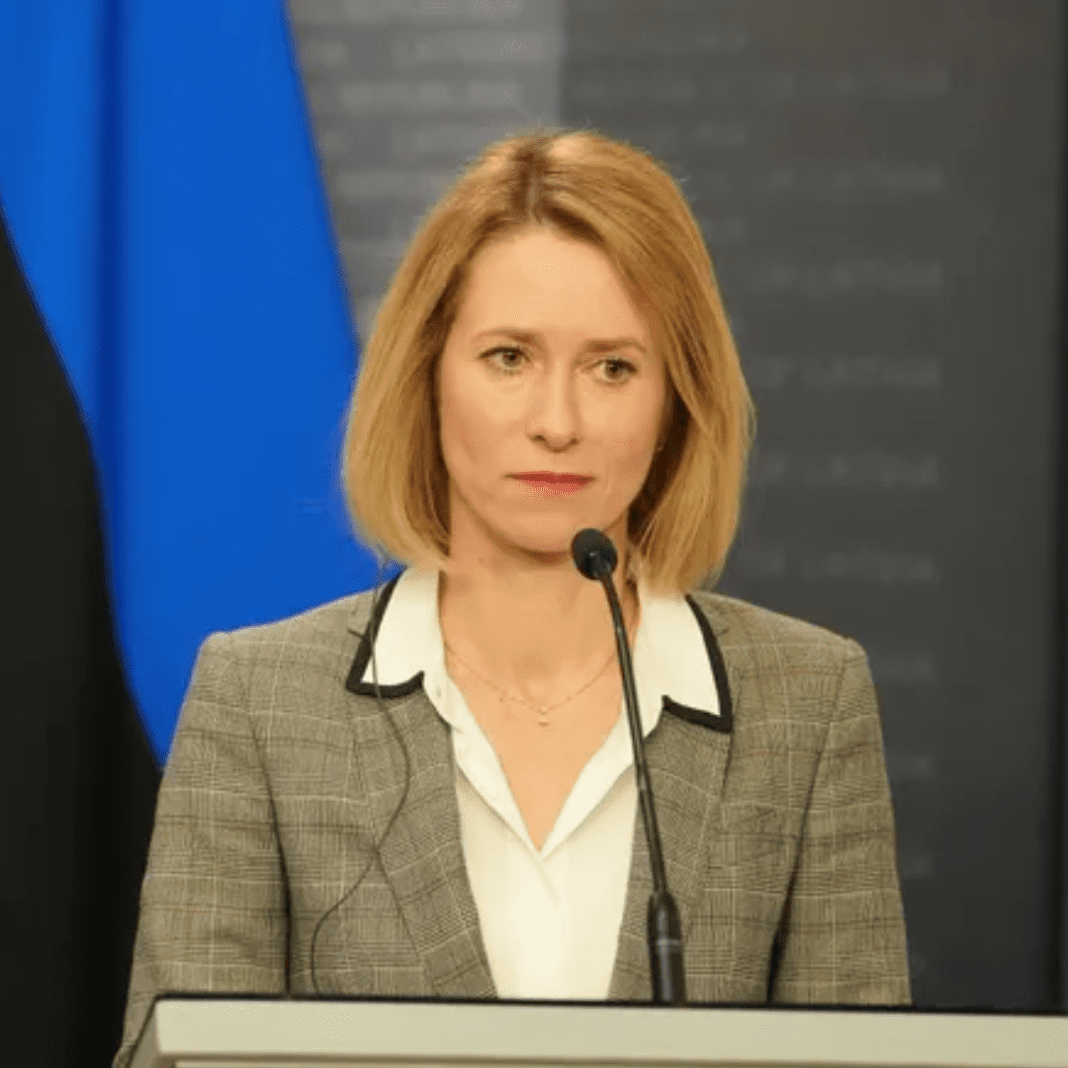

Throughout the corridors in Europe, a new name has cropped up, full of the resounding potential. That the scenery of European Union diplomacy csan ever have. The name of Kaja Kallas, most of the time tagged as Estonia’s ‘Iron Lady’, now stands empowered. On the threshold of a journey of transformation from Tallinn to Brussels. There is a lot of speculation over her candidature for the top diplomatic job. At the EU; clearly, this picks attention and also intrigues and sets the political analyses and citizens on the tongues in debate.
Estonia’s Political Trailblazer
Kaja Kallas quickly became the face of the Estonian political platform. Born in 1977 in the capital city of Estonia. Tallinn, Kallas hails from a family with a rich political background. Her father, Siim Kallas, was Prime Minister of Estonia and later moved on to be an EU Commissioner. This is a big exposure for a growing daughter about national and European politics. Educated first in law and then at the Tallinn School of Economics, Kaja Kallas began a career of her own that deftly combined. The elements of public service and corporate governance.
The political career of Kaja Kallas took off on a high note in 2011 when. To be precise, she was associated with the Revolution Party of Estonia. A centrist-liberal force in the party politics of her country. Within a couple of years, though, Kallas began to rise in the public estimation. Showing an acute intellect, strategic wisdom, and an demoralize impulse. For fostering reforms and modernization in the governance and economy of Estonia. In 2019, she entered the books of history. By becoming the first female Prime Minister of Estonia. A big acknowledgment of her efforts. And of the advanced stand of Estonia with regard to gender equality.
Estonia’s Pragmatic Leader
Kaja Kallas, during her tenure as Prime Minister of Estonia, focused on advancing the country’s digital infrastructure and fostering a business-friendly environment. Aimed at attracting foreign investment. Her leadership underscored a pragmatic approach to governance, leveraging Estonia’s strengths on the global stage. Internationally, Kallas advocated for a more integrated Europe. Championing democratic values and human rights within and beyond the EU. Her diplomatic skills and commitment to European unity have positioned. Her as a formidable candidate for the role of High Representative of the Union for Foreign Affairs and Security Policy. A pivotal position responsible for navigating complex international relations. And representing the EU’s unified stance on global diplomacy.
Within the European Council, Kallas has garnered broad support due to her ability to bridge. Differences and promote consensus among member states. Her deep understanding of European policies and institutions, combined with her background in economics and finance, equips her to effectively tackle the economic dimensions of foreign policy. Challenges in an increasingly interconnected world. As speculation mounts regarding her potential appointment, Kallas stands at a critical juncture in her career. Poised to potentially shape the future of European diplomacy at its highest levels.
Diplomatic Ambitions: Amidst EU Challenges
But serious challenges are ahead. The EU is facing a collection of geopolitical issues: from the complex stewardship that needs to be taken to factors. Within considerations for powers such as the US, China, and Russia, to regional turmoil and conflicts. In the EU’s immediate neighbourhood. Next, the agenda of the High Representative-in-charge will be difficult to master and demand Quick diplomatic qualities, strategic perspective, and elasticity, with a firm commitment to the cause of European values and interests.
The road ahead holds equal parts of promise and peril for Kaja Kallas. In addition to this, Kallas’ candidacy is an ambitious assertion of the amplified voice of the country in the EU. A proud testament of this small country’s careful steps toward an independent. Digital future far removed from protectionist shadows. If Kallas is appointed as the most prominent representative from Estonia on the European stage. She would be perceived as a sign that the EU is seriously addressing gender equality and diversity in its leadership.
Estonia’s Trailblazer
Kaja Kallas is at a very critical juncture in her career and is likely to become a game-changer for European diplomacy. By competing for the position of High Representative of the Union for Foreign Affairs and Security Policy. Her nomination epitomises the link between vision and ability in the labyrinth of international politics. Leading to increased aspirations among the nations of Europe. To strive for a say in next-generation governance. The potential appointment casts deep implications for the future role and unity of Europe. At a time when the challenges of 21st-century geopolitics are rising. Coupled with nationalist pressure. It is one of the moves being followed keenly across the globe.