
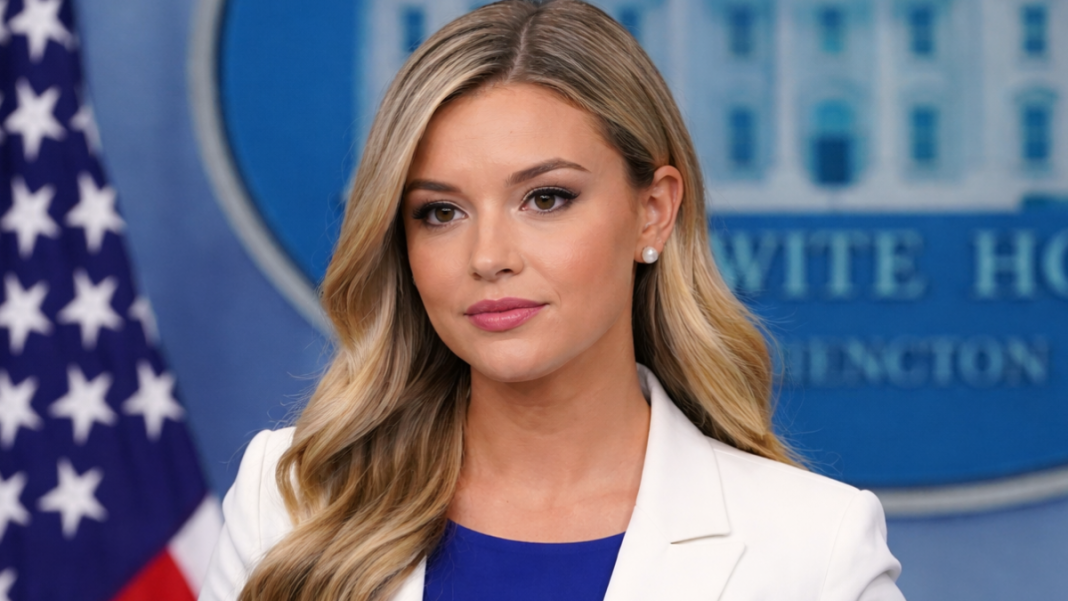

A routine White House press briefing unexpectedly became the focus of a nationwide online debate after it ended just seconds earlier than many people anticipated. What appeared to be a normal conclusion quickly turned into a heated discussion involving gamblers, political observers, and critics of online prediction markets. At the center of the controversy was White House Press Secretary Karoline Leavitt, whose decision to leave the stage roughly 30 seconds before a key time threshold led to significant financial consequences for some online bettors.
The reaction was not driven by policy announcements but by timing and perception. The focus remained on Karoline Leavitt’s timing rather than the substance of the briefing. The incident highlighted how modern betting platforms can turn even ordinary government events into high-stakes outcomes, raising questions about public trust and fairness.
Karoline’s briefing ended seconds early
The daily press briefing took place on Wednesday and followed a familiar pattern. Karoline Leavitt, known for lengthy and often combative sessions, spoke with reporters for more than an hour. Topics included new dietary guidelines tied to a health campaign, oil-related developments involving Venezuela, and the seizure of a tanker connected to sanctions violations.
She also promoted a new White House website revisiting the January 6 Capitol events. As she concluded, Leavitt encouraged the public to view the site, thanked those present, gathered her papers, and exited the stage. The briefing lasted approximately 64 minutes and 30 seconds.
For most viewers, the exact length meant little. For users of prediction market platforms, however, those final seconds mattered greatly. Bettors had placed wagers on whether the briefing would last longer than 65 minutes. Given that Karoline Leavitt’s briefings often exceed an hour, many assumed it was almost certain the session would cross that mark.
Instead, it ended just short. The abrupt conclusion surprised viewers and bettors alike. Some online observers noted that Karoline Leavitt appeared to glance upward before leaving, which some interpreted as checking a clock. While unproven, this observation fueled jokes and speculation online. The briefing also ended without final questions, a departure from Karoline Leavitt’s usual style, which further added to the surprise and helped push the topic into trending discussions.
How prediction markets amplified the reaction
Prediction markets allow people to wager real money on actual outcomes, with platforms like Kalshi and Polymarket gaining popularity for their accurate forecasts, especially regarding elections. In a recent case, bettors predicted whether a briefing would exceed 65 minutes, with odds strongly favoring an overage, reportedly reaching 98 percent.
Karoline Leavitt responds sharply to report on possible Cabinet shake-up
When the briefing ended early, those betting against this outcome saw immediate returns, some earning multiples of their initial investments within seconds. Social media reactions varied, with users expressing humor and frustration, while some criticized the fairness of the system. Democratic strategist Mike Nellis voiced disbelief over the chaos generated by a routine briefing.
As the debate unfolded, comments like Braden Hoffman’s, which suggested intentional timing, gained traction. However, there is no evidence that Karoline Leavitt or anyone from the White House engaged in betting or acted for financial gain.
Broader concerns about trust and regulation
The controversy drew attention from across the political spectrum and revived broader concerns about prediction markets and government transparency. Critics argue that allowing people to profit from precise actions taken by Karoline Leavitt can undermine trust, even when no wrongdoing occurs.
Some online commentators suggested that if Congress moves to restrict stock trading by lawmakers, prediction markets could become another avenue for influence. Others called for such platforms to be banned, arguing they encourage manipulation and suspicion.
Trump says Epstein letter is fake, White House supports forensic handwriting test
The discussion also intersected with existing political tensions. References to figures such as Stephen Miller and other unrelated political debates contributed to the rapid spread of the story. Mentions of the Department of Justice (DOJ) appeared in related conversations, though it has no direct connection to the betting incident.
No official response has been issued by the White House regarding Karoline Leavitt and the betting outcome. The briefing followed standard procedures, and no rules were broken. Still, Karoline Leavitt’s briefing showed how closely political actions are scrutinized and how quickly routine moments can escalate into national conversations when money, politics, and technology intersect.