

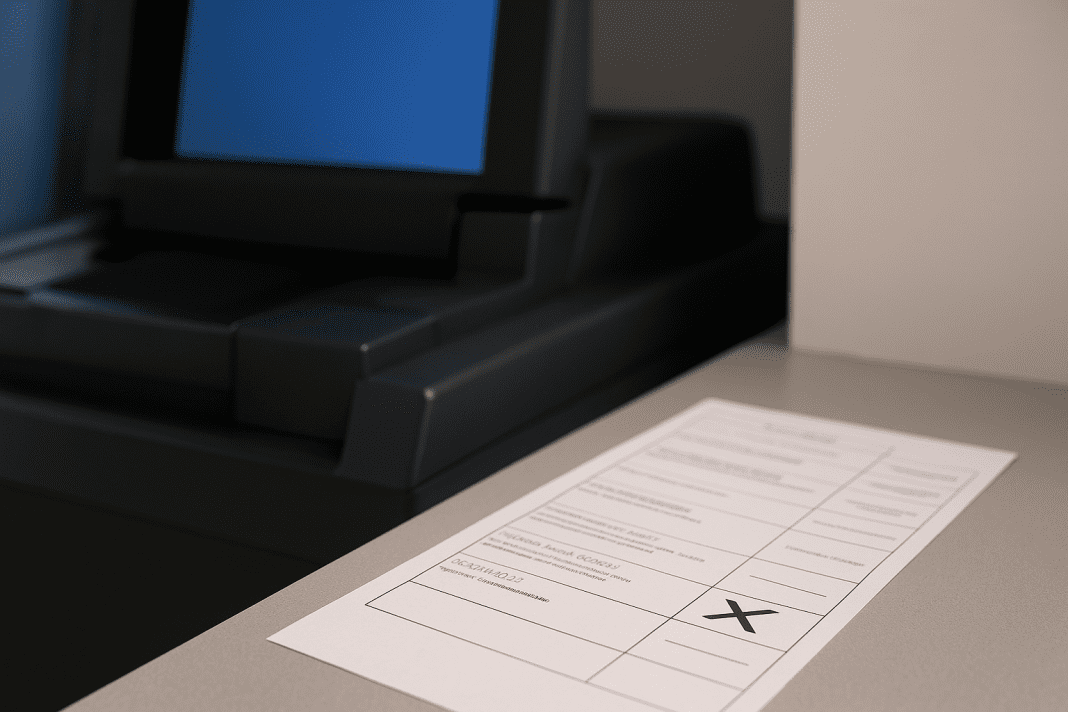

In a move that has caught many by surprise, Dominion Voting Systems — one of the largest voting machine companies in the United States — has been purchased by Scott Leiendecker, the founder and CEO of Knowink, a Missouri-based company that makes electronic poll books used in elections. The acquisition has raised widespread questions about what this means for election integrity, transparency, and voter confidence across the country.
A Sudden and Surprising Acquisition
Scott Leiendecker, a former Republican Party operative and election official from Missouri, announced that Dominion Voting Systems will now operate under a new name — Liberty Vote. He described the rebranding as a “bold and historic move” to improve election integrity in America. The company also stated that it will be “100% American-owned” and will focus on using hand-marked paper ballots and third-party audits to reassure voters about the security of US elections.
Dominion Voting Systems has faced years of controversy. Following the 2020 presidential election, former President Donald Trump and his supporters falsely accused the company of manipulating votes in favor of Joe Biden. These claims were later proven false, but they caused lasting damage to the company’s reputation. Leiendecker said the new brand aims to distance itself from these past accusations.
Trump explodes at Harris over ‘closest election’ remark — calls her ‘dumb as a rock
Dominion Becomes Liberty Vote
Liberty Vote’s press release made several promises. It said the company will focus on domestic staffing, meaning all its software and development will happen within the United States. Dominion Voting Systems had previously developed software in Canada and Serbia, and many programmers still listed their employment with the company on LinkedIn. However, Liberty did not explain how it would handle the massive amount of existing software code created overseas or whether it plans to replace foreign developers with American ones.
An official from Liberty told media outlets that Leiendecker is “committed to 100% domestic staffing and software development.” But some experts believe this claim may not make a real difference. Philip Stark, a statistics professor at UC Berkeley and a well-known election integrity advocate, said that the location of programmers doesn’t automatically guarantee security. “If the claim is that this is somehow a security measure, it isn’t,” he said. “Programmers in the US can also act maliciously.”
The company also promised a “third-party, independent review” of Dominion Voting Systems software and equipment. According to Liberty, this review will ensure that any vulnerabilities are found and reported to federal and state election authorities. The company said this will take place before next year’s midterm elections.
However, election experts doubt that Liberty can meet that timeline. They note that redesigning, testing, and certifying new voting equipment can take months or even years. Each state also has laws limiting when updates to voting systems can occur before an election. Experts believe that even replacing foreign workers with American ones would delay the process further.
Stark and others also pointed out that the most effective election audits are those that check paper ballots after an election, not audits of software. They explained that software audits cannot confirm whether a voting machine has been tampered with after certification.
Elections Systems And The Rising Threat of Ransomware Attack
Control Over Half of US Voting Infrastructure
The acquisition gives Scott Leiendecker significant control over U.S. election infrastructure. Dominion Voting Systems equipment—now under Liberty Vote—is used in 26 states and Puerto Rico, while Knowink’s electronic poll books operate in 29 states and Washington, D.C.
In 14 states, both Dominion Voting Systems and Knowink products are used together, covering about 20 million registered voters. This means Leiendecker’s companies now manage nearly every stage of the voting process—from verifying voter identities to counting ballots. In Georgia, both systems are used statewide.
This overlap has raised concerns among election observers because Knowink poll books generate voter smart cards that interact directly with Dominion Voting Systems machines, giving one owner control over both front-end and back-end election operations.
The U.S. voting technology market has long been dominated by three main firms: Election Systems & Software (ES&S), Dominion Voting Systems, and Hart InterCivic. Dominion became a major player in 2010 after acquiring Premier Election Solutions and Sequoia Voting Systems, both of which had faced criticism over security issues.
With Leiendecker’s takeover, power in the industry is even more concentrated. Dominion machines are difficult to replace, as states rely on long-term contracts for maintenance and support.
In 2018, Dominion was valued at $80 million, but after the 2020 election and defamation lawsuits, its estimated worth rose to $741 million. Leiendecker has not revealed the purchase price, saying only that he financed it privately.
The sale reportedly closed after Dominion Voting Systems settled multiple lawsuits with Fox News, Newsmax, and Trump allies Rudy Giuliani and Sidney Powell. Lawsuits against others, including Mike Lindell and Patrick Byrne, are still pending.
Leiendecker’s history as an election official in Missouri has earned him bipartisan respect, though his ties to Republican figures like Ed Martin have raised questions. Still, he has previously rejected false claims of election fraud, even when made by members of his own party.
Paper Ballots and Trump’s Executive Order
Liberty Vote has announced that it will promote hand-marked paper ballots, a move Leiendecker says aligns with federal election standards. This comes after former President Trump signed an executive order calling for all voting systems to produce voter-verifiable paper ballots.
Republican stronghold falls as Democrat Mindy O’Neall wins Fairbanks mayoral race
Trump’s order also opposes the use of ballots with bar codes or QR codes, which are used in many Dominion Voting Systems machines. Critics argue these codes are not human-readable and could hide vote changes within the system. Dominion’s ImageCast X machines — which print ballots with QR codes — are used in 15 states, including Georgia.
Both left- and right-wing election integrity activists have called for ballots that can be verified by humans without relying on bar codes. These concerns remain at the center of debates over how electronic systems and paper ballots should coexist in future elections.
For now, the facts remain clear: one Republican businessman now holds control over a massive portion of America’s election infrastructure, and Dominion Voting Systems — once at the center of controversy — is now being reshaped under a new name and leadership.


