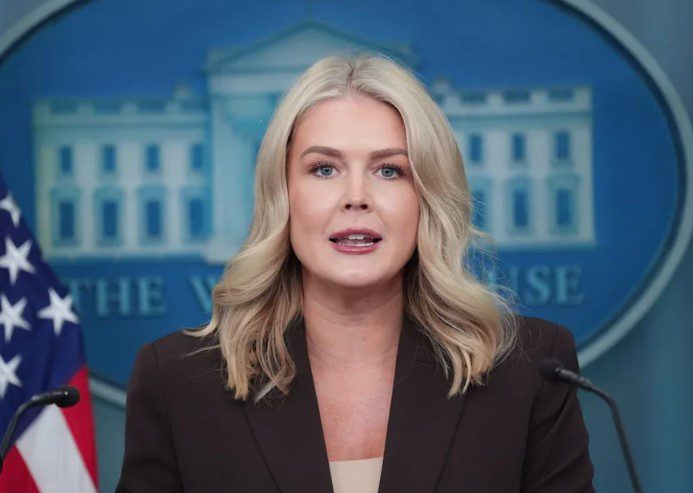

White House Press Secretary Karoline Leavitt has openly criticized New York City mayoral candidate Zohran Mamdani and the Democratic Party in a recent Fox News interview. Leavitt accused the party of prioritizing far-left agendas over core American values, claiming that it has shifted its focus away from mainstream issues that affect everyday citizens.
According to Leavitt, the Democratic Party now caters more to groups such as “Hamas terrorists, illegal aliens, and violent criminals” than to the general public, signaling a major departure from traditional party principles.
Leavitt Criticizes Mamdani and the Democratic Party
Leavitt highlighted Mamdani’s refusal to call for Hamas to disarm as a key example of what she views as the party’s dangerous direction. She argued that his position demonstrates the influence of the far-left on the Democratic Party and reflects a broader pattern of political correctness taking precedence over law enforcement and security.
“That is the basis of the Democrat Party today; they don’t stand for anything except for catering to their far-left base,” Leavitt said, stressing the importance of leaders taking firm stances on matters of national and international security.
Karoline Leavitt fires back at Fox News — denies claim that U.S. troops are headed to Israel
Her comments quickly gained attention across media platforms, drawing debates over the Democratic Party’s priorities and approach to complex issues like terrorism and immigration. By publicly criticizing Mamdani, Leavitt placed the NYC mayoral candidate under a sharp political spotlight, signaling that the administration expects political leaders to align with what she described as common-sense values of safety, security, and lawfulness.
Leavitt Highlights Mamdani’s Stance on Hamas
The controversy surrounding Mamdani stems from his statements about Hamas, the militant group operating in the Middle East. In interviews, Mamdani refrained from calling on Hamas to disarm, a position Leavitt described as “dangerous and irresponsible.” She argued that failing to explicitly condemn Hamas or demand disarmament indirectly supports organizations that threaten both international stability and American security.
Leavitt emphasized that political leaders must take clear and decisive positions against terrorism. By not condemning Hamas, Mamdani, in her view, aligns himself with forces that could endanger civilians and global peace. She further criticized the Democratic Party for tolerating or even encouraging such stances, claiming that the party now places appeasing extremist voices above protecting citizens and maintaining law and order.
Across party lines: Americans unite to arm Ukraine and tighten sanctions on Russia
Political analysts have pointed out that Leavitt’s remarks are part of a broader strategy to highlight Republican priorities, particularly security and anti-terrorism, in contrast to Democratic policies. Leavitt’s criticism aims to underscore the perceived ideological differences between the parties and reinforce the administration’s position on national safety and combating extremist threats.
Trump Joins Criticism, Labels Policies “Communist”
The attack on Mamdani was soon echoed by US President Donald Trump. The President described Mamdani’s policies as “Communist,” suggesting that they reflect extreme leftist ideology rather than practical governance. Trump focused on what he considered shortcomings in Mamdani’s approach to law enforcement, security, and public safety, aligning with concerns about the party’s current priorities.
Together, Trump and the White House criticism have framed Mamdani’s positions as indicative of a larger trend within the Democratic Party, portraying candidates like him as politically aligned with radical or extreme positions. Both stressed that these policies deviate from traditional American values, highlighting the growing influence of far-left ideology on local and national governance.
The comments quickly became a focal point in media coverage. Political commentators discussed how these criticisms could shape voter opinions in the upcoming New York City mayoral race. The remarks reinforced the Republican narrative of prioritizing security and law enforcement while contrasting it with what they described as the Democratic Party’s appeasement of extremist elements.
The White House statements have been cited multiple times across news outlets, bringing additional scrutiny to Mamdani’s campaign and increasing public awareness of the ideological divide between the major political parties. The commentary has elevated discussions on voter priorities, the role of political leaders in maintaining national security, and the consequences of failing to take clear positions against extremist organizations.