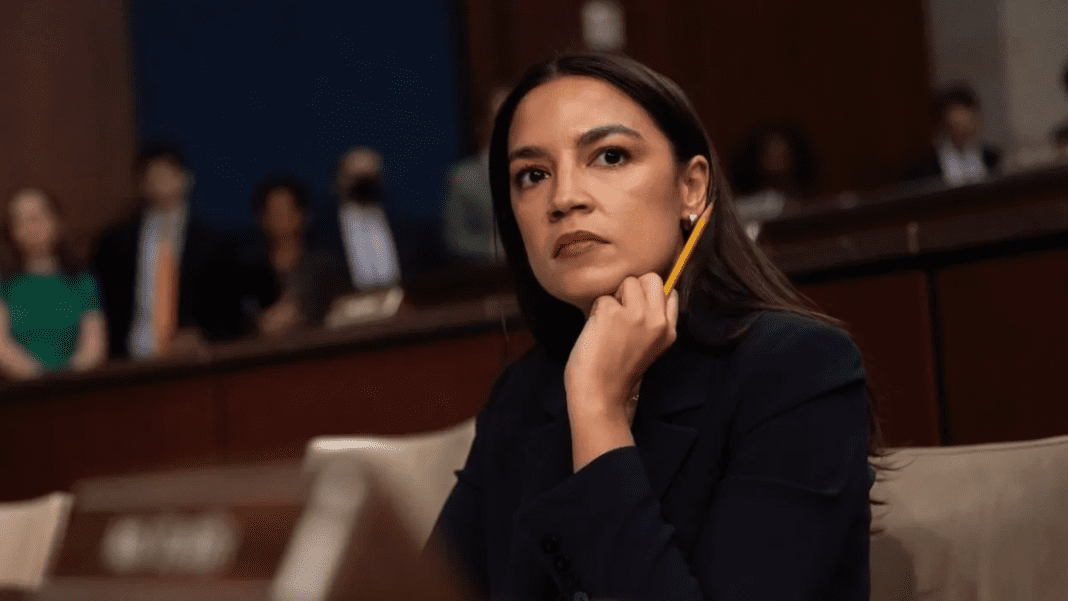

At a CNN town hall on Wednesday, Representative Alexandria Ocasio-Cortez of New York and Senator Bernie Sanders of Vermont shared differing perspectives on whether former President Donald Trump should be credited for securing the recent Gaza ceasefire and the release of Israeli hostages.
The event, hosted by CNN anchor Kaitlan Collins, featured both lawmakers addressing a series of foreign policy questions, including the ongoing conflict in Gaza and the diplomatic role played by the United States. The conversation turned tense when Collins asked both members of Congress if they believed former President Trump deserved recognition for his involvement in the ceasefire agreement.
AOC Acknowledges Trump’s Role in Hostage Release
Representative Ocasio-Cortez began her response by emphasizing the humanitarian significance of the hostage release.
“There have been several ceasefire announcements and developments that have happened over the past two years. I think that the release of the hostages is a tremendous accomplishment,” Ocasio-Cortez said. “It is providing so much healing to so many people, Israelis and Palestinians. And it is a profound and important moment in this conflict.”
Collins pressed further, asking directly if President Trump should be credited for securing the release. Ocasio-Cortez responded, “In this particular development, yes. But we also know that President Trump was an obstacle to peace previously, as well.”
The congresswoman’s comments marked a rare acknowledgment of Trump’s efforts from a leading progressive figure in Congress. Her statement drew attention because most Democratic lawmakers had so far refrained from publicly commenting on Trump’s involvement in the ceasefire process.
White House criticizes Sanders and Ocasio-Cortez over social media posts on government shutdown
Ocasio-Cortez also noted that she hoped the ceasefire would continue to hold. “As President Trump was on the plane back to the United States, there were already indications and questions about whether this ceasefire will hold,” she said. “And I pray that it does for everyone’s benefit.”
The congresswoman has been one of the most vocal critics of U.S. foreign policy in the Middle East. She has frequently called for humanitarian protections for Palestinians and has criticized military actions that led to civilian casualties.
Sanders Rejects the Idea of Credit and Questions U.S. Policy
Senator Bernie Sanders took a different position. While expressing relief over the release of hostages, he rejected the notion that any political leader should receive credit for the ceasefire.
“I am annoyed by everyone talking about credit,” Sanders said. “The entire infrastructure of Gaza—hospitals, schools, water systems, wastewater plants—has been destroyed under Trump.”
Sanders criticized the U.S. government’s funding for Israel during both the Trump and Biden administrations. “We have given under Biden and under Trump, $22 billion to Netanyahu’s extremist government, which for the last month or two have been starving children. That has been their policy,” Sanders stated.
AOC Turns Controversy Into Conversation — How Her ‘Short King’ Moment Became a Lesson in Empathy
He reiterated his long-standing position that while Israel has the right to defend itself, its actions in Gaza have resulted in significant humanitarian consequences. “This is not a time for credit,” he said. “This is a time to think about American policy. Are we happy that we have given tens of billions of dollars to destroy the Palestinian people?”
Sanders also highlighted that the Israeli government’s actions have impacted civilians disproportionately. “Israel had a right to defend itself. They were attacked by a terrorist group. They did not have a right to go into an all-out war against women and children in Gaza,” he added.
Trump’s Role and Reactions from Lawmakers
The ceasefire agreement was reached after weeks of international mediation. Reports from diplomatic sources indicate that former President Trump played a behind-the-scenes role in negotiations that led to the release of several hostages held in Gaza.
Trump’s team and Israeli officials have confirmed that the former president participated in discussions with regional leaders, though specific details of his involvement have not been made public.
Following the agreement, Trump was photographed alongside Israeli Prime Minister Benjamin Netanyahu before boarding Air Force One at Ben Gurion International Airport near Tel Aviv on October 13, 2025. Israel’s President Isaac Herzog was also present during the farewell.
After the announcement, several Republican lawmakers praised Trump for his diplomatic role. Some Democrats, however, were cautious in their statements, focusing instead on the humanitarian aspects of the ceasefire rather than the political implications.
Newsom boosts Ocasio-Cortez into national spotlight with Prop 50 campaign
Sanders Confronted on Schumer and Government Shutdown
Later in the CNN town hall, Senator Sanders was confronted by a student from American University, Rohan Naval, who identified himself as a Republican. Naval questioned Sanders about Senate Minority Leader Chuck Schumer’s role in the recent government shutdown.
Sanders responded by shifting the focus to Republican leadership. “Well, I think it reflects more on [Speaker] Mike Johnson’s leadership and President Trump’s leadership,” Sanders said.
He continued, “This is a leadership that said it’s OK to give a trillion dollars in tax breaks to the richest people in the country and then make massive cuts to healthcare for working-class people.”
The exchange drew applause from some audience members and underscored Sanders’ consistent criticism of fiscal policies under Republican leadership.
Ceasefire and Diplomatic Context
The ceasefire agreement follows months of intense conflict between Israeli forces and militant groups in Gaza. The humanitarian situation in Gaza had drawn international concern, with several countries and organizations calling for an immediate halt to hostilities.
According to reports, the ceasefire deal included the release of multiple Israeli hostages and provisions for humanitarian aid deliveries into Gaza. The agreement was brokered with the involvement of multiple nations, including the United States, Egypt, and Qatar.
Trump’s involvement marked a return to international diplomacy for the former president, who has previously emphasized his role in the Abraham Accords during his first term.
The statements from Ocasio-Cortez and Sanders illustrate the divisions within the U.S. political spectrum regarding how credit for the ceasefire should be assigned and how American foreign policy in the Middle East should evolve.
Both lawmakers expressed hope that the release of hostages would bring relief to affected families, while their comments highlighted broader disagreements over the role of U.S. leadership and military aid in th