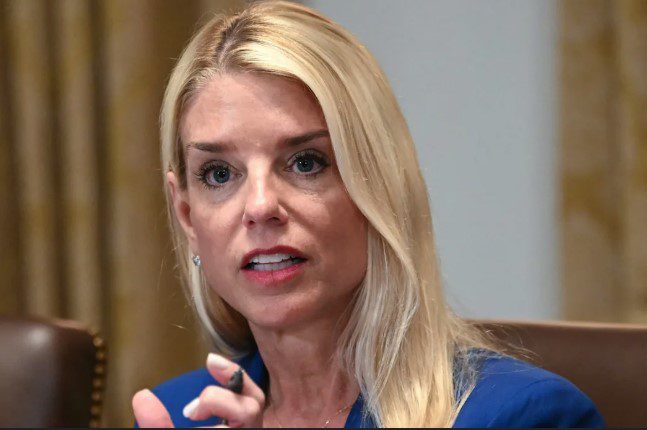

Attorney General Pam Bondi has drawn attention after comparing the Antifa movement to MS-13, one of the world’s most feared criminal gangs. During her appearance on Fox News’s Hannity show, Bondi said Antifa was “no different” from the violent drug gang, claiming it operates like an organized crime network.
Bondi’s Strong Comparison Sparks Nationwide Debate
Bondi’s comments came shortly after President Donald Trump signed an executive order designating Antifa a “domestic terrorist organization.” The order aims to curb left-wing opposition to his administration, though several legal experts warned it might allow the government to target political dissent.
“It’s organized crime. They are completely organized,” Bondi stated on air. She accused the antifascist movement of being behind the “chaos” in Portland and other U.S. cities where protests against federal agents have erupted. According to her, Antifa’s actions go beyond protest. “They’re encouraging violence, calling everyone fascist, but it’s more than that—it’s hurting the American people,” she added.
Senate hearing explodes into chaos as Bondi dodges ethics questions and attacks Schiff
Bondi emphasized that her view was not based solely on official reports but also on firsthand accounts from MAGA influencers who claim to have been attacked or threatened by Antifa members. “Talk to all the influencers who have been threatened and beat up and their lives threatened from Antifa members. It’s going to stop under Donald Trump,” she said firmly.
MAGA Influencers Cite Clashes with Antifa
Bondi’s remarks referenced a recent White House “Antifa roundtable”, where right-wing media personalities and influencers shared their personal experiences. Among them was Katie Daviscourt, a journalist from the conservative outlet The Post Millennial. Daviscourt appeared on Fox News earlier this month with a visible black eye, which she said resulted from a confrontation with an “Antifa-affiliated” protester in Portland.
Another influencer, Nick Sortor, was arrested outside an ICE (Immigration and Customs Enforcement) building in Portland after what he described as a fight with “Antifa thugs.” White House Press Secretary Karoline Leavitt defended him, alleging that he had been “ambushed by Antifa.”
During the White House meeting, Homeland Security Secretary Kristi Noem added her own comparison, saying Antifa was as dangerous and organized as terrorist organizations like ISIS, Hamas, and Hezbollah. “They are just as sophisticated as MS-13, as Tren de Aragua, as Isis, as Hezbollah, as Hamas, as all of them. They have an agenda to destroy us, just like the other terrorists we’ve dealt with for many years,” Noem stated.
Forklifts sold as made in America lead to federal indictment of 2 companies and 3 executives
The Trump administration has repeatedly cited MS-13 as a key threat to national security. In one high-profile case, officials accused Kilmar Abrego Garcia, a Salvadoran national, of being a gang member—though he denied those claims. The case has since become a flashpoint in discussions about immigration and gang violence in the United States.
Bondi’s statement linking Antifa to such groups reflects a wider Republican narrative that connects left-wing activism with organized criminal behavior. Supporters of Trump argue that such designations are necessary to maintain order, while critics view them as attempts to silence political opposition.
Republicans Tie Antifa to Protests and Violence
Trump’s executive order came after the fatal shooting of Charlie Kirk in Utah. The suspect, Tyler Robinson, reportedly held “leftist ideology,” though police have not linked him to the movement.
In a Truth Social post on September 24, Trump condemned “Radical Left Terrorists,” citing Kirk’s death. “We have already declared ANTIFA a Terrorist Organization,” he wrote, pledging to dismantle “Domestic Terrorism Networks.”
Republican officials later tied the group to protests near federal immigration facilities. White House Deputy Chief of Staff Stephen Miller claimed ICE officers were engaging in “hand-to-hand combat” with activists in several cities.
The administration also blamed the organization for the upcoming “No Kings” demonstrations, though reports show the events are led by civil rights groups, not militant factions. The earlier protest on June 14 drew millions of peaceful participants nationwide with few arrests.
From campaign cash to foreign lobbying: Pam Bondi’s past resurfaces in Epstein storm
Despite this, Transportation Secretary Sean Duffy called the rallies “part of Antifa” and questioned their funding, while House Speaker Mike Johnson labeled them a “hate America rally,” predicting “radical types” would join.
Bondi’s strong comparison between the left-wing network and MS-13 has intensified the political divide over domestic extremism, highlighting the growing clash between government officials and civil rights advocates who warn against equating dissent with terrorism.