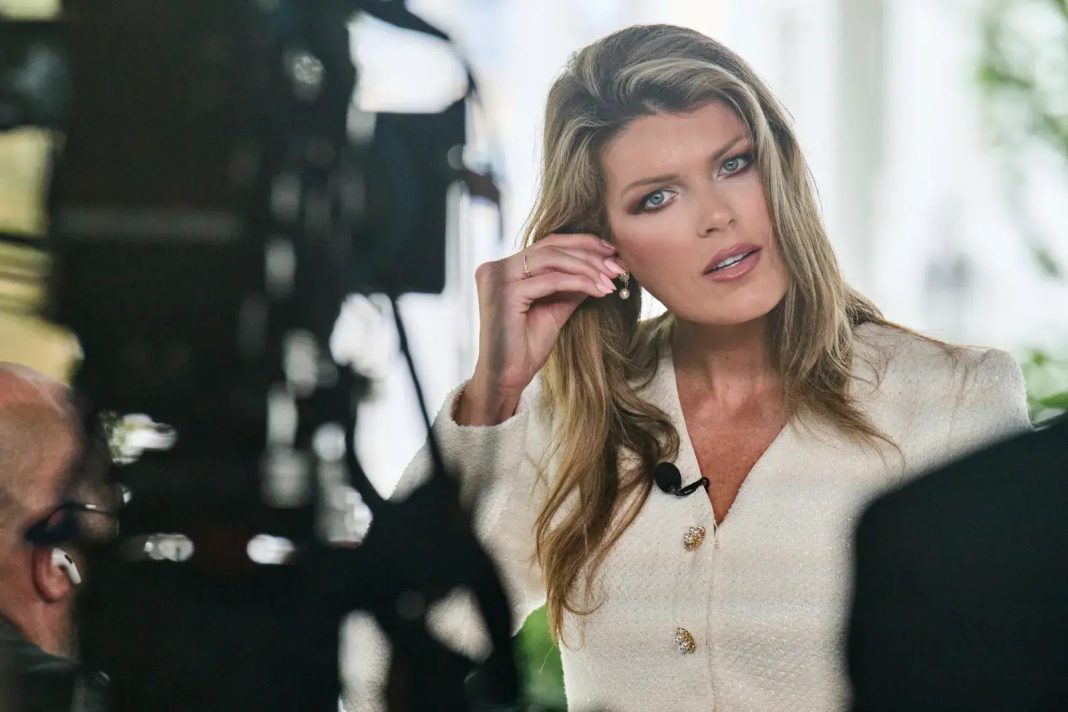

A storm is brewing inside one of America’s most powerful U.S. Attorney’s offices.
Lindsey Halligan — once a beauty-pageant contestant and insurance lawyer — has made national headlines after issuing a warning to the very prosecutors she oversees. The newly appointed U.S. Attorney for the Eastern District of Virginia said that anyone leaking confidential information from her office could face investigation and even prosecution.
The statement, circulated internally and later confirmed by multiple reports, has created a mix of confusion, fear, and political controversy inside the Department of Justice.
For many, it’s a highly unusual move for a newcomer with limited prosecutorial experience.
From Pageants to Prosecutions
Before her appointment, Halligan’s career followed an unconventional path. She practiced insurance-litigation law in Florida and participated in the Miss Colorado USA beauty pageant. When Donald Trump returned to the White House, Halligan — who had represented him in civil cases — was quickly elevated to one of the most powerful legal positions in the federal system.
Her new role places her in charge of investigations involving national-security, defense-contracting, and white-collar crimes, areas that normally require decades of courtroom experience.
Yet within months of taking office, Halligan became a lightning rod for debate.
Her name first made waves when she personally took control of politically sensitive prosecutions involving state officials who had publicly criticized Trump. Career prosecutors reportedly objected to the timing and direction of the cases, warning that it could appear politically motivated.
Grammy Winner D’Angelo Dies at 51: The Soulful Voice Who Redefined R&B
Sources familiar with internal discussions say that Halligan dismissed those concerns, insisting that “no one is above the law” and that the leaks undermining her authority would be met with full-scale inquiry.
That message — circulated in writing to every division of her office — effectively put her own staff on notice.
Warning That Shook Her Office
According to multiple insiders quoted by The Daily Beast, Halligan’s memo described leaks as “unauthorized disclosures” that would be “investigated to the maximum extent permitted by law.”
She reportedly demanded that senior prosecutors report any suspected leak immediately and cooperate fully with internal investigators.
While federal prosecutors routinely sign confidentiality agreements, Halligan’s tone and threat of criminal action are viewed as extreme.
Veteran officials say it could create a chilling effect on open communication, making it harder for attorneys to discuss cases even internally.
Observers also note that Halligan’s order followed a period of tension within her office, where some prosecutors privately questioned the political motivations behind new indictments targeting officials considered critics of the Trump administration.
Halligan, meanwhile, has defended her approach publicly, calling herself a “strict enforcer of accountability.” She maintains that stopping leaks is essential for protecting the integrity of ongoing investigations and ensuring “justice is blind.”
Still, critics argue that her warning may have been aimed at silencing dissent rather than preventing misconduct.
Chicago erupts after Kristi Noem and YouTuber Benny Johnson join live immigration raid near Walmart
Reactions and Wider Implications
The reaction from legal and political circles has been swift.
Some conservative commentators have praised Halligan for taking a “firm and fearless stand” against what they describe as a culture of leaks inside the Department of Justice. They see her actions as restoring order to a system they claim was “politicized long ago.”
However, career prosecutors and legal scholars warn that the situation sets a troubling precedent. The Department of Justice, they say, depends on internal transparency and mutual trust.
If subordinates fear being prosecuted by their own boss, that balance could collapse.
A former federal prosecutor told The Washington Post that such internal threats are “virtually unheard of,” adding that, “Leaking classified or grand-jury material is already a crime. The difference here is tone — the suggestion that loyalty is being enforced politically.”
Inside the legal community, Halligan’s swift rise from beauty pageants to the upper ranks of federal law enforcement has sparked fascination and skepticism alike. Some describe her story as a symbol of how politics can reshape the Justice Department, while others see her as a disciplined newcomer unfairly targeted because of her background.
Kristi Noem sparks outrage after comparing antifa to MS-13, Hamas, Hezbollah and ISIS
Public records show that Halligan previously had no criminal-law experience before joining the Trump legal team in 2022. Her sudden promotion to U.S. Attorney has raised eyebrows, given that such appointments usually go to senior prosecutors or career justice officials.
Despite the controversy, Halligan remains firm in her messaging. During a recent address at a law-enforcement summit in Arlington, Virginia, she stated:
“Every member of this office has a duty to uphold the law — and that includes following it within our walls. If you break the trust of this office, you will be held accountable.”
Her remarks were met with applause from some law-enforcement representatives, though several prosecutors reportedly left the room in silence.
The broader implications extend beyond one office. The conflict highlights growing political polarization within America’s justice system, where prosecutors once known for independence now find themselves navigating loyalty tests and ideological scrutiny.
As the story unfolds, Halligan’s leadership style — part courtroom authority, part political loyalty — continues to attract national attention. Whether her internal crackdown restores order or deepens division, one thing is certain: the Justice Department has rarely seen a debut quite like this.