

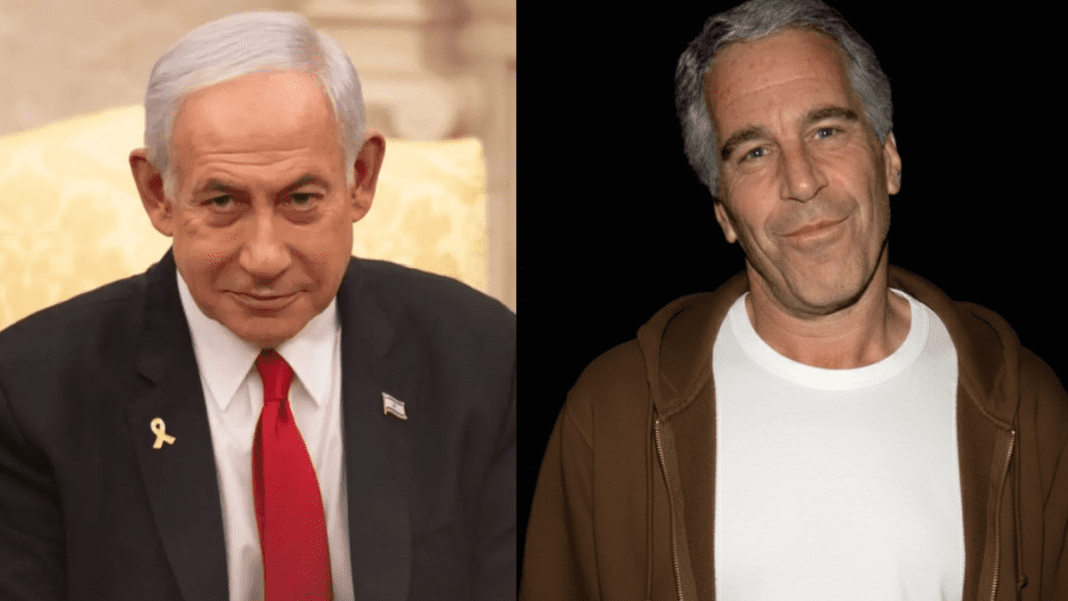

Fresh claims circulating online have sparked global attention after new details emerged from documents widely referred to as the “Epstein Files.” According to reports being shared across several platforms, the name of Israeli Prime Minister Benjamin Netanyahu allegedly appears more than 6,300 times within records connected to financier Jeffrey Epstein.
The information has rapidly spread across social media and discussion forums, prompting widespread debate about the nature of the references and the context in which the name appears in the files. Some reports also claim that certain photographs linked to the documents were blurred and that attempts may have been made to remove email communications connected to Epstein. These developments have drawn intense public interest as people examine the material being circulated online.
Emails and Photo Reference Spark Online Debate
One of the key claims focuses on an email exchange reportedly connected to the documents. The message is said to contain a subject line referencing a photograph taken during a visit involving Benjamin Netanyahu. According to the circulating information, the email reportedly mentioned a picture that had been found from a previous meeting.
The message was allegedly sent by Jacob Frenkel, who previously served as Governor of the Bank of Israel. In the email, he reportedly stated that he had found a photo from a visit involving Netanyahu. The message was said to have been addressed to Jesse Staley, a banker who has held leadership roles in major financial institutions.
Heated debate erupts after Epstein files release and claims Iran tensions shift attention
Netanyahu’s Blurred Images and Archived Documents
Another aspect of the reports involves photographs linked to the files connected with Jeffrey Epstein. According to the information being circulated, some images believed to be related to Benjamin Netanyahu appear blurred in the documents that have been shared publicly.
The reason behind the blurred photographs has not been clearly explained in the material circulating online. In many document releases, images are sometimes edited to protect identities or comply with privacy and legal guidelines. Because of this, observers say that blurred images alone do not necessarily indicate the reason for the change.
Newly released US documents expose Jeffrey Epstein’s role in Israel–Ivory Coast security talks
Despite this, the images have become one of the most discussed parts of the story. Social media users have shared cropped versions of the pictures while trying to understand what the original photographs may have shown. The blurred images, combined with the references to emails, have added to the mystery surrounding the documents.
Some posts claim that the photos were discovered while reviewing archived communications connected to Epstein’s network. According to these claims, the images were linked to meetings or visits that had been recorded in email conversations.
Growing Global Attention Around the Files
The documents connected to Jeffrey Epstein have remained a topic of international attention for years. Various batches of records have been released or discussed over time, often leading to renewed public interest and widespread online conversation. Because of this background, any new claims tied to the files tend to spread quickly.
In this case, the reports mentioning thousands of references to Benjamin Netanyahu quickly gained traction across digital platforms. Many users expressed shock at the number being cited, while others called for careful verification of the claims before drawing conclusions.
Peter Attia steps down from CBS News role after messages with Jeffrey Epstein surface
Experts who study large digital archives often explain that email systems automatically repeat names across long message threads. A single conversation that is forwarded multiple times can include the same names again and again, which may significantly increase the total number of mentions in a dataset.
Even so, the claims regarding the Epstein Files, the email exchange reportedly involving Jacob Frenkel and Jesse Staley, and the blurred photographs have continued to draw attention. Discussions about the documents remain active across social media platforms and news discussions as people continue reviewing the information that has surfaced online.