

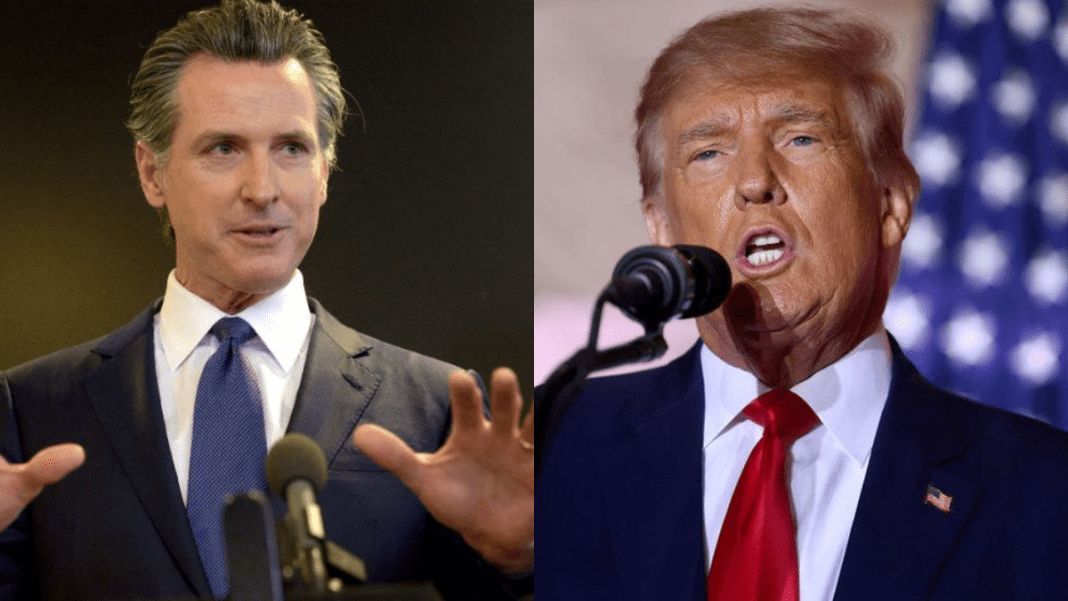
“Pay more and enjoy nothing”—Newsom torches Trump’s tariff push as costs for food, cars, and flights soar

California Governor Gavin Newsom has strongly criticized President Donald Trump’s latest tariff ideas, calling them a blow to everyday Americans.

California Governor Fires Back at Trump’s Tariff Plans

The governor expressed frustration over the rising costs of living caused by the president’s trade policies. Newsom highlighted that Americans are already paying higher prices for everyday items.

In a post on X, Newsom said, “You’re already paying more for eggs, coffee, toys, shoes, electricity, furniture, cars, and flights. Now, Trump wants to raise taxes to see the movies.” He added, “PAY MORE AND ENJOY NOTHING. That’s Donald Trump’s America.” The governor’s words reflect the anger felt by many who see rising costs affecting daily life.

The issue began after President Trump called Newsom “weak and incompetent” in a post on Truth Social. Trump criticized California for being “particularly hard hit” by what he sees as unfair practices in the movie industry. He also resurfaced his idea of imposing a 100% tariff on foreign-made films, aiming to protect American entertainment jobs.

Trump Targets Foreign-Made Films with New Tariff Threat

President Trump claimed that the U.S. movie industry has been “stolen” by other countries, comparing it to “stealing candy from a baby.” He argued that countries offering incentives for film production abroad are harming America’s entertainment business. According to Trump, these policies have hurt California the most, prompting him to propose a dramatic tariff plan.

Trump first mentioned the idea of a foreign-made film tariff in May. He said the U.S. entertainment industry is “dying to a very fast death” because filmmakers often shoot abroad to save money.

Newsom rejects $1 billion Trump demand tied to UCLA funding, calls it extortion threat

However, the president’s announcement left many questions unanswered. It remains unclear whether the 100% tariff would only affect films shot outside the U.S. or also target projects where part of the work, like editing or special effects, is done abroad.

The president presented the tariff plan as a solution to what he described as a “long time, never ending problem.” While details are scarce, Trump positioned the measure as a way to protect domestic jobs and ensure that Americans benefit from the country’s thriving movie industry.

Public Reactions Reflect Frustration Over Rising Costs

Newsom’s statement reflects a growing frustration among Americans who are feeling the pinch of higher prices. The governor listed a wide range of items already costing more due to tariffs and other economic pressures. From daily groceries to cars and flights, many households are struggling to keep up.

The proposed movie tariff adds to this frustration. Critics argue that Americans may face higher ticket prices if the plan is implemented. Newsom’s blunt message—“Pay more and enjoy nothing”—captures the sentiment of people who feel that economic policies are benefiting few while burdening many.

Newsom office doubles down on fascist label for Miller citing his political actions and views

This clash highlights a broader debate over Trump’s approach to trade and tariffs. While the president frames the measures as protection for American industries, opponents like Newsom see them as a direct hit to consumers’ wallets. The debate over the foreign-made film tariff is just one example of how economic decisions in Washington can spark nationwide conversations.

Newsom’s strong reaction comes as tariffs continue to influence prices for goods across the country. His post underscores the growing tension between federal trade policies and the realities of daily life for Americans.


Renuka Bangale
Renuka Bangale
Renuka is a distinguished Chartered Accountant and a Certified Digital Threats Analyst from Riskpro, renowned for her expertise in cybersecurity. With a deep understanding of cybercrimes, malware, cyber warfare, and espionage, she has established herself as an authority in the field. Renuka combines her financial acumen with advanced knowledge of digital threats to provide unparalleled insights into the evolving landscape of information security. Her analytical prowess enables her to dissect complex cyber incidents, offering clarity on risks and mitigation strategies. As a key contributor to Newsinterpretation’s information security category, Renuka delivers authoritative articles that educate and inform readers about emerging threats and best practices.

TOP 10 TRENDING ON NEWSINTERPRETATION

Cyber Attacks on Space Infrastructure: Satellites, GPS and the Ground Systems Behind Them

From the Viasat KA-SAT hack to GPS jamming over the Baltic, a research guide to how attackers target satellites, navigation signals and ground stations, and why it matters on Earth.

How AI Agents Are Used in Cyber Attacks: From Assisted Hacking to AI-Orchestrated Espionage

Attackers now use AI agents to scan networks, write exploits and run extortion campaigns. A research guide to documented cases, including the first reported AI-orchestrated espionage campaign, and what defenders should do.

Cyber Attacks on AI and LLMs: How Attackers Target Large Language Models

Prompt injection, data poisoning, model theft and jailbreaks: a research guide to how attackers target AI systems and large language models, with real cases and defences.

French Supermarket Refrigeration Cyberattack: How Hacking the Cold Chain Can Endanger Lives

In October 2026 attackers heated refrigeration cabinets in hundreds of French supermarkets to as much as 50°C. No one was hurt, but the attack shows how hacking the cold chain can endanger lives through fire, food poisoning and spoiled medicines.

Cyberattacks on Nuclear Facilities: Stuxnet, Kudankulam and the Limits of Air Gaps

Stuxnet, the Davis-Besse worm and malware at India’s Kudankulam plant: what they show about cyber risk at nuclear facilities and the limits of air gaps.

Triton: When Hackers Target the Safety Systems That Prevent Industrial Disasters

The 2017 Triton attack targeted the safety systems that prevent industrial disasters. What happened, who was charged, and how plants protect their last line of defence.

Cybersecurity Risks in Smart Cities: When Connected Infrastructure Fails

How connecting traffic control, emergency alerts and utilities concentrates cyber risk in cities, what the Dallas and Atlanta incidents showed, and what governments recommend.

Weaponized Drones: Hijacking, GPS Spoofing and Emerging Cyber Warfare Risks

How drones can be hijacked, jammed or misled by GPS spoofing, what researchers have demonstrated, and why governments treat drone fleets as a security risk.

Ransomware Attacks on Hospitals: How Healthcare Cyberattacks Put Patients at Risk

How ransomware against hospitals and their suppliers delays care and endangers patients, what the Düsseldorf and WannaCry cases show, and what research says about deaths.

Operational blunder exposes massive Russian cyber espionage attack on Ukrainian prosecutors

A major cyberattack has compromised the email accounts of...

Cyber Attacks on Space Infrastructure: Satellites, GPS and the Ground Systems Behind Them

From the Viasat KA-SAT hack to GPS jamming over the Baltic, a research guide to how attackers target satellites, navigation signals and ground stations, and why it matters on Earth.

French Supermarket Refrigeration Cyberattack: How Hacking the Cold Chain Can Endanger Lives

In October 2026 attackers heated refrigeration cabinets in hundreds of French supermarkets to as much as 50°C. No one was hurt, but the attack shows how hacking the cold chain can endanger lives through fire, food poisoning and spoiled medicines.

Cyberattacks on Nuclear Facilities: Stuxnet, Kudankulam and the Limits of Air Gaps

Stuxnet, the Davis-Besse worm and malware at India’s Kudankulam plant: what they show about cyber risk at nuclear facilities and the limits of air gaps.

Triton: When Hackers Target the Safety Systems That Prevent Industrial Disasters

The 2017 Triton attack targeted the safety systems that prevent industrial disasters. What happened, who was charged, and how plants protect their last line of defence.

Cybersecurity Risks in Smart Cities: When Connected Infrastructure Fails

How connecting traffic control, emergency alerts and utilities concentrates cyber risk in cities, what the Dallas and Atlanta incidents showed, and what governments recommend.

Ransomware Attacks on Hospitals: How Healthcare Cyberattacks Put Patients at Risk

How ransomware against hospitals and their suppliers delays care and endangers patients, what the Düsseldorf and WannaCry cases show, and what research says about deaths.

FBI warns of AVrecon malware targeting outdated routers linked to proxy based cybercrime

A serious cybersecurity warning has been issued regarding commonly...

Related Articles

Popular Categories
