

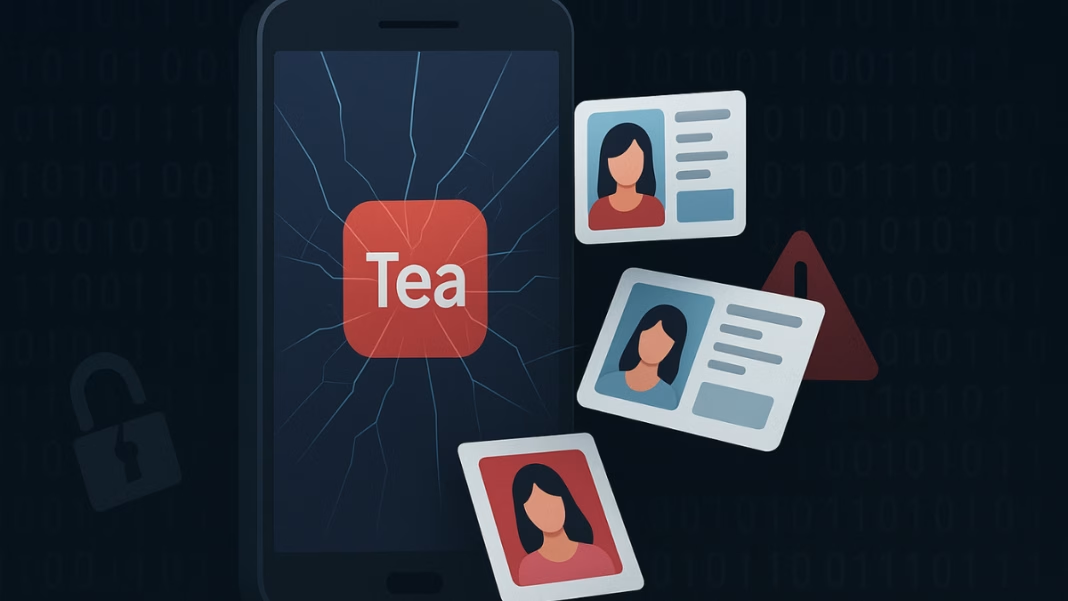
🔓 72,000 Images Stolen from Viral Women’s Dating App—ID Cards, Selfies Leaked Online

A popular app created to help women share their dating experiences and stay safe has been hit by a serious data breach. The app, called Tea, allows women to post feedback about men they’ve dated. It became famous for its goal of protecting women from unsafe or dishonest relationships. But now, that same app is at the center of a privacy nightmare.

On Friday, Tea confirmed that hackers broke into its system and stole over 72,000 images. Many of these images include sensitive selfies and ID cards that users uploaded to verify their accounts. This unexpected leak has raised concerns about the safety of users and the risks they now face.

Tea App Hack Exposes Private Images and ID Cards

The security breach happened early Friday, targeting an old storage system that was still holding files from users who joined the app before February last year. According to a spokesperson from Tea, the system stored thousands of personal images.

Out of the 72,000 stolen pictures, around 13,000 were verification images, such as selfies and government-issued IDs, including driver’s licenses. These ID images were used by the app to confirm user identities. The rest of the stolen content came from public posts, comments, or messages visible within the app.

💻 Digital Espionage Crisis—China-Linked Hackers Slip Past Microsoft Defenses, Steal Encryption Keys

The stolen images were later found shared online, including on the well-known but controversial site 4Chan. This platform is infamous for spreading harmful content, and now, screenshots of Tea users’ IDs have started to appear there and on other websites.

Tea says that no email addresses or phone numbers were accessed. However, privacy experts warn that the leak of ID photos alone is extremely dangerous and could put thousands of users at risk.

Real-World Risks for Users After Leak

Security experts are warning that this breach could lead to serious consequences. Criminals can use the leaked ID cards to commit identity theft, track people online, or even stalk them in real life.

When an ID card is leaked with a face photo, it becomes easier for bad actors to search for more details about the person. They may try to connect that information to social media accounts or other online platforms.

Even without access to phone numbers or email addresses, just having ID documents in the wrong hands creates a huge privacy risk. Victims may now face the danger of being impersonated or having their personal data misused.

🔓 Australia’s political inboxes hacked — years of classified documents now in hacker hands

Tea’s creators designed it as a safe space where women could connect, warn others, and feel protected. But the hack shattered that sense of security. Now, many users wonder how the company handled their personal data and why it stored it in an outdated system.

Tea App’s Rise and Controversy

Tea has become one of the most talked-about apps in recent weeks. It quickly went viral on social media, especially for its bold idea of allowing women to share red flags and stories about men they dated.

This week, it even became the top free app in Apple’s Lifestyle category. Tea’s website claims it has built a community of over 1.6 million women who use the platform to give dating advice and stay informed.

But as the app’s popularity has grown, so has criticism. Some people argue that allowing users to post about others—sometimes including names and photos—creates ethical and legal problems. Critics have raised concerns about false claims, defamation, and now, data safety.

The recent hack has added fuel to the fire. Users now question how the app protects sensitive information and why it stored private ID documents in a vulnerable system.

Tea says it has launched an internal investigation and is working to fix the issue. However, the breach has already caused damage to spread, and it has shaken the app’s promise of a “safe sisterhood.”

T U Deshmukh
T U Deshmukh
T U Deshmukh is the leading voice on the subject of Jobs, AI, Data and layoffs and she regularly contributes a column on Jobs for Newsinterpretation.

TOP 10 TRENDING ON NEWSINTERPRETATION

Cyber Attacks on Space Infrastructure: Satellites, GPS and the Ground Systems Behind Them

From the Viasat KA-SAT hack to GPS jamming over the Baltic, a research guide to how attackers target satellites, navigation signals and ground stations, and why it matters on Earth.

How AI Agents Are Used in Cyber Attacks: From Assisted Hacking to AI-Orchestrated Espionage

Attackers now use AI agents to scan networks, write exploits and run extortion campaigns. A research guide to documented cases, including the first reported AI-orchestrated espionage campaign, and what defenders should do.

Cyber Attacks on AI and LLMs: How Attackers Target Large Language Models

Prompt injection, data poisoning, model theft and jailbreaks: a research guide to how attackers target AI systems and large language models, with real cases and defences.

French Supermarket Refrigeration Cyberattack: How Hacking the Cold Chain Can Endanger Lives

In October 2026 attackers heated refrigeration cabinets in hundreds of French supermarkets to as much as 50°C. No one was hurt, but the attack shows how hacking the cold chain can endanger lives through fire, food poisoning and spoiled medicines.

Cyberattacks on Nuclear Facilities: Stuxnet, Kudankulam and the Limits of Air Gaps

Stuxnet, the Davis-Besse worm and malware at India’s Kudankulam plant: what they show about cyber risk at nuclear facilities and the limits of air gaps.

Triton: When Hackers Target the Safety Systems That Prevent Industrial Disasters

The 2017 Triton attack targeted the safety systems that prevent industrial disasters. What happened, who was charged, and how plants protect their last line of defence.

Cybersecurity Risks in Smart Cities: When Connected Infrastructure Fails

How connecting traffic control, emergency alerts and utilities concentrates cyber risk in cities, what the Dallas and Atlanta incidents showed, and what governments recommend.

Weaponized Drones: Hijacking, GPS Spoofing and Emerging Cyber Warfare Risks

How drones can be hijacked, jammed or misled by GPS spoofing, what researchers have demonstrated, and why governments treat drone fleets as a security risk.

Ransomware Attacks on Hospitals: How Healthcare Cyberattacks Put Patients at Risk

How ransomware against hospitals and their suppliers delays care and endangers patients, what the Düsseldorf and WannaCry cases show, and what research says about deaths.

Operational blunder exposes massive Russian cyber espionage attack on Ukrainian prosecutors

A major cyberattack has compromised the email accounts of...

Cyber Attacks on Space Infrastructure: Satellites, GPS and the Ground Systems Behind Them

From the Viasat KA-SAT hack to GPS jamming over the Baltic, a research guide to how attackers target satellites, navigation signals and ground stations, and why it matters on Earth.

French Supermarket Refrigeration Cyberattack: How Hacking the Cold Chain Can Endanger Lives

In October 2026 attackers heated refrigeration cabinets in hundreds of French supermarkets to as much as 50°C. No one was hurt, but the attack shows how hacking the cold chain can endanger lives through fire, food poisoning and spoiled medicines.

Cyberattacks on Nuclear Facilities: Stuxnet, Kudankulam and the Limits of Air Gaps

Stuxnet, the Davis-Besse worm and malware at India’s Kudankulam plant: what they show about cyber risk at nuclear facilities and the limits of air gaps.

Triton: When Hackers Target the Safety Systems That Prevent Industrial Disasters

The 2017 Triton attack targeted the safety systems that prevent industrial disasters. What happened, who was charged, and how plants protect their last line of defence.

Cybersecurity Risks in Smart Cities: When Connected Infrastructure Fails

How connecting traffic control, emergency alerts and utilities concentrates cyber risk in cities, what the Dallas and Atlanta incidents showed, and what governments recommend.

Ransomware Attacks on Hospitals: How Healthcare Cyberattacks Put Patients at Risk

How ransomware against hospitals and their suppliers delays care and endangers patients, what the Düsseldorf and WannaCry cases show, and what research says about deaths.

FBI warns of AVrecon malware targeting outdated routers linked to proxy based cybercrime

A serious cybersecurity warning has been issued regarding commonly...

Related Articles

Popular Categories
