

42 million Americans in limbo as Trump administration fights to freeze SNAP payments

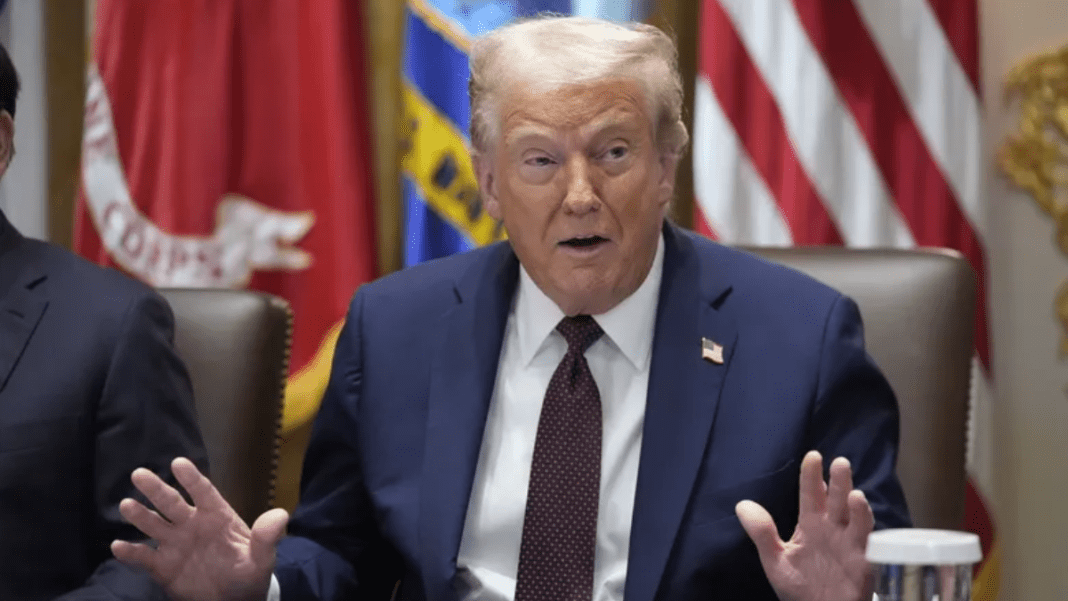
President Donald Trump’s administration has again turned to the Supreme Court, asking it to keep full payments from the Supplemental Nutrition Assistance Program (SNAP) frozen while the government remains shut down. The request comes as millions of Americans struggle to buy food and rely on the program that helps about 42 million people each month.

SNAP benefits have been caught in a legal back-and-forth during the shutdown. Lower courts, including rulings from Judge John J. McConnell in Rhode Island, ordered the government to keep full benefits flowing. The administration appealed, saying those rulings interfere with congressional negotiations over government funding.

Solicitor General D. John Sauer, representing the administration, told the Supreme Court that while the funding lapse is tragic, judges should not control spending decisions. The high court, where Justice Ketanji Brown Jackson is handling emergency matters, is expected to rule soon.

The Senate on Monday passed a compromise package to reopen the government and refill SNAP funds. The measure now goes to the House for consideration.

Sanders explodes over Trump’s shutdown, accuses Bezos and Musk of benefiting from ‘rigged’ tax breaks

Millions Wait as States Struggle

The shutdown has caused confusion across the country. Some states, including Hawaii and New Jersey, sent out full SNAP benefits after Judge McConnell’s order. Others, such as Nebraska and West Virginia, held off while waiting for new instructions from the U.S. Department of Agriculture (USDA), which oversees the program.

The delays have left families desperate. Brandi Johnson, 48, from St. Louis, said she had only $20 left in her SNAP account and had been skipping meals so her three teenage children could eat. She is also caring for her infant granddaughter, who has food allergies, and her elderly mother. Johnson said food pantries have offered little help as many restrict aid by ZIP code or prioritize the elderly.

Millions of people in at least a dozen states, mostly with Democratic governors, received full SNAP payments before Justice Jackson paused Judge McConnell’s order. Many others have yet to receive their benefits for November. Some states, including Texas, have issued partial payments as they wait for further guidance.

Diane Yentel, head of the National Council of Nonprofits, said the uncertainty has deepened suffering for children, seniors, and working families. She said nonprofits are struggling to meet growing demand as government delays continue.

Kamala Harris rallies Democrats during shutdown — ‘we won’t trade healthcare for tax breaks’

Confusion and Clashes Deepen

The USDA’s changing instructions have added to the chaos. After Judge McConnell ordered full payments, the department told states to move ahead, only to later send a message telling them to “undo” any full benefits issued. Judge Indira Talwani, overseeing a related case in Boston, said the shifting orders were confusing, especially since one came just a day after the opposite message.

In Wisconsin, which quickly issued full benefits, federal reimbursement was frozen, leaving the state’s SNAP account nearly empty. Officials warned that stores might not be repaid for food sold to SNAP users. New York Attorney General Letitia James said some cardholders were being turned away by stores, while New Jersey Attorney General Matt Platkin called the administration’s effort “the most heinous thing I’ve ever seen in public life.”

A federal appeals court in Boston, led by Judge Julie Rikleman, left the full benefits order in place but criticized the government for being unprepared. She said the record showed the administration “sat on its hands” while people went without food.

Federal lawyer Tyler Becker told Judge Talwani that the USDA’s order was aimed at states and not directly at beneficiaries. Talwani said she would issue a full written order soon.

As of Monday, SNAP payments remain uncertain, and the legal fight continues. States are unsure whether they can or should release full monthly benefits while the Supreme Court weighs the Trump administration’s appeal.


T U Deshmukh
T U Deshmukh
T U Deshmukh is the leading voice on the subject of Jobs, AI, Data and layoffs and she regularly contributes a column on Jobs for Newsinterpretation.

TOP 10 TRENDING ON NEWSINTERPRETATION

Cyber Attacks on Space Infrastructure: Satellites, GPS and the Ground Systems Behind Them

From the Viasat KA-SAT hack to GPS jamming over the Baltic, a research guide to how attackers target satellites, navigation signals and ground stations, and why it matters on Earth.

How AI Agents Are Used in Cyber Attacks: From Assisted Hacking to AI-Orchestrated Espionage

Attackers now use AI agents to scan networks, write exploits and run extortion campaigns. A research guide to documented cases, including the first reported AI-orchestrated espionage campaign, and what defenders should do.

Cyber Attacks on AI and LLMs: How Attackers Target Large Language Models

Prompt injection, data poisoning, model theft and jailbreaks: a research guide to how attackers target AI systems and large language models, with real cases and defences.

French Supermarket Refrigeration Cyberattack: How Hacking the Cold Chain Can Endanger Lives

In October 2026 attackers heated refrigeration cabinets in hundreds of French supermarkets to as much as 50°C. No one was hurt, but the attack shows how hacking the cold chain can endanger lives through fire, food poisoning and spoiled medicines.

Cyberattacks on Nuclear Facilities: Stuxnet, Kudankulam and the Limits of Air Gaps

Stuxnet, the Davis-Besse worm and malware at India’s Kudankulam plant: what they show about cyber risk at nuclear facilities and the limits of air gaps.

Triton: When Hackers Target the Safety Systems That Prevent Industrial Disasters

The 2017 Triton attack targeted the safety systems that prevent industrial disasters. What happened, who was charged, and how plants protect their last line of defence.

Cybersecurity Risks in Smart Cities: When Connected Infrastructure Fails

How connecting traffic control, emergency alerts and utilities concentrates cyber risk in cities, what the Dallas and Atlanta incidents showed, and what governments recommend.

Weaponized Drones: Hijacking, GPS Spoofing and Emerging Cyber Warfare Risks

How drones can be hijacked, jammed or misled by GPS spoofing, what researchers have demonstrated, and why governments treat drone fleets as a security risk.

Ransomware Attacks on Hospitals: How Healthcare Cyberattacks Put Patients at Risk

How ransomware against hospitals and their suppliers delays care and endangers patients, what the Düsseldorf and WannaCry cases show, and what research says about deaths.

Operational blunder exposes massive Russian cyber espionage attack on Ukrainian prosecutors

A major cyberattack has compromised the email accounts of...

Cyber Attacks on Space Infrastructure: Satellites, GPS and the Ground Systems Behind Them

From the Viasat KA-SAT hack to GPS jamming over the Baltic, a research guide to how attackers target satellites, navigation signals and ground stations, and why it matters on Earth.

French Supermarket Refrigeration Cyberattack: How Hacking the Cold Chain Can Endanger Lives

In October 2026 attackers heated refrigeration cabinets in hundreds of French supermarkets to as much as 50°C. No one was hurt, but the attack shows how hacking the cold chain can endanger lives through fire, food poisoning and spoiled medicines.

Cyberattacks on Nuclear Facilities: Stuxnet, Kudankulam and the Limits of Air Gaps

Stuxnet, the Davis-Besse worm and malware at India’s Kudankulam plant: what they show about cyber risk at nuclear facilities and the limits of air gaps.

Triton: When Hackers Target the Safety Systems That Prevent Industrial Disasters

The 2017 Triton attack targeted the safety systems that prevent industrial disasters. What happened, who was charged, and how plants protect their last line of defence.

Cybersecurity Risks in Smart Cities: When Connected Infrastructure Fails

How connecting traffic control, emergency alerts and utilities concentrates cyber risk in cities, what the Dallas and Atlanta incidents showed, and what governments recommend.

Ransomware Attacks on Hospitals: How Healthcare Cyberattacks Put Patients at Risk

How ransomware against hospitals and their suppliers delays care and endangers patients, what the Düsseldorf and WannaCry cases show, and what research says about deaths.

FBI warns of AVrecon malware targeting outdated routers linked to proxy based cybercrime

A serious cybersecurity warning has been issued regarding commonly...

Related Articles

Popular Categories
