

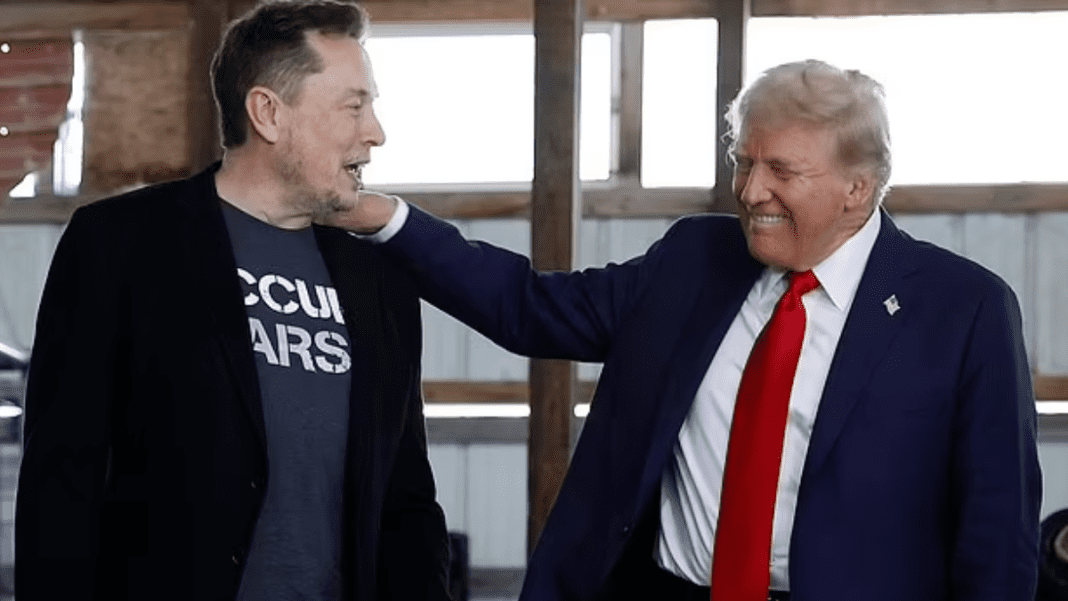
Trump describes Musk as super genius with problems during interview on strained friendship

A Friendship That Turned Into a Rift

A once strong friendship between two of the world’s most powerful men Donald Trump and Elon Musk has now turned into a public split. The former allies were once often seen praising each other, but things changed after a clash over a massive government spending bill.

Elon Musk strongly opposed the bill, calling it wasteful and damaging. He even went as far as to describe it online as a “disgusting abomination.” This direct criticism soon created a major fallout. The rift deepened further when he claimed on his social media platform that the president’s name appeared in certain controversial files. That post was quickly deleted, but the damage was done.

From that moment, their relationship appeared broken. The businessman left his role in the administration and began hinting at his own political moves, while the president Trump distanced himself and warned of consequences if the Musk supported rival candidates.

Trump Calls Musk a ‘Super-Genius’ With ‘Problems’

During a recent radio interview, the Trump was asked about his relationship with Elon Musk. In response, he described the entrepreneur as someone with “80 percent super-genius” and “20 percent problems.”

Trump explained that while Musk is highly intelligent and innovative, he still has flaws that have caused friction. He added that the billionaire had “gone off the reservation incorrectly” but hinted that he regretted his actions.

Cyberattack Catastrophe: How Hackers Can Endanger Human Lives ?

Despite the differences, the president spoke warmly at times. He noted that he has always liked the billionaire and even now still considers him a “good person.” According to his comments, he believes that if the businessman can work through his issues, he will be “great.”

The interview also touched on the possibility of the entrepreneur returning to align with the political party the president leads. While not directly saying whether the two have been in contact, Trump suggested that his former ally does not really have another option. He dismissed the idea that the businessman could support the opposing party, calling them “radical left lunatics.”

Billionaire’s Political Moves Stir More Tension

The rift between the two figures grew more intense after the businessman hinted at starting his own political party. He used his platform to ask followers if they wanted a new choice outside of the two-party system. On July 4, he announced the launch of the “America Party” after his followers voted for the name.

In a post, he argued that the current system does not truly represent the people and instead acts as a “uniparty” that wastes money and ignores public interests. The announcement grabbed attention, but his platform has been quiet about the party since early July. Reports suggested that he may have put the idea on hold.

At the same time, speculation grew about whether he might back another rising figure in future elections. This only fueled talk of how far the split between him and the president has gone.

Gavin Newsom mocks Melania Trump with AI Vanity Fair cover calling himself “The American King”

Still, Musk’s earlier support cannot be ignored. He had donated over $250 million to the president’s campaign in the past, showing the depth of their earlier bond. But their falling out over spending, politics, and personal remarks has left that relationship in an uncertain place.

The comments made in the recent radio interview mark a sharp change from earlier statements. Just a few months ago, the president said he believed the friendship was “over.” Now, while still critical, his words show a more mixed picture—acknowledging the businessman’s genius while also pointing to what he sees as serious problems.


Renuka Bangale
Renuka Bangale
Renuka is a distinguished Chartered Accountant and a Certified Digital Threats Analyst from Riskpro, renowned for her expertise in cybersecurity. With a deep understanding of cybercrimes, malware, cyber warfare, and espionage, she has established herself as an authority in the field. Renuka combines her financial acumen with advanced knowledge of digital threats to provide unparalleled insights into the evolving landscape of information security. Her analytical prowess enables her to dissect complex cyber incidents, offering clarity on risks and mitigation strategies. As a key contributor to Newsinterpretation’s information security category, Renuka delivers authoritative articles that educate and inform readers about emerging threats and best practices.

TOP 10 TRENDING ON NEWSINTERPRETATION

Cyber Attacks on Space Infrastructure: Satellites, GPS and the Ground Systems Behind Them

From the Viasat KA-SAT hack to GPS jamming over the Baltic, a research guide to how attackers target satellites, navigation signals and ground stations, and why it matters on Earth.

How AI Agents Are Used in Cyber Attacks: From Assisted Hacking to AI-Orchestrated Espionage

Attackers now use AI agents to scan networks, write exploits and run extortion campaigns. A research guide to documented cases, including the first reported AI-orchestrated espionage campaign, and what defenders should do.

Cyber Attacks on AI and LLMs: How Attackers Target Large Language Models

Prompt injection, data poisoning, model theft and jailbreaks: a research guide to how attackers target AI systems and large language models, with real cases and defences.

French Supermarket Refrigeration Cyberattack: How Hacking the Cold Chain Can Endanger Lives

In October 2026 attackers heated refrigeration cabinets in hundreds of French supermarkets to as much as 50°C. No one was hurt, but the attack shows how hacking the cold chain can endanger lives through fire, food poisoning and spoiled medicines.

Cyberattacks on Nuclear Facilities: Stuxnet, Kudankulam and the Limits of Air Gaps

Stuxnet, the Davis-Besse worm and malware at India’s Kudankulam plant: what they show about cyber risk at nuclear facilities and the limits of air gaps.

Triton: When Hackers Target the Safety Systems That Prevent Industrial Disasters

The 2017 Triton attack targeted the safety systems that prevent industrial disasters. What happened, who was charged, and how plants protect their last line of defence.

Cybersecurity Risks in Smart Cities: When Connected Infrastructure Fails

How connecting traffic control, emergency alerts and utilities concentrates cyber risk in cities, what the Dallas and Atlanta incidents showed, and what governments recommend.

Weaponized Drones: Hijacking, GPS Spoofing and Emerging Cyber Warfare Risks

How drones can be hijacked, jammed or misled by GPS spoofing, what researchers have demonstrated, and why governments treat drone fleets as a security risk.

Ransomware Attacks on Hospitals: How Healthcare Cyberattacks Put Patients at Risk

How ransomware against hospitals and their suppliers delays care and endangers patients, what the Düsseldorf and WannaCry cases show, and what research says about deaths.

Operational blunder exposes massive Russian cyber espionage attack on Ukrainian prosecutors

A major cyberattack has compromised the email accounts of...

Cyber Attacks on Space Infrastructure: Satellites, GPS and the Ground Systems Behind Them

From the Viasat KA-SAT hack to GPS jamming over the Baltic, a research guide to how attackers target satellites, navigation signals and ground stations, and why it matters on Earth.

French Supermarket Refrigeration Cyberattack: How Hacking the Cold Chain Can Endanger Lives

In October 2026 attackers heated refrigeration cabinets in hundreds of French supermarkets to as much as 50°C. No one was hurt, but the attack shows how hacking the cold chain can endanger lives through fire, food poisoning and spoiled medicines.

Cyberattacks on Nuclear Facilities: Stuxnet, Kudankulam and the Limits of Air Gaps

Stuxnet, the Davis-Besse worm and malware at India’s Kudankulam plant: what they show about cyber risk at nuclear facilities and the limits of air gaps.

Triton: When Hackers Target the Safety Systems That Prevent Industrial Disasters

The 2017 Triton attack targeted the safety systems that prevent industrial disasters. What happened, who was charged, and how plants protect their last line of defence.

Cybersecurity Risks in Smart Cities: When Connected Infrastructure Fails

How connecting traffic control, emergency alerts and utilities concentrates cyber risk in cities, what the Dallas and Atlanta incidents showed, and what governments recommend.

Ransomware Attacks on Hospitals: How Healthcare Cyberattacks Put Patients at Risk

How ransomware against hospitals and their suppliers delays care and endangers patients, what the Düsseldorf and WannaCry cases show, and what research says about deaths.

FBI warns of AVrecon malware targeting outdated routers linked to proxy based cybercrime

A serious cybersecurity warning has been issued regarding commonly...

Related Articles

Popular Categories
