

Newsom’s science-first pact: California, Oregon, Washington align on vaccine safety

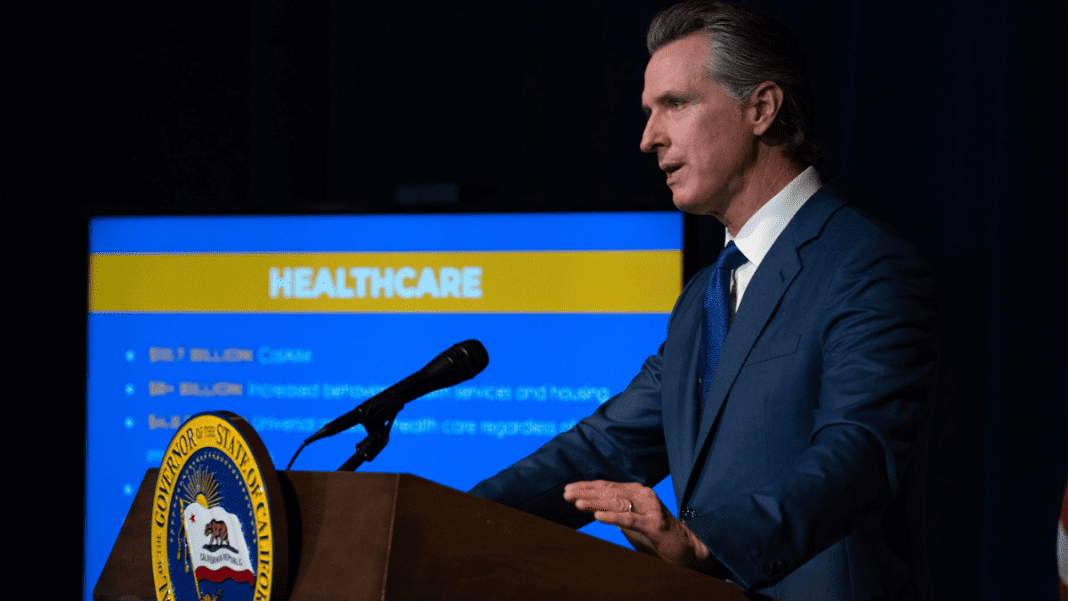
California, Oregon, and Washington have announced the creation of a new West Coast Health Alliance.

States step in to protect science-based guidance

The move comes after growing concerns that the nation’s main public health agency has lost independence and credibility. Leaders of the three states said their partnership will ensure people continue to receive health guidance that is based on science, not politics.

The alliance will focus on vaccine safety and clear communication with residents. The three states will work together to provide unified recommendations on who should get vaccines and why they are important. By standing together, they hope to fill the gap left by the weakened federal system and prevent public confusion.

Health officials stressed that vaccines remain one of the most reliable tools in modern medicine. They said that when guidance is inconsistent or appears political, trust breaks down at the exact time it is needed most. The new partnership aims to restore confidence in vaccines by providing residents with evidence-based recommendations that are easy to understand.

Why the West Coast is acting now

For decades, the CDC was considered a trusted source for protecting people from dangerous diseases. But recent actions at the national level have created widespread worry. The removal of experienced health experts, reduced transparency, and a shift away from data-driven advice have left the public uncertain.

Without clear federal direction, vaccine makers struggle to plan production. Health care providers also find it harder to explain consistent care plans to patients. Families are left unsure about vaccine access and safety. Officials in California, Oregon, and Washington said this uncertainty puts lives at risk.

How Cyber Attacks on Industrial Control Systems Can Endanger Lives ?

The new alliance builds on several shared principles, including safety, transparency, trust, and access. Leaders say the partnership ensures that scientists and clinicians with years of experience guide health decisions. The three states will also align their immunization recommendations with respected medical organizations to maintain credibility.

Importantly, the states confirmed that Tribal sovereignty will be respected. Tribal governments will keep full authority over their own vaccine programs. At the same time, cooperation will continue so that all communities can access consistent, evidence-based health information.

How the alliance will work

The West Coast Health Alliance will coordinate recommendations so residents receive clear guidance, no matter where they live along the coast. Health officials said prevention remains the core mission: preventing illness, preventing the spread of disease, and preventing early deaths.

The alliance will also provide stronger communication around vaccines. Residents can expect messages that are transparent and science-based, rather than confusing or influenced by ideology. Officials emphasized that public health is about protecting lives through prevention, not about politics.

In the coming weeks, the three states will finalize a set of shared principles to strengthen vaccine confidence. While each state will continue to follow its own laws and community needs, the alliance ensures that the foundation of all decisions will be rooted in science.

AI startup Anthropic confirms cybercriminals used its Claude AI Chatbots to Launch Phishing and Ransom Attacks

Officials said they are standing firmly with trusted medical professionals and respected health organizations.

The decision to form this alliance is also a direct response to the removal of the CDC’s long-standing immunization advisory committee earlier this summer. Without that independent panel of experts, many states fear there is no longer a reliable national framework to follow. The alliance intends to fill this gap by providing consistent, science-led direction for its residents.

Health leaders warned that dismantling long-standing public health structures has created a dangerous vacuum. They said that if guidance is unclear, the entire health system struggles — from vaccine producers to clinics to families. By stepping in now, the West Coast states hope to ensure that people continue to have access to safe and trusted health advice.


Renuka Bangale
Renuka Bangale
Renuka is a distinguished Chartered Accountant and a Certified Digital Threats Analyst from Riskpro, renowned for her expertise in cybersecurity. With a deep understanding of cybercrimes, malware, cyber warfare, and espionage, she has established herself as an authority in the field. Renuka combines her financial acumen with advanced knowledge of digital threats to provide unparalleled insights into the evolving landscape of information security. Her analytical prowess enables her to dissect complex cyber incidents, offering clarity on risks and mitigation strategies. As a key contributor to Newsinterpretation’s information security category, Renuka delivers authoritative articles that educate and inform readers about emerging threats and best practices.

TOP 10 TRENDING ON NEWSINTERPRETATION

Cyber Attacks on Space Infrastructure: Satellites, GPS and the Ground Systems Behind Them

From the Viasat KA-SAT hack to GPS jamming over the Baltic, a research guide to how attackers target satellites, navigation signals and ground stations, and why it matters on Earth.

How AI Agents Are Used in Cyber Attacks: From Assisted Hacking to AI-Orchestrated Espionage

Attackers now use AI agents to scan networks, write exploits and run extortion campaigns. A research guide to documented cases, including the first reported AI-orchestrated espionage campaign, and what defenders should do.

Cyber Attacks on AI and LLMs: How Attackers Target Large Language Models

Prompt injection, data poisoning, model theft and jailbreaks: a research guide to how attackers target AI systems and large language models, with real cases and defences.

French Supermarket Refrigeration Cyberattack: How Hacking the Cold Chain Can Endanger Lives

In October 2026 attackers heated refrigeration cabinets in hundreds of French supermarkets to as much as 50°C. No one was hurt, but the attack shows how hacking the cold chain can endanger lives through fire, food poisoning and spoiled medicines.

Cyberattacks on Nuclear Facilities: Stuxnet, Kudankulam and the Limits of Air Gaps

Stuxnet, the Davis-Besse worm and malware at India’s Kudankulam plant: what they show about cyber risk at nuclear facilities and the limits of air gaps.

Triton: When Hackers Target the Safety Systems That Prevent Industrial Disasters

The 2017 Triton attack targeted the safety systems that prevent industrial disasters. What happened, who was charged, and how plants protect their last line of defence.

Cybersecurity Risks in Smart Cities: When Connected Infrastructure Fails

How connecting traffic control, emergency alerts and utilities concentrates cyber risk in cities, what the Dallas and Atlanta incidents showed, and what governments recommend.

Weaponized Drones: Hijacking, GPS Spoofing and Emerging Cyber Warfare Risks

How drones can be hijacked, jammed or misled by GPS spoofing, what researchers have demonstrated, and why governments treat drone fleets as a security risk.

Ransomware Attacks on Hospitals: How Healthcare Cyberattacks Put Patients at Risk

How ransomware against hospitals and their suppliers delays care and endangers patients, what the Düsseldorf and WannaCry cases show, and what research says about deaths.

Operational blunder exposes massive Russian cyber espionage attack on Ukrainian prosecutors

A major cyberattack has compromised the email accounts of...

Cyber Attacks on Space Infrastructure: Satellites, GPS and the Ground Systems Behind Them

From the Viasat KA-SAT hack to GPS jamming over the Baltic, a research guide to how attackers target satellites, navigation signals and ground stations, and why it matters on Earth.

French Supermarket Refrigeration Cyberattack: How Hacking the Cold Chain Can Endanger Lives

In October 2026 attackers heated refrigeration cabinets in hundreds of French supermarkets to as much as 50°C. No one was hurt, but the attack shows how hacking the cold chain can endanger lives through fire, food poisoning and spoiled medicines.

Cyberattacks on Nuclear Facilities: Stuxnet, Kudankulam and the Limits of Air Gaps

Stuxnet, the Davis-Besse worm and malware at India’s Kudankulam plant: what they show about cyber risk at nuclear facilities and the limits of air gaps.

Triton: When Hackers Target the Safety Systems That Prevent Industrial Disasters

The 2017 Triton attack targeted the safety systems that prevent industrial disasters. What happened, who was charged, and how plants protect their last line of defence.

Cybersecurity Risks in Smart Cities: When Connected Infrastructure Fails

How connecting traffic control, emergency alerts and utilities concentrates cyber risk in cities, what the Dallas and Atlanta incidents showed, and what governments recommend.

Ransomware Attacks on Hospitals: How Healthcare Cyberattacks Put Patients at Risk

How ransomware against hospitals and their suppliers delays care and endangers patients, what the Düsseldorf and WannaCry cases show, and what research says about deaths.

FBI warns of AVrecon malware targeting outdated routers linked to proxy based cybercrime

A serious cybersecurity warning has been issued regarding commonly...

Related Articles

Popular Categories
