

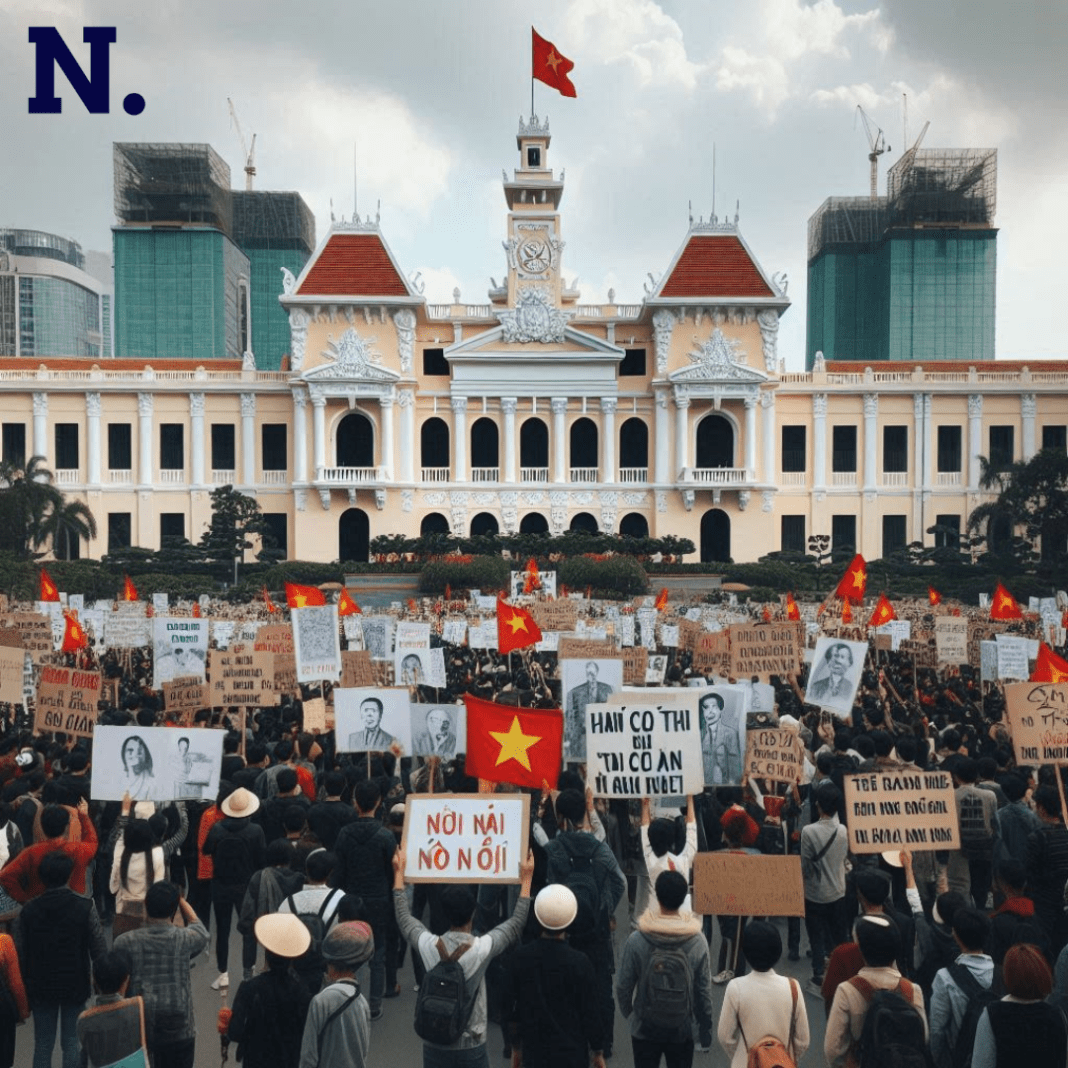
U.S Criticises Vietnam for welcoming putin Amid war Crimes Concerns

Vietnam recent decision to welcome Russian President Vladimir Putin has sparked controversy and drawn criticism from the United States. Amid growing concerns over alleged war crimes committed by Russian forces in Ukraine, Vietnam’s reception of Putin has raised eyebrows internationally. This article explores the implications of Vietnam’s gesture, the U.S. response, and the broader geopolitical dynamics at play.

Vietnam Welcome: Diplomacy or Disregard?

Vietnam’s decision to host Vladimir Putin amidst global condemnation of Russia’s actions in Ukraine reflects a complex balancing act in international diplomacy. By welcoming the Russian leader, Vietnam asserts its sovereignty and autonomy in conducting foreign affairs, distinct from Western-led sanctions and criticisms aimed at Moscow. This move underscores Vietnam’s pragmatic approach to diplomacy, prioritising national interests and regional stability over alignment with Western narratives on human rights and international law.

Historically, Vietnam has maintained a nuanced foreign policy that seeks to maximise strategic partnerships while avoiding entanglements in broader geopolitical conflicts. Hosting Putin could be interpreted as a strategic manoeuvre to bolster economic ties and military cooperation with Russia, which remains a significant arms supplier and investor in Southeast Asia. Moreover, Vietnam’s actions may signal a broader geopolitical strategy to diversify its diplomatic relations. Beyond traditional Western alliances, enhancing its leverage in regional dynamics where Russia plays a crucial role.

Putin’s visit to Vietnam U.S. Response

Putin forces in Ukraine. Reports of civilian casualties, indiscriminate shelling, and attacks Putin’s visit to Vietnam has been overshadowed by allegations of war crimes committed by Russian critical infrastructure. Have raised serious concerns among the international community. The timing of Putin’s visit, amidst these allegations, has drawn sharp criticism from the United States and other Western powers.

The United States has been quick to condemn Vietnam’s decision to welcome Putin, citing concerns over Russia’s actions in Ukraine. In a statement issued by the White House, President expressed disappointment with Vietnam’s disregard for human rights and democratic principles. The U.S. has warned of potential diplomatic consequences for countries that align themselves with Russia amidst ongoing conflicts.

Russia-Vietnam Relationship: Geopolitical Implications

Vietnam’s reception of Putin highlights the complex web of geopolitical alliances and interests in the Asia-Pacific region. As tensions between Russia and the West escalate, countries like Vietnam find themselves caught between competing powers. For Vietnam, balancing relations with both the U.S. and Russia is essential. For maintaining stability and security in the region. However, the decision to welcome Putin risks alienating Western allies and undermining Vietnam’s standing on the international stage.

Putin’s visit to Vietnam underscores the longstanding ties between the two countries. Historically, Russia has been a key supporter of Vietnam, providing military assistance, economic aid, and political backing. The relationship dates back to the Cold War era when Vietnam was a socialist ally of the Soviet Union. Today, Russia remains an important partner for Vietnam, particularly in the areas of defence and energy cooperation.

Future Outlook: Balancing Act for Vietnam

As Vietnam navigates its relationship with Russia and the United States, it faces a delicate balancing act. The country must weigh the benefits of closer ties with Russia against the potential consequences of alienating Western allies. Moving forward, Vietnam may seek to diversify its diplomatic partnerships and mitigate the risk of being drawn into broader geopolitical conflicts.

Conclusion: vietnam Diplomatic crossroads

Vietnam’s decision to welcome Vladimir Putin amid allegations of war crimes has drawn criticism from the United States and raised concerns about the country’s diplomatic priorities. As tensions between Russia and the West continue to escalate, Vietnam finds itself at a crossroads. Balancing competing interests and navigating a complex geopolitical landscape. The outcome of this diplomatic balancing act will have far-reaching implications for Vietnam’s relations. With both Russia and the United States, as well as its broader role in the Asia-Pacific region.

Vedangi Verma
Vedangi Verma
Vedangi Verma is working as an journalism intern in 'newsinterpretation'. She has published articles that cover topics like military and security, national and international politics, cybersecurity, ecological conditions of the said area and so on.

TOP 10 TRENDING ON NEWSINTERPRETATION

Cyber Attacks on Space Infrastructure: Satellites, GPS and the Ground Systems Behind Them

From the Viasat KA-SAT hack to GPS jamming over the Baltic, a research guide to how attackers target satellites, navigation signals and ground stations, and why it matters on Earth.

How AI Agents Are Used in Cyber Attacks: From Assisted Hacking to AI-Orchestrated Espionage

Attackers now use AI agents to scan networks, write exploits and run extortion campaigns. A research guide to documented cases, including the first reported AI-orchestrated espionage campaign, and what defenders should do.

Cyber Attacks on AI and LLMs: How Attackers Target Large Language Models

Prompt injection, data poisoning, model theft and jailbreaks: a research guide to how attackers target AI systems and large language models, with real cases and defences.

French Supermarket Refrigeration Cyberattack: How Hacking the Cold Chain Can Endanger Lives

In October 2026 attackers heated refrigeration cabinets in hundreds of French supermarkets to as much as 50°C. No one was hurt, but the attack shows how hacking the cold chain can endanger lives through fire, food poisoning and spoiled medicines.

Cyberattacks on Nuclear Facilities: Stuxnet, Kudankulam and the Limits of Air Gaps

Stuxnet, the Davis-Besse worm and malware at India’s Kudankulam plant: what they show about cyber risk at nuclear facilities and the limits of air gaps.

Triton: When Hackers Target the Safety Systems That Prevent Industrial Disasters

The 2017 Triton attack targeted the safety systems that prevent industrial disasters. What happened, who was charged, and how plants protect their last line of defence.

Cybersecurity Risks in Smart Cities: When Connected Infrastructure Fails

How connecting traffic control, emergency alerts and utilities concentrates cyber risk in cities, what the Dallas and Atlanta incidents showed, and what governments recommend.

Weaponized Drones: Hijacking, GPS Spoofing and Emerging Cyber Warfare Risks

How drones can be hijacked, jammed or misled by GPS spoofing, what researchers have demonstrated, and why governments treat drone fleets as a security risk.

Ransomware Attacks on Hospitals: How Healthcare Cyberattacks Put Patients at Risk

How ransomware against hospitals and their suppliers delays care and endangers patients, what the Düsseldorf and WannaCry cases show, and what research says about deaths.

Operational blunder exposes massive Russian cyber espionage attack on Ukrainian prosecutors

A major cyberattack has compromised the email accounts of...

Cyber Attacks on Space Infrastructure: Satellites, GPS and the Ground Systems Behind Them

From the Viasat KA-SAT hack to GPS jamming over the Baltic, a research guide to how attackers target satellites, navigation signals and ground stations, and why it matters on Earth.

French Supermarket Refrigeration Cyberattack: How Hacking the Cold Chain Can Endanger Lives

In October 2026 attackers heated refrigeration cabinets in hundreds of French supermarkets to as much as 50°C. No one was hurt, but the attack shows how hacking the cold chain can endanger lives through fire, food poisoning and spoiled medicines.

Cyberattacks on Nuclear Facilities: Stuxnet, Kudankulam and the Limits of Air Gaps

Stuxnet, the Davis-Besse worm and malware at India’s Kudankulam plant: what they show about cyber risk at nuclear facilities and the limits of air gaps.

Triton: When Hackers Target the Safety Systems That Prevent Industrial Disasters

The 2017 Triton attack targeted the safety systems that prevent industrial disasters. What happened, who was charged, and how plants protect their last line of defence.

Cybersecurity Risks in Smart Cities: When Connected Infrastructure Fails

How connecting traffic control, emergency alerts and utilities concentrates cyber risk in cities, what the Dallas and Atlanta incidents showed, and what governments recommend.

Ransomware Attacks on Hospitals: How Healthcare Cyberattacks Put Patients at Risk

How ransomware against hospitals and their suppliers delays care and endangers patients, what the Düsseldorf and WannaCry cases show, and what research says about deaths.

FBI warns of AVrecon malware targeting outdated routers linked to proxy based cybercrime

A serious cybersecurity warning has been issued regarding commonly...

Related Articles

Popular Categories
