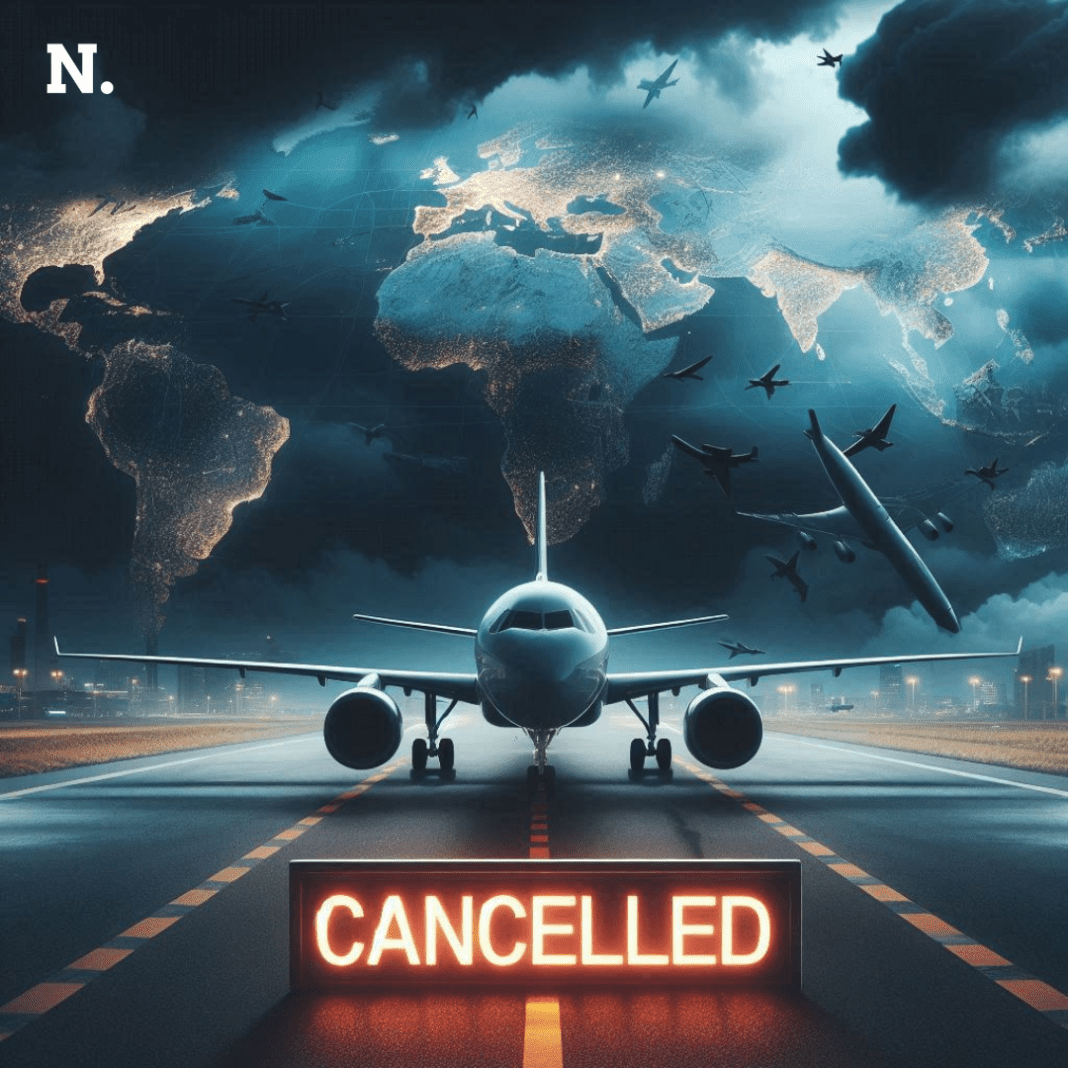

The United Arab Emirates has canceled several flights of late due to the rising tensions in West Asia. All these increased fears and threats of the possibility of conflict send shivers down the spines of expatriates and travelers. With the increased tension, airlines operating in the UAE cancel or divert several flights into or out of the country.
Flights Cancellation and Adjustments
There are many operators that have cancelled flights to various destinations in the West Asian region. Emirates, one of the country’s flagship airlines based in the emirate city, says it has cancelled all flights to Iraq, Iran and Jordan. Details show specific cancellations of flights on Basra, Baghdad, Tehran, and Amman for today and tomorrow.
However, some of its uninterrupted services have been announced to face delays by Etihad Airways as well. Airlines are strictly avoiding those risky airspace routes to make it safe for their passengers. The overall situation is being strictly monitored with the airlines observing when they can safely resume their flights.
These cancellations prove that the airlines are concerned about the safety of the passengers. By their decision to stop these flights under unclear conditions, they are acting to prevent circumstances that may put a close shave on someone flying.
Flight status can be checked with airlines.
Regional Conflict Raises Concerns
The situation has only grown worse with the reported missile strikes against Israel by Iran. In return, Israeli Prime Minister Benjamin Netanyahu vowed to retaliate as he said that “Iran made a big mistake last night. We will respond.” Such a statement has increased the fear of an expanded conflict in that region.
If Israel attacks Iran, it would increase the odds of a full-scale war manifold. Such an event would then be the cause of chaos on many routes that fly to India and other places. In short, tensions in the region would continue unabated.
As this war has already lasted for such a long time, many travelers and expatriates are getting worried about the implications of this war. The mere threat of this war has now put people in a sea of unrest, and it is making many people not willing to travel. The uncertainty which surrounds the situation adds stress to those who intend to fly.
Effects for Expatriates and Travelers
Most of the expatriates dwelling in the UAE are concerned about these recent happenings. Uncertainty surrounding cancellations of flights is a significant contribution to this percentage. They mostly travel to their home countries, and any such interference poses a serious hassle for them.
UAE Sent $100 Million Lifeline for Lebanon Amidst Crisis
The traveling public is advised to check with their airlines for updates. Most of them are confused and upset by the cancellations as they do not see it coming. The government of the UAE encourages citizens to be updated on what is taking place.
The ever-mounting tension is increasingly forcing people to procrastinate their traveling intentions. The worrying thing is that the fear of actual conflict will fuel their apprehension further. International travels across the region will continue, and these disruptions will accordingly have long-reaching effects on the travel industries.
During such incidents, expatriates are anxious about the safety of their family and friends back in the affected areas or regions. Their continued violence and sensitivities frighten them about the well-being of their loved ones. This emotional pressure is something added to the problems of staying in a tense environment.
Airlines are also concerned with how they can communicate effectively to their passengers. Keeping an individual informed of any delay saves lots of anxiety. Customers now require airlines to give them up-to-date flight status information during a crisis.
Government and Airline Responses
Of course, the UAE government has been very proactive. The situation of rising tensions is carefully monitored for the protection of residents and travelers within the UAE. They continue to issue guidance as well as travel advisories.
The airlines also change their procedures according to the current situation. In many cases, they take passenger safety measures into consideration as well. For example, they would reroute the flights away from high-risk areas as well as assess potential threats.
Air carriers are also going to reach out to support the passengers whose flights have been grounded. The rebooking options and arrangements for other support during flight cancellations will be announced by the airlines. This will ensure minimal disruption to the passengers for the containment of this situation as customer trust is being maintained.