

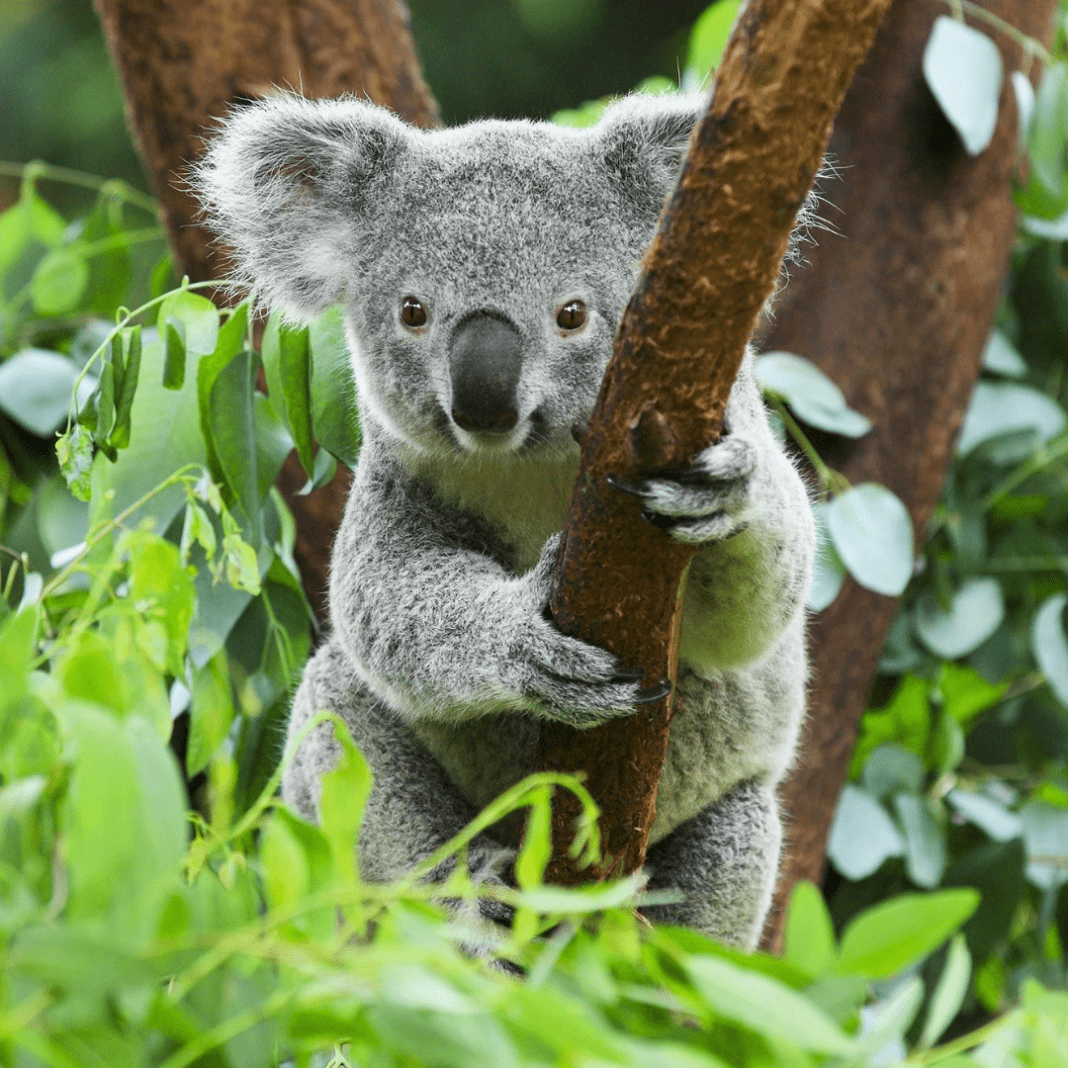
Koala Habitat Destruction Persists Despite Political Promises in Australia

Since 2011, close to 2 million hectares of forests that koalas call home have been cleared in Australia. That’s an area bigger than the entire city of Sydney and all the land around it including the Blue Mountains and the Southern Highlands.

The Silent Disappearance of Koala Forests

Even though the koala was officially declared a threatened species in 2011, the destruction of its habitat has not stopped. In fact, the cutting down of koala forests has continued at a massive scale, especially in Queensland and New South Wales, the two main states where koalas are struggling to survive.

Between 2012 and 2021, an estimated 1,964,200 hectares of koala habitat were bulldozed. About 81% of this was in Queensland alone. This destruction is shocking, especially since politicians had promised to protect koalas and their homes. But the facts show that these promises have not been kept.

What’s more, the size of land cleared is ten times larger than the area currently being considered for a proposed “Great Koala National Park” in NSW. That shows how much habitat has been lost compared to how little is being protected.

Bulldozers and Cattle: What’s Causing the Loss?

Most of this destroyed forest didn’t happen naturally. It wasn’t due to bushfires or droughts. Instead, around 75% of it was cleared for farming, mainly to make way for cattle pastures and crop fields. Large areas of koala-friendly trees were cut down to raise animals or grow food.

Another 13% of the land was removed by the forestry industry, where trees are cut down for timber and other uses. And 5% was cleared for things like roads, mines, and buildings. Only a small portion – 4% – was due to natural causes like fire or drought.

Critical Vulnerabilities: The Dark Side of Pacemaker Technology

Surprisingly, most of this clearing happened in small chunks. These pieces were often too small to be considered under federal environment laws. As a result, less than 2% of all the habitat destruction was ever officially approved by the federal environment minister. This means that almost all the forest was cleared without serious checks or questions.

Despite the growing danger to koalas, new clearing is still being allowed. In 2024 alone, about 3,000 hectares of potential koala habitat were approved for bulldozing.

The Harsh Reality Koalas Now Face

Koalas were already listed as vulnerable in 2012. By 2022, things got even worse. Their status was changed to endangered, after scientists saw that their numbers had likely dropped by half in just 20 years.

Current estimates suggest there are between 95,000 and 238,000 koalas left in Queensland, NSW, and the ACT – where they are most at risk. Some more live in Victoria and South Australia, where they are not yet listed as endangered.

But losing trees isn’t the only danger. Koalas also face extreme heat, which they cannot survive for many days in a row. They struggle to keep cool when temperatures go over 37°C, and many areas now have multiple days over 40°C due to climate change. This heat weakens them and makes it even harder for them to find food and shelter.

Cyber Attacks on Connected Cars

Their habitat is shrinking not just because of heat and farming, but also because of urban development. As trees are cleared, koalas move closer to towns and roads, where they face attacks from dogs and being hit by cars.

In some areas, like southwestern Sydney, koalas are also getting trapped in small areas. These groups can’t mix with others, which causes inbreeding and makes them weaker and more likely to get sick.

Most koalas don’t live in national parks. They live on private land, which often isn’t protected. This makes them even more vulnerable.


Renuka Bangale
Renuka Bangale
Renuka is a distinguished Chartered Accountant and a Certified Digital Threats Analyst from Riskpro, renowned for her expertise in cybersecurity. With a deep understanding of cybercrimes, malware, cyber warfare, and espionage, she has established herself as an authority in the field. Renuka combines her financial acumen with advanced knowledge of digital threats to provide unparalleled insights into the evolving landscape of information security. Her analytical prowess enables her to dissect complex cyber incidents, offering clarity on risks and mitigation strategies. As a key contributor to Newsinterpretation’s information security category, Renuka delivers authoritative articles that educate and inform readers about emerging threats and best practices.

TOP 10 TRENDING ON NEWSINTERPRETATION

Cyber Attacks on Space Infrastructure: Satellites, GPS and the Ground Systems Behind Them

From the Viasat KA-SAT hack to GPS jamming over the Baltic, a research guide to how attackers target satellites, navigation signals and ground stations, and why it matters on Earth.

How AI Agents Are Used in Cyber Attacks: From Assisted Hacking to AI-Orchestrated Espionage

Attackers now use AI agents to scan networks, write exploits and run extortion campaigns. A research guide to documented cases, including the first reported AI-orchestrated espionage campaign, and what defenders should do.

Cyber Attacks on AI and LLMs: How Attackers Target Large Language Models

Prompt injection, data poisoning, model theft and jailbreaks: a research guide to how attackers target AI systems and large language models, with real cases and defences.

French Supermarket Refrigeration Cyberattack: How Hacking the Cold Chain Can Endanger Lives

In October 2026 attackers heated refrigeration cabinets in hundreds of French supermarkets to as much as 50°C. No one was hurt, but the attack shows how hacking the cold chain can endanger lives through fire, food poisoning and spoiled medicines.

Cyberattacks on Nuclear Facilities: Stuxnet, Kudankulam and the Limits of Air Gaps

Stuxnet, the Davis-Besse worm and malware at India’s Kudankulam plant: what they show about cyber risk at nuclear facilities and the limits of air gaps.

Triton: When Hackers Target the Safety Systems That Prevent Industrial Disasters

The 2017 Triton attack targeted the safety systems that prevent industrial disasters. What happened, who was charged, and how plants protect their last line of defence.

Cybersecurity Risks in Smart Cities: When Connected Infrastructure Fails

How connecting traffic control, emergency alerts and utilities concentrates cyber risk in cities, what the Dallas and Atlanta incidents showed, and what governments recommend.

Weaponized Drones: Hijacking, GPS Spoofing and Emerging Cyber Warfare Risks

How drones can be hijacked, jammed or misled by GPS spoofing, what researchers have demonstrated, and why governments treat drone fleets as a security risk.

Ransomware Attacks on Hospitals: How Healthcare Cyberattacks Put Patients at Risk

How ransomware against hospitals and their suppliers delays care and endangers patients, what the Düsseldorf and WannaCry cases show, and what research says about deaths.

Operational blunder exposes massive Russian cyber espionage attack on Ukrainian prosecutors

A major cyberattack has compromised the email accounts of...

Cyber Attacks on Space Infrastructure: Satellites, GPS and the Ground Systems Behind Them

From the Viasat KA-SAT hack to GPS jamming over the Baltic, a research guide to how attackers target satellites, navigation signals and ground stations, and why it matters on Earth.

French Supermarket Refrigeration Cyberattack: How Hacking the Cold Chain Can Endanger Lives

In October 2026 attackers heated refrigeration cabinets in hundreds of French supermarkets to as much as 50°C. No one was hurt, but the attack shows how hacking the cold chain can endanger lives through fire, food poisoning and spoiled medicines.

Cyberattacks on Nuclear Facilities: Stuxnet, Kudankulam and the Limits of Air Gaps

Stuxnet, the Davis-Besse worm and malware at India’s Kudankulam plant: what they show about cyber risk at nuclear facilities and the limits of air gaps.

Triton: When Hackers Target the Safety Systems That Prevent Industrial Disasters

The 2017 Triton attack targeted the safety systems that prevent industrial disasters. What happened, who was charged, and how plants protect their last line of defence.

Cybersecurity Risks in Smart Cities: When Connected Infrastructure Fails

How connecting traffic control, emergency alerts and utilities concentrates cyber risk in cities, what the Dallas and Atlanta incidents showed, and what governments recommend.

Ransomware Attacks on Hospitals: How Healthcare Cyberattacks Put Patients at Risk

How ransomware against hospitals and their suppliers delays care and endangers patients, what the Düsseldorf and WannaCry cases show, and what research says about deaths.

FBI warns of AVrecon malware targeting outdated routers linked to proxy based cybercrime

A serious cybersecurity warning has been issued regarding commonly...

Related Articles

Popular Categories
