

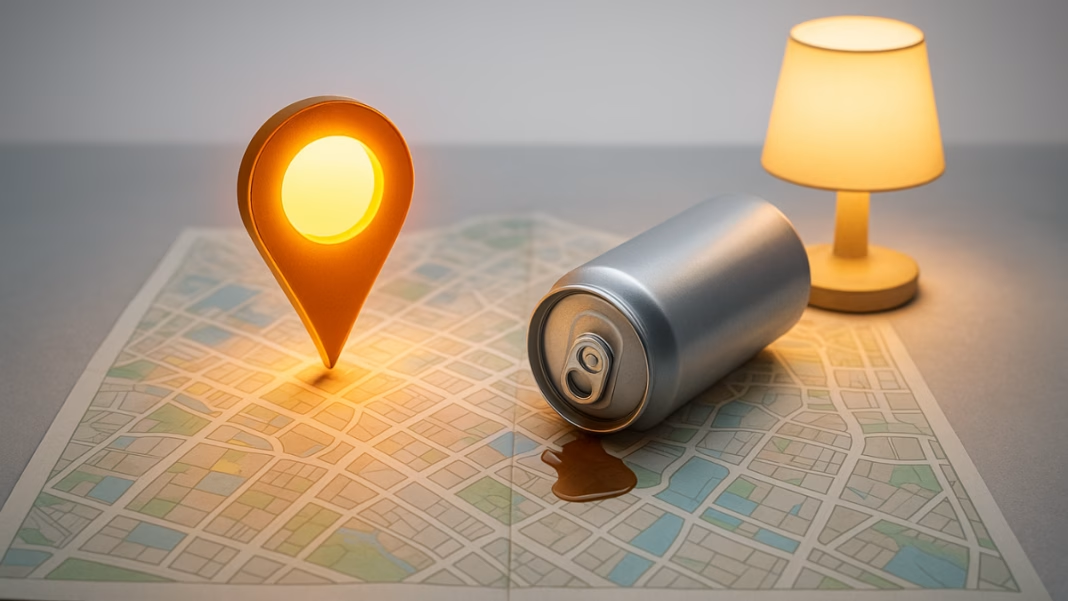
Brain Health Alert: Why Experts Say You Shouldn’t Rely on GPS Too Much

Dementia cases are rising quickly in the United States, and health experts are concerned about the impact of modern lifestyle habits on our brains. One surprising habit under the spotlight is using GPS for every single trip.

A neurologist trained at leading medical centers has warned that depending too much on GPS can weaken the brain’s ability to remember places and directions. He also pointed out two other daily habits that could harm brain health over time — drinking too many energy drinks and sleeping with the lights on.

How GPS Can Weaken Your Brain

Dementia is not only a problem for older people. It can affect younger adults too. Alzheimer’s disease is the most common type, but there are many others. All forms of dementia affect memory, thinking, and the ability to do everyday tasks. With no cure available, experts say that protecting brain health early is very important.

GPS has made life easier by helping people find their way without getting lost. But there’s a hidden downside. The hippocampus, a part of the brain responsible for navigation and memory, works best when we actively use it. This means remembering routes, noticing landmarks, and figuring out directions on our own.

When people rely on GPS for every journey, their hippocampus does not get much exercise. Over time, this can make it less active. Studies show that regular GPS users have more trouble remembering routes without it. They also find it harder to picture the layout of an area or remember where certain places are located.

Research involving London taxi drivers, who learn complex city road networks from memory, revealed that they have larger and more active hippocampuses than the average person. This suggests that the more you challenge your brain with navigation, the stronger this part of the brain becomes.

Some scientists believe that when the hippocampus is kept active through mental “map-making,” it builds what is called cognitive reserve. This reserve may help the brain stay healthier for longer, even if other conditions, like dementia, develop later in life.

Why Too Many Energy Drinks Can Be Harmful

Energy drinks are popular with people who need a quick energy boost. They often contain high amounts of caffeine and sugar, which can make you feel alert for a short time. However, when consumed often, these drinks can put serious stress on the heart, blood vessels, and brain.

Cyberattack Catastrophe: How Hackers Can Endanger Human Lives ?

Too much caffeine can interfere with sleep, cause anxiety, and affect the brain’s chemical balance. The high sugar content can lead to spikes and crashes in energy levels, which over time may impact mood, memory, and focus. Experts say that the body and brain both work better when they are not constantly under this kind of pressure.

Many people see energy drinks as harmless because the effects are not immediate. But brain health can be slowly damaged by habits that cause long-term stress on the body. Limiting these drinks could be a simple way to protect memory and thinking ability.

The Problem With Sleeping in the Light

Light plays a big role in how the brain and body rest. The brain needs darkness to produce melatonin, the hormone that controls sleep cycles and supports brain repair at night. When people sleep with the TV on or lights in the room, melatonin levels can drop.

Cyber Attacks on Connected Cars

Without enough melatonin, sleep becomes lighter and less refreshing. Over time, this can affect mood, attention span, and memory. Experts say that deep sleep is when the brain clears waste products and strengthens connections between brain cells. Poor-quality sleep means these important processes may not happen fully.

Small changes, like turning off the lights and electronics before bed, can help the brain get the rest it needs. Even a small nightlight can sometimes reduce melatonin production, so darker environments are better for brain recovery.

Renuka Bangale
Renuka Bangale
Renuka is a distinguished Chartered Accountant and a Certified Digital Threats Analyst from Riskpro, renowned for her expertise in cybersecurity. With a deep understanding of cybercrimes, malware, cyber warfare, and espionage, she has established herself as an authority in the field. Renuka combines her financial acumen with advanced knowledge of digital threats to provide unparalleled insights into the evolving landscape of information security. Her analytical prowess enables her to dissect complex cyber incidents, offering clarity on risks and mitigation strategies. As a key contributor to Newsinterpretation’s information security category, Renuka delivers authoritative articles that educate and inform readers about emerging threats and best practices.

TOP 10 TRENDING ON NEWSINTERPRETATION

Cyber Attacks on Space Infrastructure: Satellites, GPS and the Ground Systems Behind Them

From the Viasat KA-SAT hack to GPS jamming over the Baltic, a research guide to how attackers target satellites, navigation signals and ground stations, and why it matters on Earth.

How AI Agents Are Used in Cyber Attacks: From Assisted Hacking to AI-Orchestrated Espionage

Attackers now use AI agents to scan networks, write exploits and run extortion campaigns. A research guide to documented cases, including the first reported AI-orchestrated espionage campaign, and what defenders should do.

Cyber Attacks on AI and LLMs: How Attackers Target Large Language Models

Prompt injection, data poisoning, model theft and jailbreaks: a research guide to how attackers target AI systems and large language models, with real cases and defences.

French Supermarket Refrigeration Cyberattack: How Hacking the Cold Chain Can Endanger Lives

In October 2026 attackers heated refrigeration cabinets in hundreds of French supermarkets to as much as 50°C. No one was hurt, but the attack shows how hacking the cold chain can endanger lives through fire, food poisoning and spoiled medicines.

Cyberattacks on Nuclear Facilities: Stuxnet, Kudankulam and the Limits of Air Gaps

Stuxnet, the Davis-Besse worm and malware at India’s Kudankulam plant: what they show about cyber risk at nuclear facilities and the limits of air gaps.

Triton: When Hackers Target the Safety Systems That Prevent Industrial Disasters

The 2017 Triton attack targeted the safety systems that prevent industrial disasters. What happened, who was charged, and how plants protect their last line of defence.

Cybersecurity Risks in Smart Cities: When Connected Infrastructure Fails

How connecting traffic control, emergency alerts and utilities concentrates cyber risk in cities, what the Dallas and Atlanta incidents showed, and what governments recommend.

Weaponized Drones: Hijacking, GPS Spoofing and Emerging Cyber Warfare Risks

How drones can be hijacked, jammed or misled by GPS spoofing, what researchers have demonstrated, and why governments treat drone fleets as a security risk.

Ransomware Attacks on Hospitals: How Healthcare Cyberattacks Put Patients at Risk

How ransomware against hospitals and their suppliers delays care and endangers patients, what the Düsseldorf and WannaCry cases show, and what research says about deaths.

Operational blunder exposes massive Russian cyber espionage attack on Ukrainian prosecutors

A major cyberattack has compromised the email accounts of...

Cyber Attacks on Space Infrastructure: Satellites, GPS and the Ground Systems Behind Them

From the Viasat KA-SAT hack to GPS jamming over the Baltic, a research guide to how attackers target satellites, navigation signals and ground stations, and why it matters on Earth.

French Supermarket Refrigeration Cyberattack: How Hacking the Cold Chain Can Endanger Lives

In October 2026 attackers heated refrigeration cabinets in hundreds of French supermarkets to as much as 50°C. No one was hurt, but the attack shows how hacking the cold chain can endanger lives through fire, food poisoning and spoiled medicines.

Cyberattacks on Nuclear Facilities: Stuxnet, Kudankulam and the Limits of Air Gaps

Stuxnet, the Davis-Besse worm and malware at India’s Kudankulam plant: what they show about cyber risk at nuclear facilities and the limits of air gaps.

Triton: When Hackers Target the Safety Systems That Prevent Industrial Disasters

The 2017 Triton attack targeted the safety systems that prevent industrial disasters. What happened, who was charged, and how plants protect their last line of defence.

Cybersecurity Risks in Smart Cities: When Connected Infrastructure Fails

How connecting traffic control, emergency alerts and utilities concentrates cyber risk in cities, what the Dallas and Atlanta incidents showed, and what governments recommend.

Ransomware Attacks on Hospitals: How Healthcare Cyberattacks Put Patients at Risk

How ransomware against hospitals and their suppliers delays care and endangers patients, what the Düsseldorf and WannaCry cases show, and what research says about deaths.

FBI warns of AVrecon malware targeting outdated routers linked to proxy based cybercrime

A serious cybersecurity warning has been issued regarding commonly...

Related Articles

Popular Categories
