

AOC pushes explosive new bill forcing companies to prove tariff-linked price increases are real

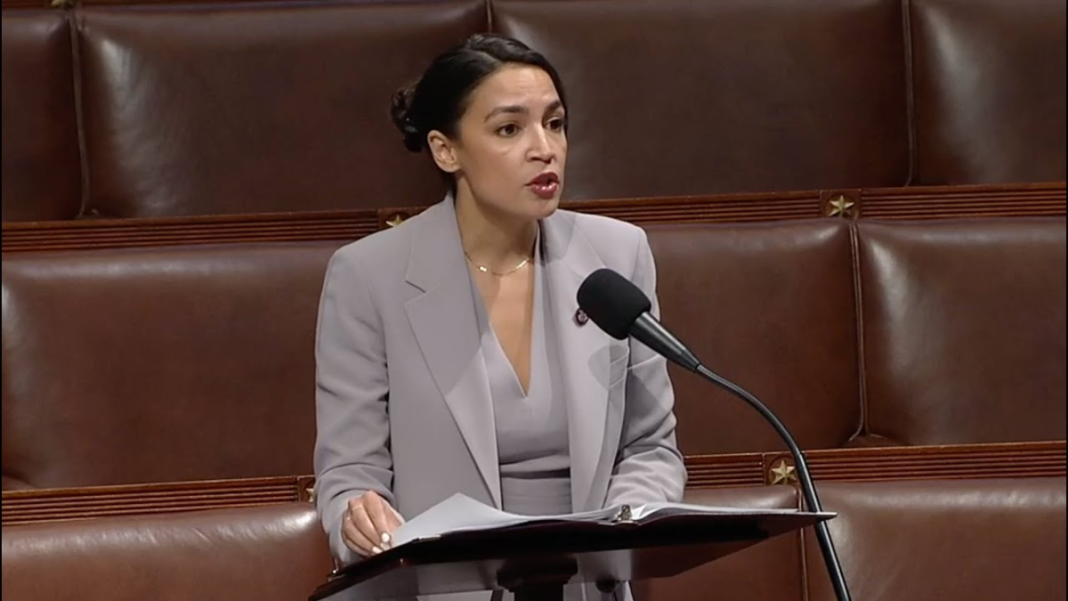
Three U.S. lawmakers — Alexandria Ocasio-Cortez (AOC), Rosa DeLauro, and Angie Craig — have introduced the No GOUGE Act, a bill created to stop companies from raising prices more than necessary when tariffs change. The full name of the bill is the No Gratuitous Overcharging Ubiquitous Global Exports Act. The lawmakers say many families are facing higher costs, and they believe some companies are using tariff policies as an excuse to increase prices beyond what their actual expenses require.

The goal of the No GOUGE Act is to prevent companies from hiding behind tariff changes to justify extra markups. The lawmakers argue that people should not have to pay more for basic goods simply because a company chooses to boost profits. They say families are already struggling with rising living costs, and unfair pricing makes daily life even harder.

The bill is meant to address situations where companies blame tariff rules for price jumps that are far larger than the real impact on their business. The lawmakers want companies to be honest about how tariffs affect their costs and to explain price increases based on real facts, not guesswork or profit motives.

How the No GOUGE Act Works

The No GOUGE Act creates clear rules that require companies to show how tariffs influence their prices. If a company raises prices because of a tariff, the company must share information that proves the change was necessary. This helps prevent markups that are not tied to actual costs.

“She’s running, trust me”: Ingraham says AOC is prepping a White House takeover as her battleground tour explodes online

The act also gives the Federal Trade Commission and state attorneys general stronger powers to investigate tariff-linked price hikes. These officials would be able to check whether companies are telling the truth when they say tariffs forced them to charge more. If a company cannot show proof of higher costs, it may face enforcement action.

Supporters say the act helps protect people from hidden charges. They point out that some large companies have been accused of raising prices more than needed and then blaming tariffs to avoid criticism. With the No GOUGE Act in place, companies would have to explain their pricing decisions in a clear and honest way.

Union leaders have spoken in favor of the bill. They say many working families cannot handle more price increases and that clear rules are needed to keep companies from adding extra charges that do not reflect true expenses. They believe transparency will help show whether a company is raising prices for real reasons or simply taking advantage of the situation.

AOC, DeLauro, and Craig state that the bill is designed to support people who feel the impact of higher prices the most. They say families deserve fair treatment and should not have to deal with added financial pressure that comes from unnecessary markups.

Alexandria Ocasio-Cortez Says Trump ‘Deserves Some Credit’ for Hostage Release — Sanders Blasts U.S. Role in Gaza

Recent Updates Related to Rep. Alexandria Ocasio-Cortez

Along with helping introduce the No GOUGE Act, Alexandria Ocasio-Cortez (AOC) recently reported new financial details through public filings. She disclosed $4.4 million in fundraising during the third quarter of 2025, all from individual donors. During that same reporting period, she reported $2.5 million in spending and ended with $11.8 million in cash on hand.

Her estimated net worth is $49,000 as of December 2, 2025, and she has no publicly traded investments that can be tracked.

AOC has also proposed several bills this year. Some of her recent proposals include the 9/11 Immigrant Worker Freedom Act, the DEFIANCE Act of 2025, the Healthy Start Reauthorization Act of 2025, the 10 Percent Credit Card Interest Rate Cap Act, the Geothermal Cost-Recovery Authority Act of 2025, and the Oyster Reef Recovery Act of 2025.

These updates show her continued work on a variety of issues while also pushing forward the No GOUGE Act, which aims to increase transparency and protect families from unfair pricing connected to tariffs.


T U Deshmukh
T U Deshmukh
T U Deshmukh is the leading voice on the subject of Jobs, AI, Data and layoffs and she regularly contributes a column on Jobs for Newsinterpretation.

TOP 10 TRENDING ON NEWSINTERPRETATION

Cyber Attacks on Space Infrastructure: Satellites, GPS and the Ground Systems Behind Them

From the Viasat KA-SAT hack to GPS jamming over the Baltic, a research guide to how attackers target satellites, navigation signals and ground stations, and why it matters on Earth.

How AI Agents Are Used in Cyber Attacks: From Assisted Hacking to AI-Orchestrated Espionage

Attackers now use AI agents to scan networks, write exploits and run extortion campaigns. A research guide to documented cases, including the first reported AI-orchestrated espionage campaign, and what defenders should do.

Cyber Attacks on AI and LLMs: How Attackers Target Large Language Models

Prompt injection, data poisoning, model theft and jailbreaks: a research guide to how attackers target AI systems and large language models, with real cases and defences.

French Supermarket Refrigeration Cyberattack: How Hacking the Cold Chain Can Endanger Lives

In October 2026 attackers heated refrigeration cabinets in hundreds of French supermarkets to as much as 50°C. No one was hurt, but the attack shows how hacking the cold chain can endanger lives through fire, food poisoning and spoiled medicines.

Cyberattacks on Nuclear Facilities: Stuxnet, Kudankulam and the Limits of Air Gaps

Stuxnet, the Davis-Besse worm and malware at India’s Kudankulam plant: what they show about cyber risk at nuclear facilities and the limits of air gaps.

Triton: When Hackers Target the Safety Systems That Prevent Industrial Disasters

The 2017 Triton attack targeted the safety systems that prevent industrial disasters. What happened, who was charged, and how plants protect their last line of defence.

Cybersecurity Risks in Smart Cities: When Connected Infrastructure Fails

How connecting traffic control, emergency alerts and utilities concentrates cyber risk in cities, what the Dallas and Atlanta incidents showed, and what governments recommend.

Weaponized Drones: Hijacking, GPS Spoofing and Emerging Cyber Warfare Risks

How drones can be hijacked, jammed or misled by GPS spoofing, what researchers have demonstrated, and why governments treat drone fleets as a security risk.

Ransomware Attacks on Hospitals: How Healthcare Cyberattacks Put Patients at Risk

How ransomware against hospitals and their suppliers delays care and endangers patients, what the Düsseldorf and WannaCry cases show, and what research says about deaths.

Operational blunder exposes massive Russian cyber espionage attack on Ukrainian prosecutors

A major cyberattack has compromised the email accounts of...

Cyber Attacks on Space Infrastructure: Satellites, GPS and the Ground Systems Behind Them

From the Viasat KA-SAT hack to GPS jamming over the Baltic, a research guide to how attackers target satellites, navigation signals and ground stations, and why it matters on Earth.

French Supermarket Refrigeration Cyberattack: How Hacking the Cold Chain Can Endanger Lives

In October 2026 attackers heated refrigeration cabinets in hundreds of French supermarkets to as much as 50°C. No one was hurt, but the attack shows how hacking the cold chain can endanger lives through fire, food poisoning and spoiled medicines.

Cyberattacks on Nuclear Facilities: Stuxnet, Kudankulam and the Limits of Air Gaps

Stuxnet, the Davis-Besse worm and malware at India’s Kudankulam plant: what they show about cyber risk at nuclear facilities and the limits of air gaps.

Triton: When Hackers Target the Safety Systems That Prevent Industrial Disasters

The 2017 Triton attack targeted the safety systems that prevent industrial disasters. What happened, who was charged, and how plants protect their last line of defence.

Cybersecurity Risks in Smart Cities: When Connected Infrastructure Fails

How connecting traffic control, emergency alerts and utilities concentrates cyber risk in cities, what the Dallas and Atlanta incidents showed, and what governments recommend.

Ransomware Attacks on Hospitals: How Healthcare Cyberattacks Put Patients at Risk

How ransomware against hospitals and their suppliers delays care and endangers patients, what the Düsseldorf and WannaCry cases show, and what research says about deaths.

FBI warns of AVrecon malware targeting outdated routers linked to proxy based cybercrime

A serious cybersecurity warning has been issued regarding commonly...

Related Articles

Popular Categories
