

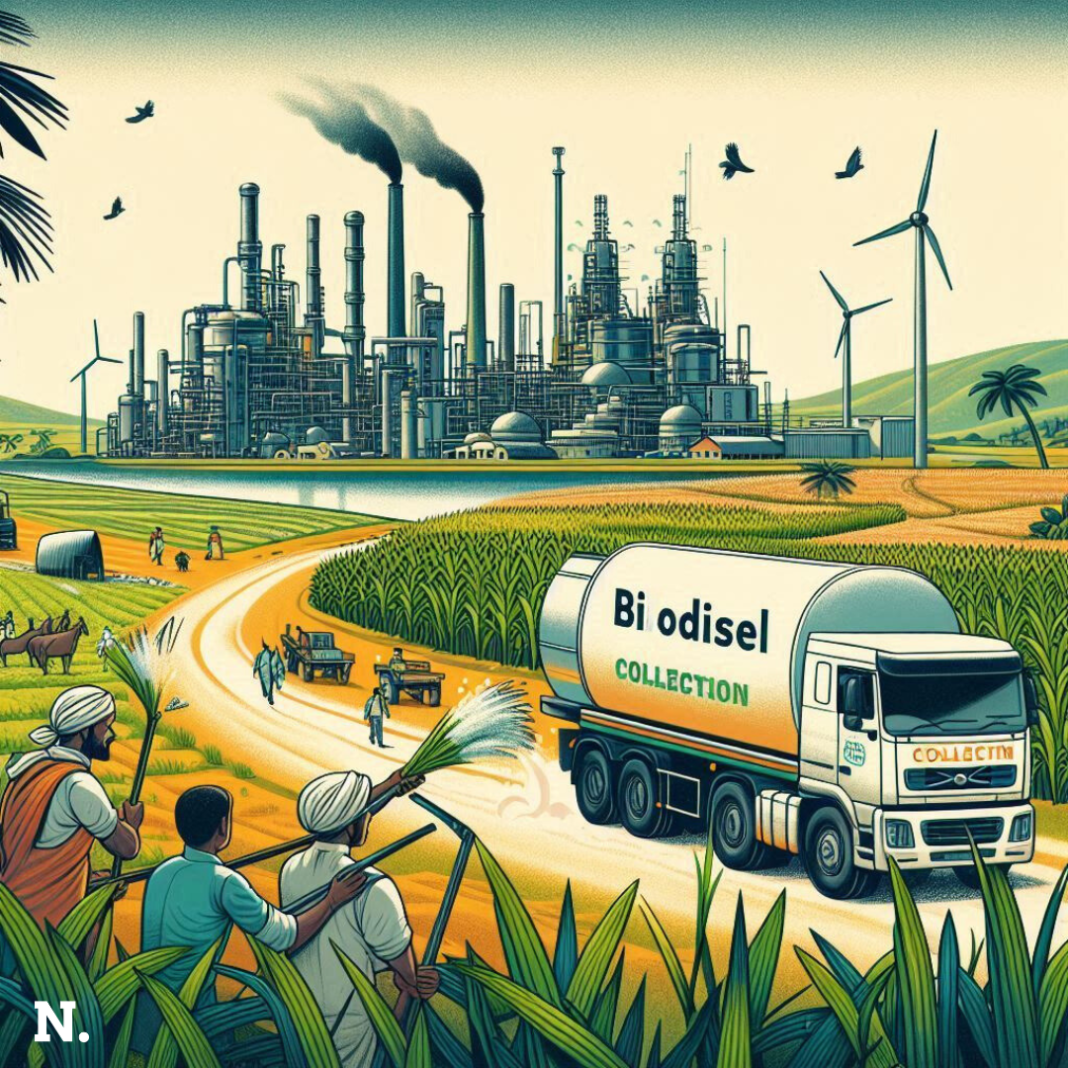

India is on the brink of a biofuel revolution. Significant steps are being taken to reduce the country’s reliance on fossil fuels. The focus is on moving toward more sustainable energy sources. One of the key developments is the blending of biofuels with conventional fuels. Ethanol and biodiesel are being blended into petrol and diesel. This shift marks a promising step in India’s green energy journey. Ethanol has been a well-known player in the biofuel arena. However, a surprising new contender has emerged—used cooking oil (UCO). Let’s dive into the fascinating world of India’s biofuel journey.
The Ethanol Story: A Promising Start
When it comes to running our vehicles, most of us think of petrol and diesel. These fuels are derived from petroleum, a non-renewable resource that contributes to pollution and environmental damage. Another compound can be added to petrol to create a cleaner fuel. This compound is ethanol.
Fermenting sugars from organic matter like sugarcane, fruits, and grains produces ethanol, also known as ethyl alcohol (C2H5OH). The fermentation process results in a liquid fuel. When blended with gasoline, this fuel emits fewer greenhouse gases. It also helps reduce air pollution. Using locally sourced organic materials for ethanol supports energy independence and boosts agricultural and rural economies.
Chances are, if you’ve filled up your car with petrol recently, you’ve already used fuel that contains ethanol. India has made significant strides in this area and is now the world’s third-largest producer of ethanol, following the United States and Brazil.
The Plan for a Biofuel
India’s journey into biofuels didn’t start yesterday. The government has been working on ethanol blending for years, and the results are impressive. In 2024, E20 petrol, which contains 20% ethanol, became widely available at retail fuel outlets across the country. This is a major achievement in the government’s Ethanol Blending Program, with the blending percentage in petrol crossing 13% during the Ethanol Supply Year 2023-24.
The goal is to reach 20% blending by 2025-26, a target that will require up to 10.16 billion litres of ethanol. The success of ethanol blending in petrol has set the stage for the next big challenge—blending biodiesel with diesel.
Biofuel Blending: The Road Ahead
Ethanol blending has made significant progress. However, the road to biodiesel blending has been bumpier. By 2030, the government aims for 5% of fuel to be blended with biodiesel. Currently, the blending rate is below 1%.
There are several reasons for this slow progress. Limited availability of feedstock, unstable ethanol production, and a relatively underdeveloped biodiesel infrastructure are some of the main challenges. To meet the 2030 target, India will need to produce around 4.5 billion litres of biodiesel annually, according to the International Energy Agency (IEA).
In response to these challenges, the government has started exploring alternative sources for biodiesel production. Used cooking oil (UCO) is one of the most promising options. People often discard this waste product after cooking, but it can be repurposed into biodiesel, making it a valuable resource in the country’s green energy efforts.
The UCO Advantage
Used cooking oil, or UCO, offers several advantages as a biodiesel feedstock. For one, it turns waste into something useful, aligning with the principles of a circular economy. By repurposing UCO, India can reduce pollution caused by improper disposal of waste oil, mitigate environmental risks, and produce a clean-burning fuel that can be blended with diesel.
The government’s RUCO (Repurposed Used Cooking Oil) initiative, launched in 2019, has been a key player in this effort. The program collects UCO from households and restaurants, preventing it from being discarded improperly. In 2023, India produced 200 million litres of biodiesel, with 35% of that coming from UCO and just 3% from animal fat and tallow.
The success of RUCO has led to an expanded effort to boost biodiesel production from UCO. Oil-marketing companies are now looking to increase their collection of UCO from more locations, including non-food production units. The collection network currently involves 200 sites. The program will expand, which will increase the number of sites.
India’s biofuel journey is full of promise and potential. From ethanol blending in petrol to the emerging role of UCO in biodiesel production, the country is taking significant steps toward a greener, more sustainable future. The shift toward biofuels helps reduce reliance on fossil fuels. It also creates economic opportunities for farmers. Additionally, rural communities and the biodiesel industry benefit from this transition. With continued innovation and effort, India’s biofuel revolution is well on its way.