
The final question of the first US presidential debate on September 10, addressed several issues from Kamala Harris and Donald Trump; among these, finally, was climate change. Trump, the Republican candidate, did not respond to the question. Harris, the Democratic nominee, promised action on climate but also supported domestic fossil fuels, reported The Guardian.
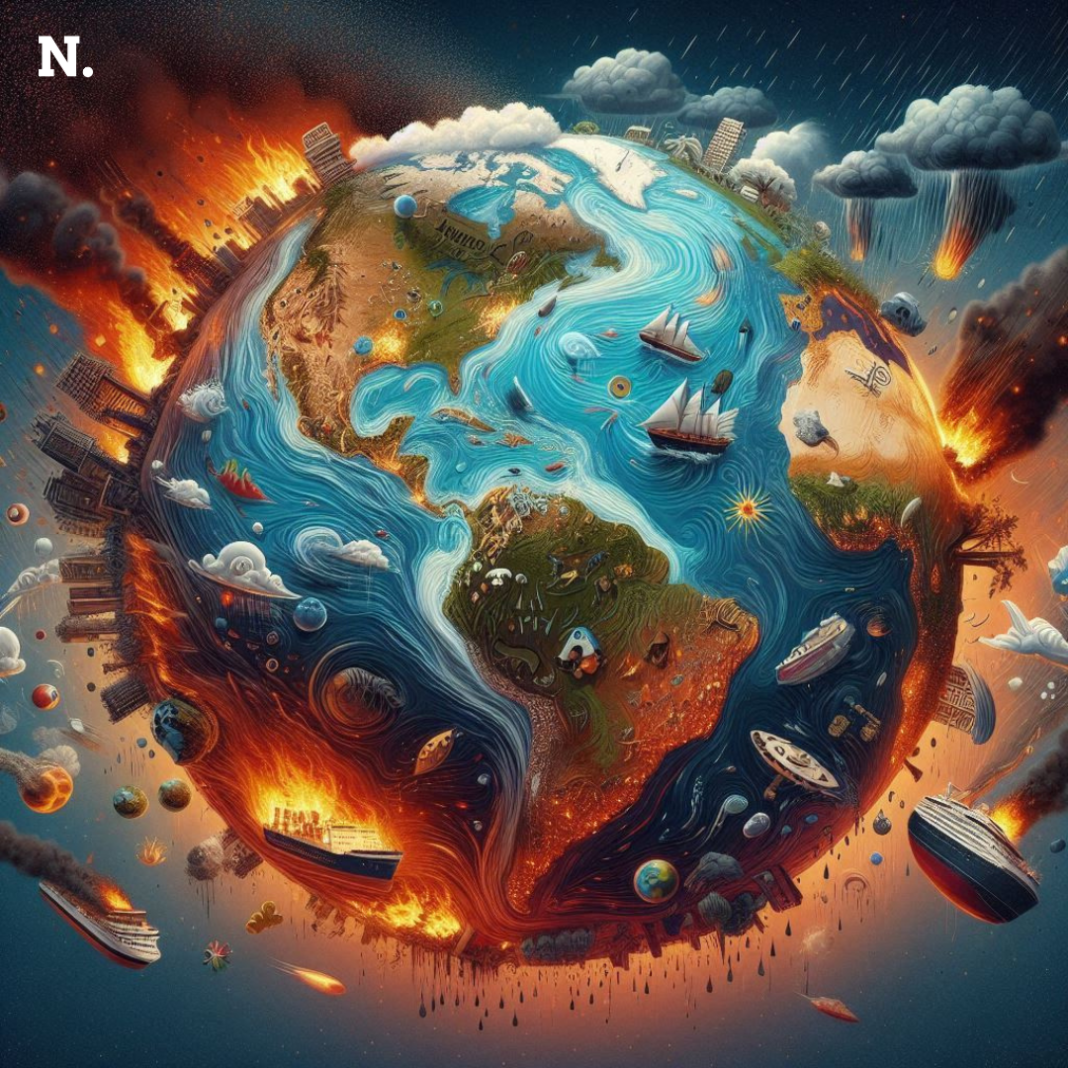
The debate came amidst some of the most intense climate disasters. Wildfires burned across Nevada, southern California, Oregon, and Idaho. Louisiana was bracing for Hurricane Francine, which reached Category 2 status, causing power outages with flash flooding and dangerous conditions. CNN, citing the National Interagency Coordination Center, reported there were over 70 active wildfires across the United States on Wednesday evening. Axios reminded that human-made climate change extends fire seasons. The New York Times reported on the wake of Francine, with “catastrophic flooding.”
Natural Disasters Increase in Intensity Globally
Typhoon Yagi killed almost 200 people in Vietnam and left more than 125 people missing. Sky News said that climate change makes storms of this kind much more powerful. Yagi, this year’s strongest typhoon in Asia, also blew across southern China and Southeast Asia. Heavy rainfall and the collapse of a dam contributed to deadly flooding in Nigeria’s northeastern state of Borno. Al Jazeera says over a million people have been affected.
If all that wasn’t enough, South America is dealing with fires. Bolivia declared a national emergency due to the most forest fires since 2010. Brazil is experiencing record drought and unprecedented forest fires. The rainforest in Peru is also burning, El Comercio reports.
Global Climate Developments and Policy
The former Italian Prime Minister Mario Draghi has authored a report on behalf of the European Commission. It reflects upon how the EU can catch up with the US and China when it comes to energy and climate policy. According to The Guardian, Antarctic sea ice is on course to hit a record low for the second consecutive year. The change could mark one of the most significant shifts in the Antarctic climate system.
Thousands thronged the streets in Seoul, asking the government and the people to take action for climate emergency. The Korea Times also reported the massive protest action. Pope Francis toured the region and learned about the threat of sea level rise to Papua New Guinea. He praised Singapore’s environmental efforts, according to the Straits Times.
Bloomberg reports that China is extending its national carbon market to include steel, aluminum, and cement industries before year’s end. The High Court in the UK has set aside approval of the first new coal mine in three decades. The ruling shows a greater effort to stand in the way of fossil fuel projects- one joined by the UK’s £500m of aid to Tata Steel to help it move away from coal-based steelmaking.
Investments and Conflicts in Energy Transition
Recent analysis by Carbon Brief showed how UK-backed Globeleq has invested heavily in gas power across Africa. Globeleq owns major gas power plants in Cameroon, Ivory Coast, and Tanzania. The firm is majorly owned by British International Investment, the development finance institution of the UK. Despite emphasis on renewables by British International Investment, gas power production in Globeleq has increased more than twofold.
The Home Insurance Crisis: How Climate Change is Reshaping Florida and Beyond
BII’s investment in gas power has been attacked as directly in conflict with the UK’s climate goals. While BII hasn’t committed new money to fossil-fuel assets in recent years, its continued support for gas projects does raise some questions. The UK government had promised to axe funding for new overseas fossil-fuel projects beyond March 2021; though partial exemptions allow funding of projects which are compatible with net-zero goals.
BII’s support for gas power in Africa is most controversial. Some believe that gas power is necessary for African countries to integrate more renewables, while others worry that it will lock countries into a damaging energy future. Mohamed Adow of Power Shift Africa said, “It is absurd for UK aid to fund investments in outdated, polluting fossil fuels.”
Climate Crisis in Media and Research
In the podcast Spill, climate journalists Mary Annaïse Heglar and Amy Westervelt discussed the US Republicans’ Project 2025 plan. In it, while some experts argue that it has no comprehensive solution to the issue, strategies for tackling climate change have been laid out.
Massive floods hitting South Sudan may mean a mass displacement occasioned by climate change, an article in The Conversation reads.
The Los Angeles Times ran a special section about youth and climate anxiety. The section poignantly underlines the urgency that addressing climate issues presents and how control of our collective future has to be taken.
In short, September 2024 has been filled with the escalating call for urgent action upon the climate crisis via debates, disasters, policy course correction, and investment decisions. Indeed, responses to global climate change are continuously in flux as nations and individuals everywhere come to terms with its extreme impacts.