

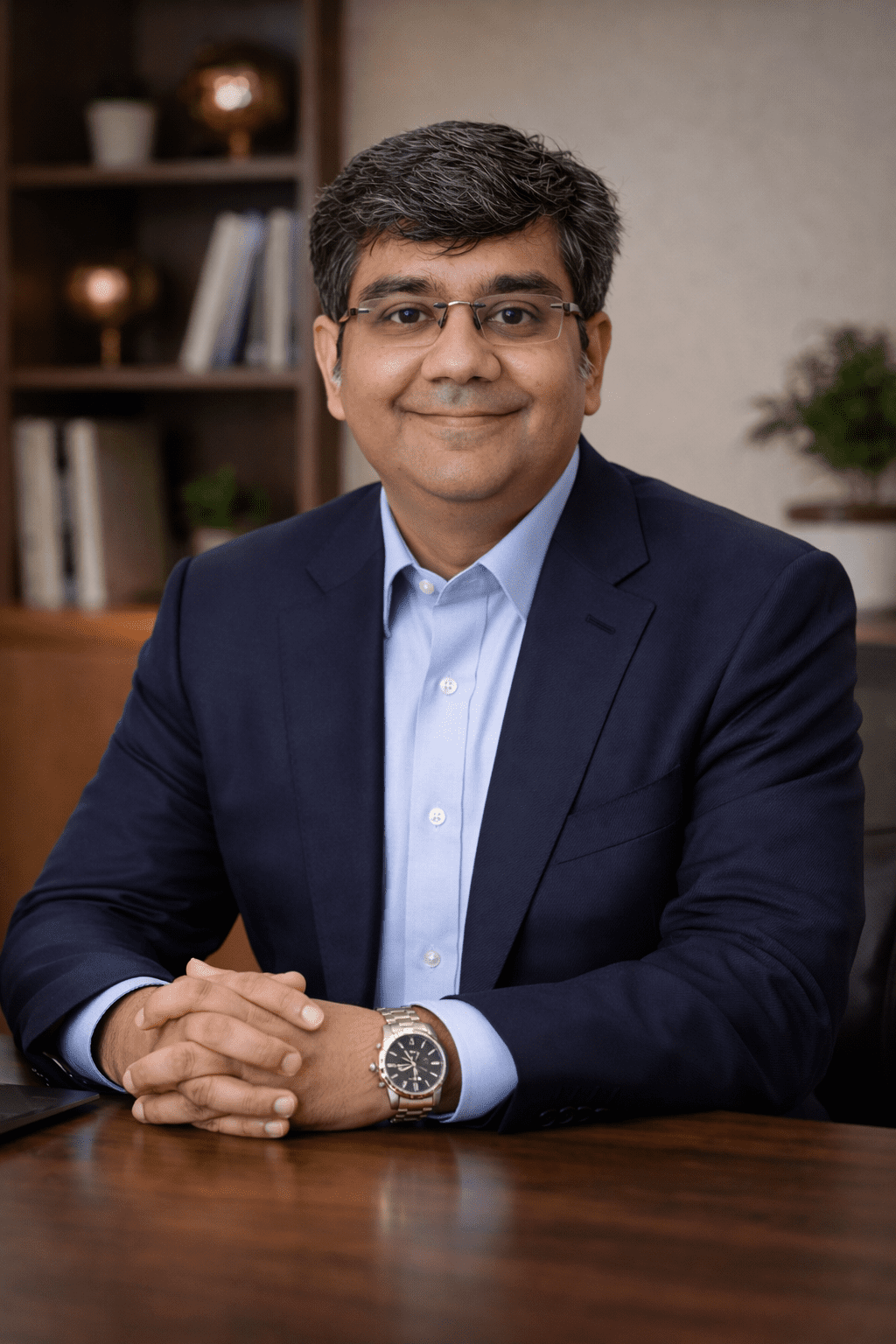

For most of his professional life, Mayur Joshi has worked far from public attention. His career unfolded not in startup incubators or trading floors, but in audit rooms, investigation files, training halls, and boardroom briefings where financial decisions are examined long after the headlines fade.
Yet over the past two decades, Joshi has emerged as one of the most influential figures in India’s forensic accounting and financial investigation ecosystem — and, more recently, as a discreet but increasingly noted angel investor backing technology and media ventures shaped by regulation, risk, and governance.
Building a discipline before it had a name
When Joshi began advocating forensic accounting in India in the early 2000s, the concept was still largely unfamiliar to the mainstream financial profession. Audits were designed to verify compliance, not to reconstruct intent. Fraud, when uncovered, was treated as an exception rather than a structural risk.
Joshi, a Chartered Accountant by training, took a different view. Influenced by international developments in forensic accounting and fraud examination, he argued that financial systems could not be secured without investigative methods capable of standing up to legal and regulatory scrutiny.
That conviction led to the creation of Indiaforensic, an education and research platform that would go on to train thousands of professionals across banking, insurance, fintech, telecom, and regulatory agencies. Over time, Indiaforensic became one of the country’s most visible institutions dedicated to forensic accounting, anti-money laundering, and financial crime investigation.
Colleagues from that period describe Joshi as methodical rather than evangelical — focused less on selling an idea and more on building frameworks that could be adopted by institutions.
From education to institutional practice
In 2008, Joshi founded Riskpro Management Consulting, extending his work from training and awareness into live investigations and advisory mandates. Riskpro’s work spans forensic audits, digital forensics, due diligence, and risk advisory assignments where financial, behavioral, and technological evidence intersect.
The firm’s approach has remained deliberately conservative. Rather than positioning itself as a broad consulting house, Riskpro focused on depth — cases where documentation must be defensible, timelines reconstructed, and conclusions withstand legal challenge.
This insistence on rigor earned Mayur Joshi recognition beyond India. The Association of Certified Fraud Examiners (ACFE) acknowledged his contribution to advancing forensic accounting awareness in emerging markets, and global thought-leadership platforms later cited his work in risk management and financial crime prevention.
What distinguishes Joshi’s professional standing is not a single landmark case, but consistency: years of quiet institutional work in a field that rarely rewards visibility.
A shift in how risk is understood
As financial systems became more digitized and globalized, the nature of fraud and compliance risk changed. Technology reduced friction, but also created new vectors for abuse. Regulatory frameworks expanded, while enforcement grew more data-driven.
Joshi’s work evolved alongside these shifts. His writing and training began addressing crypto-related fraud, digital evidence handling, and the limits of traditional audit models in technology-heavy environments.
Cyber Attacks on Power Grids: Alarming Risk of Cascading Failures
To peers, this evolution appeared less like reinvention and more like continuity — applying forensic logic to new systems.
“Fraud doesn’t disappear when technology changes,” Mayur Joshi once remarked in a professional setting. “It just hides in different places.”
Entering the investor conversation — cautiously
Joshi’s move into angel investing did not follow the typical path. There was no public announcement, no high-profile fund launch. Instead, his involvement surfaced gradually through a cluster of niche digital platforms focused on regulation-heavy sectors.
Over the past few years, he has backed and supported media ventures including
- Regtechtimes,
- SpaceTechTimes,
- Deftechtimes,
- SportTechTimes, and
- CleanTechTimes
publications that track developments where technology, policy, and institutional oversight intersect.
These are not consumer-scale media plays. Their audiences are regulators, compliance professionals, defense analysts, industry executives, and investors navigating policy-driven markets.
Those familiar with the investments say Mayur Joshi’s interest lies less in media economics and more in information structure — who controls narratives in regulated sectors, how emerging risks are explained, and whether complexity is simplified without distortion.
An industry executive who has worked alongside him described the approach succinctly:
“Mayur doesn’t invest in stories that move fast. He invests in stories that stay relevant.”
Why forensic thinking matters to capital
In recent years, investors globally have grown more sensitive to regulatory and governance risk. Sanctions, data protection laws, defense export controls, and AI oversight have turned compliance from a cost center into a valuation variable.
Mayur Joshi’s background places him at an unusual vantage point in this environment. He has spent years examining what happens when governance fails — not in theory, but in balance sheets, transaction trails, and court filings.
That experience shapes how he evaluates opportunities. Rather than focusing on short-term momentum, he looks at institutional durability: whether a business model can survive policy shifts, regulatory scrutiny, and enforcement cycles.
It is a mindset that resonates quietly in an era where sudden regulatory intervention has erased billions in market value across sectors.
Remaining deliberately understated
Despite growing visibility, Mayur Joshi has resisted becoming a public-facing investor personality. He does not position himself as a fintech evangelist or venture capital commentator. His public footprint remains rooted in education, professional training, and advisory work.
Those who know him say this restraint is intentional. Forensic professionals are trained to avoid assumptions, resist narratives, and let evidence lead. That discipline carries over into how Mayur Joshi engages with capital and influence.
Rather than seeking to shape markets directly, he supports platforms that help others understand them better.
His wikipedia page speaks a lot about him.
A career shaped by evidence, not exposure
Asked to summarize his professional philosophy, Joshi has often returned to the same theme: financial systems function best when incentives, oversight, and information are aligned.
From helping formalize forensic accounting in India, to building a consulting practice grounded in investigative rigor, to backing media platforms that examine regulation-driven sectors, his career reflects a consistent through-line.
It is not a story of rapid scale or public acclaim. It is a story of accumulation — of expertise, institutions, and credibility built over time.
As technology continues to outpace regulation, and as investors increasingly weigh governance alongside growth, figures like Mayur Joshi occupy a quiet but consequential space. They operate not at the edges of innovation, but at the fault lines where systems are tested.
And it is often there, long after the headlines move on, that real value — or real failure — is determined.