

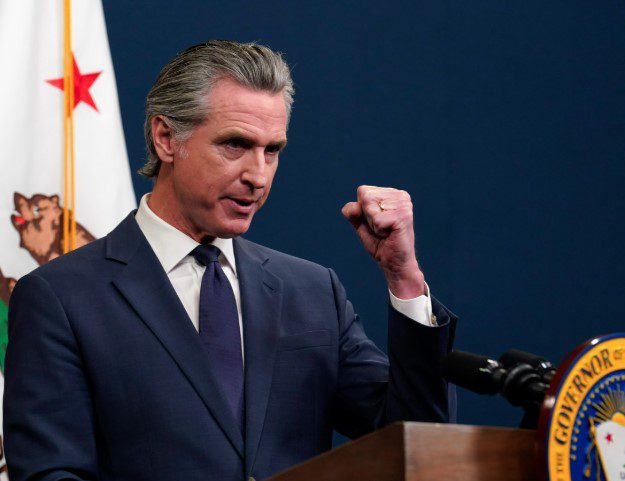

Newsom warns California colleges of losing state funds if they sign Trump education compact

California Governor Gavin Newsom has issued a strong warning to colleges and universities in the state. He said that any institution that agrees to sign a new education compact created by former President Donald Trump’s administration will immediately lose billions of dollars in state support.

Newsom’s Strong Statement Against the Federal Compact

The compact, titled the “Compact for Academic Excellence in Higher Education,” is a 10-page document. It was sent out this week to nine universities across the country. In California, the University of Southern California (USC) was the only school that received it.

The Trump administration’s compact requires schools to follow federal rules in several areas. These include admissions, hiring, free speech policies, teaching methods, and even how endowments are used. In exchange, universities that sign the compact would continue to have access to federal funds.

Midterm manipulation fury: Newsom warns Americans are paying price for GOP power games

Governor Newsom, however, declared in an all-uppercase statement that California would not tolerate schools giving up their independence. He said:

“IF ANY CALIFORNIA UNIVERSITY SIGNS THIS RADICAL AGREEMENT, THEY’LL LOSE BILLIONS IN STATE FUNDING — INCLUDING CAL GRANTS — INSTANTLY. CALIFORNIA WILL NOT BANKROLL SCHOOLS THAT SELL OUT THEIR STUDENTS, PROFESSORS, RESEARCHERS, AND SURRENDER ACADEMIC FREEDOM.”

This message makes it clear that California will not support any college that aligns itself with this compact at the cost of academic freedom.

Impact on USC and California Students

The University of Southern California, a private institution, receives significant state funding through Cal Grants. These grants are a financial aid program that helps students pay for their education without needing repayment. According to the California Department of Finance, USC received $28.4 million in Cal Grant funds last year alone.

Beyond Cal Grants, private institutions like USC also receive smaller amounts from other state programs, such as the Golden State Teacher Grant and the Chafee Grant. These state funds usually amount to several million dollars each year. Losing these programs would have a direct impact on students who rely on them for tuition support.

Other independent colleges in California, part of the Association of Independent California Colleges and Universities (AICCU), received $227.6 million in Cal Grants during the same year. Together with USC, these institutions represent a large share of the state’s aid to private schools.

Gavin Newsom weaponizes crypto with “Trump Corruption Coin” in redistricting war against Trump

Meanwhile, the state’s public universities and community colleges receive an even greater share. The University of California, California State University, and Community College systems together received $2.2 billion in Cal Grant funding in the 2024–2025 budget year. These schools are also eligible for the Middle Class Scholarship program, another major source of state aid, although private institutions like USC are not allowed to access it.

The governor’s warning means that if USC or any other school in the state were to sign the Trump administration’s compact, they could instantly lose all of these financial lifelines. This would directly affect thousands of students who depend on state grants to afford their education.

White House Defends the Compact

The Trump administration, through a White House spokesperson, defended the compact and criticized Governor Newsom’s reaction. Abigail Jackson, speaking on behalf of the White House, referred to the governor as “Newscum” in a sharp attack. She accused him of mismanaging California and ignoring issues within his own state.

She argued that the compact is meant to stop excessive tuition hikes, defend free speech on campuses, and restore what the administration calls “academic excellence.” According to the spokesperson, universities that join the compact will be helping to protect students and bring back fairness in education policies.

The White House’s position is that the compact represents common-sense reforms and that opposing it means rejecting protections for both students and free expression.

“Pay more and enjoy nothing”—Newsom torches Trump’s tariff push as costs for food, cars, and flights soar

However, Governor Newsom has made it equally clear that California will not provide taxpayer money to any school that aligns itself with this federal mandate. The conflict underscores a major clash between state and federal visions of how higher education should be run.

For now, USC has not commented on the issue. The university did not respond to media requests on Thursday afternoon regarding whether it will consider signing the compact.

The situation has placed a spotlight on how state and federal governments may collide over control of education policies. At stake are billions of dollars in funding and the future of academic freedom across California campuses.

Pearl Croft
Pearl Crofthttps://newsinterpretation.com
I am Pearl Croft I give “News Interpretation” an insight into the most recent news hitting the “Consumer Goods” sector in Wall Street. I have been an independent financial adviser for over 11 years in the city and in recent years turned my experience in finance and passion for journalism into a full time role. I perform analysis of Companies and publicize valuable information for shareholder community. But writing about the political developments is my hobby.

TOP 10 TRENDING ON NEWSINTERPRETATION

Cyber Attacks on Space Infrastructure: Satellites, GPS and the Ground Systems Behind Them

From the Viasat KA-SAT hack to GPS jamming over the Baltic, a research guide to how attackers target satellites, navigation signals and ground stations, and why it matters on Earth.

How AI Agents Are Used in Cyber Attacks: From Assisted Hacking to AI-Orchestrated Espionage

Attackers now use AI agents to scan networks, write exploits and run extortion campaigns. A research guide to documented cases, including the first reported AI-orchestrated espionage campaign, and what defenders should do.

Cyber Attacks on AI and LLMs: How Attackers Target Large Language Models

Prompt injection, data poisoning, model theft and jailbreaks: a research guide to how attackers target AI systems and large language models, with real cases and defences.

French Supermarket Refrigeration Cyberattack: How Hacking the Cold Chain Can Endanger Lives

In October 2026 attackers heated refrigeration cabinets in hundreds of French supermarkets to as much as 50°C. No one was hurt, but the attack shows how hacking the cold chain can endanger lives through fire, food poisoning and spoiled medicines.

Cyberattacks on Nuclear Facilities: Stuxnet, Kudankulam and the Limits of Air Gaps

Stuxnet, the Davis-Besse worm and malware at India’s Kudankulam plant: what they show about cyber risk at nuclear facilities and the limits of air gaps.

Triton: When Hackers Target the Safety Systems That Prevent Industrial Disasters

The 2017 Triton attack targeted the safety systems that prevent industrial disasters. What happened, who was charged, and how plants protect their last line of defence.

Cybersecurity Risks in Smart Cities: When Connected Infrastructure Fails

How connecting traffic control, emergency alerts and utilities concentrates cyber risk in cities, what the Dallas and Atlanta incidents showed, and what governments recommend.

Weaponized Drones: Hijacking, GPS Spoofing and Emerging Cyber Warfare Risks

How drones can be hijacked, jammed or misled by GPS spoofing, what researchers have demonstrated, and why governments treat drone fleets as a security risk.

Ransomware Attacks on Hospitals: How Healthcare Cyberattacks Put Patients at Risk

How ransomware against hospitals and their suppliers delays care and endangers patients, what the Düsseldorf and WannaCry cases show, and what research says about deaths.

Operational blunder exposes massive Russian cyber espionage attack on Ukrainian prosecutors

A major cyberattack has compromised the email accounts of...

Cyber Attacks on Space Infrastructure: Satellites, GPS and the Ground Systems Behind Them

From the Viasat KA-SAT hack to GPS jamming over the Baltic, a research guide to how attackers target satellites, navigation signals and ground stations, and why it matters on Earth.

French Supermarket Refrigeration Cyberattack: How Hacking the Cold Chain Can Endanger Lives

In October 2026 attackers heated refrigeration cabinets in hundreds of French supermarkets to as much as 50°C. No one was hurt, but the attack shows how hacking the cold chain can endanger lives through fire, food poisoning and spoiled medicines.

Cyberattacks on Nuclear Facilities: Stuxnet, Kudankulam and the Limits of Air Gaps

Stuxnet, the Davis-Besse worm and malware at India’s Kudankulam plant: what they show about cyber risk at nuclear facilities and the limits of air gaps.

Triton: When Hackers Target the Safety Systems That Prevent Industrial Disasters

The 2017 Triton attack targeted the safety systems that prevent industrial disasters. What happened, who was charged, and how plants protect their last line of defence.

Cybersecurity Risks in Smart Cities: When Connected Infrastructure Fails

How connecting traffic control, emergency alerts and utilities concentrates cyber risk in cities, what the Dallas and Atlanta incidents showed, and what governments recommend.

Ransomware Attacks on Hospitals: How Healthcare Cyberattacks Put Patients at Risk

How ransomware against hospitals and their suppliers delays care and endangers patients, what the Düsseldorf and WannaCry cases show, and what research says about deaths.

FBI warns of AVrecon malware targeting outdated routers linked to proxy based cybercrime

A serious cybersecurity warning has been issued regarding commonly...

Related Articles

Popular Categories
