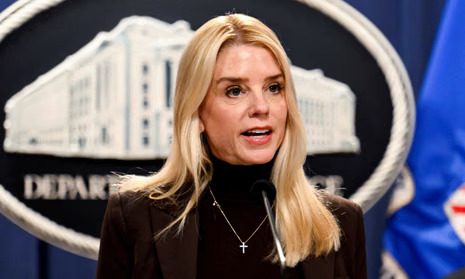

U.S. Attorney General Pam Bondi has warned several top Democratic officials that they could face criminal charges for actions related to tracking or interfering with federal Immigration and Customs Enforcement (ICE) agents. Bondi said that identifying or exposing the location of ICE officers is a federal crime, and those who do so may soon face serious legal consequences.
Bondi confirmed that her office is sending legal preservation letters to several Democratic leaders, including Chicago’s former Mayor Lori Lightfoot, Illinois Governor J.B. Pritzker, San Francisco District Attorney Brooke Jenkins, and former House Speaker Nancy Pelosi. These letters demand that the officials keep all records and emails related to their communications about ICE agents and immigration enforcement operations.
The warning came as part of a broader dispute between the White House and several Democratic-run cities over immigration enforcement. President Donald Trump has intensified federal operations targeting undocumented immigrants, promising what he calls “the largest deportation effort in American history.” These operations have led to major clashes between ICE officers and protesters, particularly in Chicago and San Francisco.
Pelosi and Jenkins Push Back Against Federal Raids
Tensions rose further this week after reports surfaced that the Trump administration planned mass immigration raids in the San Francisco Bay Area. House Speaker Emerita Nancy Pelosi strongly criticized the move, calling it “an appalling abuse of law enforcement power.” Pelosi said that while Trump might enjoy immunity from prosecution while in office, his subordinates do not.
Pam Bondi compares Antifa to MS13 as Trump order sparks debate on limits of political dissent
“While the President may enjoy absolute immunity courtesy of his rogue Supreme Court, those who operate under his orders do not,” Pelosi said in a joint statement with California Congressman Kevin Mullin. “Our state and local authorities may arrest federal agents if they break California law—and if they are convicted, the President cannot pardon them.”
Her statement came after San Francisco District Attorney Brooke Jenkins publicly declared that she “won’t hesitate” to file charges against federal agents who break local laws while conducting immigration raids. Jenkins told Politico Playbook that she was ready to act if federal officers violated the rights of residents or acted without proper legal authority.
The Justice Department immediately viewed these comments as direct interference with federal law enforcement. Bondi argued that such actions and statements encourage obstruction of justice and could expose the officials to prosecution.
“Pritzker, same ball game. Nancy Pelosi got a letter today from Deputy Attorney General Todd Blanche, so did Brooke Jenkins—that D.A. in San Francisco,” Bondi continued. “We told them: ‘Preserve your emails, preserve everything you have on this topic.’ Because if you are telling people to arrest our ICE officers, our federal agents, you cannot do that. You are impeding an investigation, and we will charge them.”
Images from Chicago and San Francisco have shown violent confrontations between federal agents and protesters. Tear gas, pepper balls, and physical altercations have become common scenes during ICE operations. Many demonstrators have accused federal officers of using excessive force, while administration officials maintain that these tactics are necessary to maintain order and enforce the law.
White House Defends ICE Operations Amid Growing Backlash
President Trump has defended the mass deportation campaign as a crucial step to restore law and order. He said his administration’s focus is on removing “criminal aliens” and individuals with outstanding deportation orders. Critics, however, claim that the raids are politically motivated and target vulnerable communities to project strength before the upcoming election year.
Senate hearing explodes into chaos as Bondi dodges ethics questions and attacks Schiff
Earlier this month, Trump ordered National Guard troops to be federalized in Illinois after weeks of unrest in Chicago following a wave of ICE raids. The deployment, which sparked massive protests, was seen by many as part of Trump’s broader strategy to demonstrate a tough stance on immigration. During one public appearance, Trump even called for Illinois Governor J.B. Pritzker to be jailed, accusing him of obstructing federal immigration efforts.
Bondi reaffirmed that the Justice Department will not hesitate to pursue legal action against any official who interferes with federal agents. “If they think I won’t, they have not met me, because we will charge them if they are violating the law,” Bondi said. “We will protect our federal agents. They’re out there working nonstop… These people are out there working to keep Californians safe. Yet you’ve got Pelosi out there saying to obstruct their investigation. You can’t do it.”
San Francisco had been preparing for a large-scale ICE operation, but the administration pulled back on Thursday, just days after public backlash and statements from local leaders. Despite the temporary pause, federal officials have signaled that immigration enforcement will continue in other parts of the country.
As the confrontation escalates, the Justice Department’s investigation into Pelosi, Pritzker, Jenkins, and Lightfoot marks one of the most intense political clashes between state and federal authorities in recent years. The move underscores how sharply divided the country remains on immigration policy—and how far the Trump administration is willing to go to defend federal authority over states and cities that resist its orders.
For now, both sides appear ready for a prolonged legal and political battle. The Department of Justice has contacted the offices of Pelosi, Pritzker, and Jenkins for further clarification, while the White House insists that federal agents will continue their work “without fear or obstruction.”