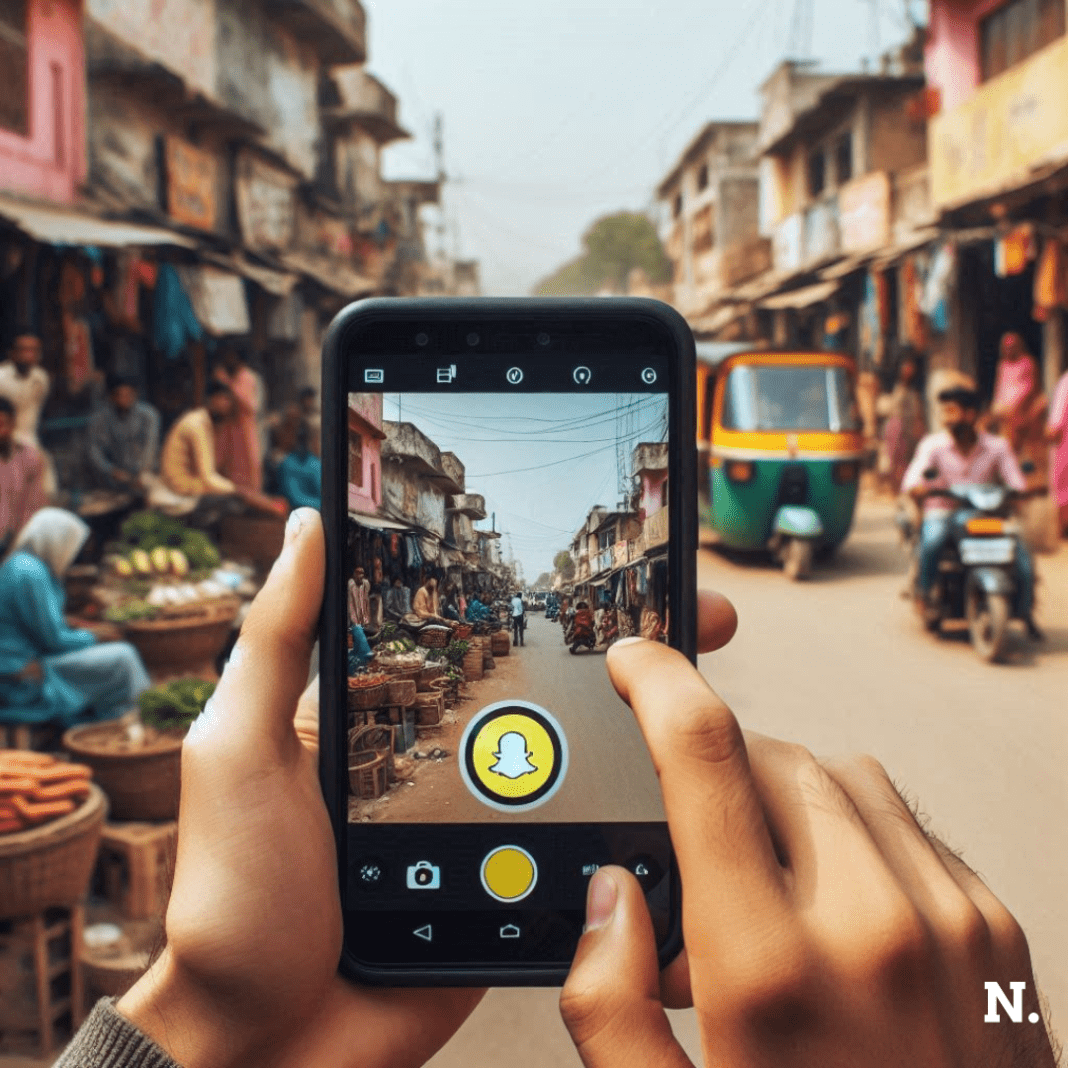

India, with the world’s largest population, is becoming the center of attention for the social media market. A country with a strong mobile presence, around 40.2% of India’s adult population is active on social media platforms. Indians use these sites for roughly 145 minutes a day on average. Over time, this adds up to an astonishing 5.7 years of one’s life spent scrolling through feeds!
Recognizing this love for digital content, various platforms are finding ways to engage Indian users more deeply. One such platform, Snapchat, is capitalizing on this growing trend with its “camera-first” approach and focus on India’s rapidly growing creator economy.
Snapchat’s Growing Influence in India’s Creator Economy
The creator economy in India is rapidly growing. More people are making digital content for platforms like YouTube and Instagram. In July 2024, YouTube had over 476 million active users. Instagram had 385 million users in January 2024. A major trend among these users is the love for short videos. Short videos, usually under a minute, are gaining popularity.
About 66% of users prefer this short video format. These platforms are seeing huge engagement through these quick, engaging clips.
Snapchat, with its own innovative approach, is making strides in India’s digital content scene by rewarding creators for their work. It’s not just focusing on big cities; Snapchat is encouraging content creators from smaller towns such as Hisar, Jalandhar, and Jaipur to create daily vlogs in regional languages. This move is contributing to the platform’s growing popularity, particularly in regional markets, where users appreciate the authenticity of the content shared by these creators.
In India, Snapchat has over 200 million monthly active users. The platform’s success in regional areas is driven by the genuine, relatable nature of the content, where creators share their everyday experiences. But the platform is not just about fun content—it also presents lucrative opportunities for these content creators.
Monetizing Content on Snapchat: The Opportunities
For content creators, Snapchat offers multiple ways to earn money. While platforms like YouTube and Instagram primarily allow creators to earn based on views and follower counts, Snapchat provides several monetization options, making it a viable source of income for a wider range of creators.
- Story Revenue Share: Snapchat’s revenue-sharing system resembles YouTube’s. Ads are placed on public stories, and Snapchat shares the generated revenue with content creators. To qualify, creators must have at least 50,000 subscribers and achieve more than 25 million views or 12,000 hours of view time on their public profiles over the past 28 days.
- Paid Brand Partnerships: Similar to Instagram, Snapchat allows creators to collaborate with brands for paid partnerships. Creators can label their public snaps as “Paid Partnership” content, helping brands reach more users while boosting their own earnings through these collaborations.
- Spotlight Rewards: Snapchat’s Spotlight feature is another significant opportunity for creators. Content shared on Spotlight can reach not only Snapchat users but also a wider audience through external websites and services. Creators can earn “crystals” (Snapchat’s virtual currency) based on the quality and engagement of their content. These crystals can be converted into real money, with 1,000 crystals equaling $100.
With more than 120 million Indians regularly engaging with Snapchat Stories and Spotlight, the platform is proving to be a valuable space for India’s creator economy. The economy itself is expected to grow from ₹19 billion in 2023 to ₹34 billion by 2026, reflecting Snapchat’s increasing influence.
Snapchat’s Social Commerce Approach
Snapchat is also venturing into the world of social commerce, following in the footsteps of platforms like Instagram and YouTube. The platform is leveraging its technology to offer users a unique shopping experience directly within the app. One of its standout features is the use of augmented reality (AR) lenses, which are gamified to enhance the shopping experience. This allows users, particularly the younger GenZ audience, to engage with products in a more interactive and fun way.
By merging social interaction with shopping, Snapchat is aligning itself with the growing trend of online commerce, creating new opportunities for both businesses and content creators to capitalize on this digital shopping experience.
Snapchat’s emphasis on supporting creators, combined with its focus on providing unique experiences for users, is carving out a distinct space for itself in India’s bustling social media landscape. The platform engages both creators and audiences effectively. It is set to grow further in the Indian market. More regional voices are stepping into the spotlight to share their stories.
Snapchat is becoming a key player in India’s social media and creator economy. It empowers content creators, especially from smaller towns, with tools to monetize their creativity. Snapchat offers innovative features like Story Revenue Share, brand partnerships, and Spotlight Rewards. These features help creators earn money in different ways. Snapchat stands out by offering multiple earning opportunities. It brings new, authentic content to millions of users across the country.