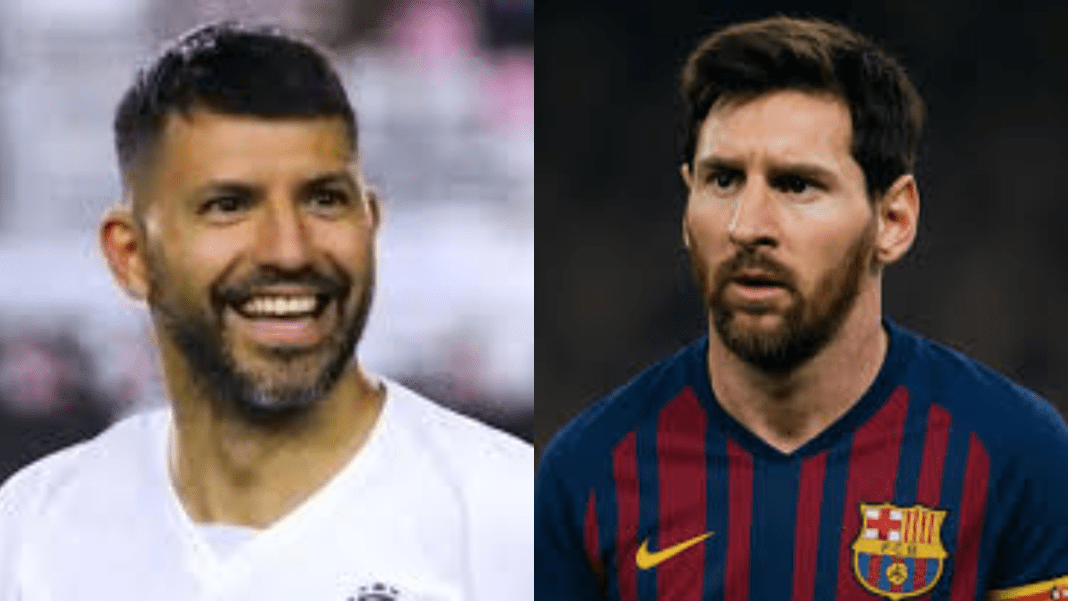

A low-quality image showing two famous Argentine footballers shirtless on a bed began spreading widely across social media in early February 2026. The photo quickly became linked to the ongoing public interest in the Jeffrey Epstein case after users claimed it came from newly released documents connected to the investigation.
The claim gained attention because it involved globally recognized athletes Lionel Messi and Sergio Agüero. Social media posts suggested the picture proved the players had been on Epstein’s private island, Little St. James. As the image circulated, fact-checking organizations started examining whether the claim had any factual basis.
How the Claim Connecting Messi and Agüero to Epstein Files Emerged
The rumor started gaining traction after the U.S. Department of Justice released another batch of files related to Jeffrey Epstein. Online users began searching the documents for celebrity names. Around the same time, an X user shared the blurry photo with a caption claiming Messi and Agüero had been on Epstein’s island.
Because both players are widely known, the post spread quickly. Some users treated the image as evidence, while others questioned its authenticity. The combination of celebrity culture and a high-profile criminal case created a situation where speculation moved faster than verification.
Epstein fallout deepens in Europe as France opens fresh trafficking and corruption probes
Fact-checking website Snopes reviewed the claim and reported that the image did not appear in the newly released Epstein files. Searches of the official documents using the names Lionel Messi and Sergio Agüero produced no results linking them to the material. This early finding weakened the central claim that the photo was part of government records.
Snopes also attempted to contact Messi through his production company, 525 Rosario, and reached out to KRÜ Esports, a company co-owned by Messi and Agüero, asking about the origins of the image. The social media user who helped spread the rumor was also contacted for clarification.
What Digital Searches Revealed About the Viral Photo
To understand where the image came from, investigators used reverse image search tools such as Google Images and TinEye. These searches found versions of the same photo online years before the recent document release.
Archived web pages showed the image had been posted as early as February 2017 on Taringa, an Argentine social networking platform that has since shut down. This timeline suggests the picture was already circulating long before the latest Epstein documents became public.
Sports reporting provided additional context. Coverage from FIFA.com described how Lionel Messi and Sergio Agüero formed a close friendship while playing together in youth tournaments. The pair reportedly shared rooms during the 2005 FIFA World Youth Championship in the Netherlands and continued rooming together during later matches.
Spanish sports publication Diario AS also reported that the two footballers often stayed together while traveling for games. This background makes it possible that the viral photo captured an ordinary moment between teammates rather than anything connected to Epstein.
Epstein case escalates globally as UN experts cite possible crimes against humanity
Users online compared the viral image with a genuine Instagram selfie Messi posted in July 2019. That photo showed Messi holding a drink while Agüero slept in a bed behind him, reinforcing the idea that similar images of the pair relaxing already existed publicly.
Why Fact-Checkers Left the Claim Unrated
Despite identifying the image’s earlier online presence, investigators could not confirm exactly where the original photo was taken or who captured it. Without clear information about its source, fact-checkers said they could not fully verify the context.
Snopes therefore left the claim unrated. This means there is not enough evidence to confirm the rumor or dismiss it completely. However, available findings show that the image did not originate from the newly released Epstein files and existed online years earlier.
Verified emails confirm Anil Ambani contacted Jeffrey Epstein regarding India-US
diplomatic news
The situation highlights how older images can resurface during major news events and be connected to unrelated narratives. When high-profile cases such as Jeffrey Epstein’s return to public discussion, familiar faces can quickly become part of online speculation.
Efforts to obtain responses from Lionel Messi, Sergio Agüero, and related organizations were ongoing at the time of reporting. Until the exact origin of the photo is established, the image remains a widely shared but unresolved piece of online content rather than confirmed evidence linked to the Epstein investigation.