

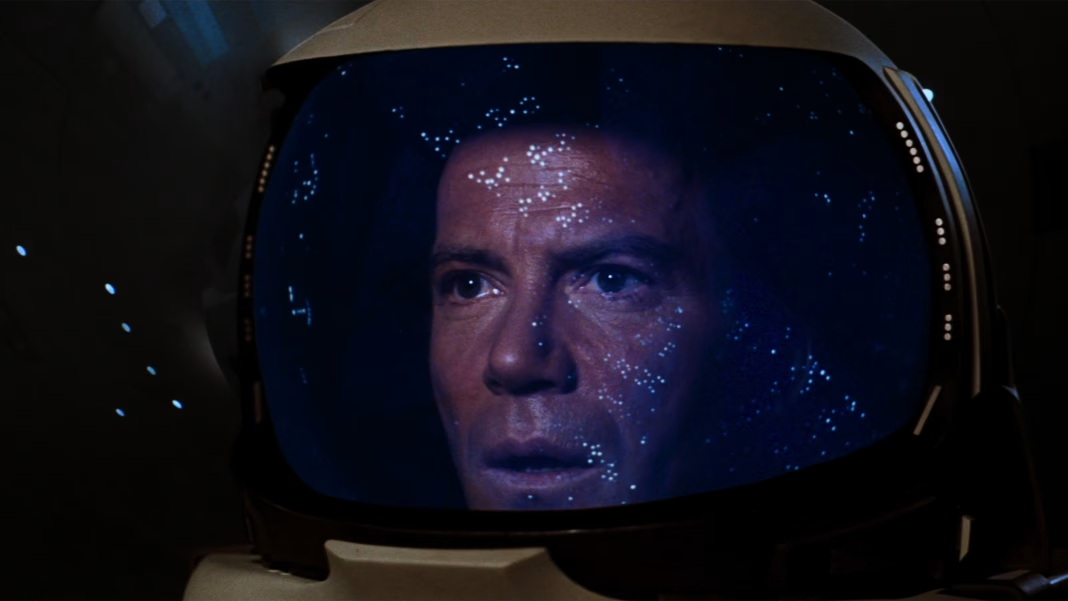
Star Trek’s First Movie: A Dazzling Space Journey That Left Fans Divided

In 1979, Star Trek made its leap from TV to the cinema with Star Trek: The Motion Picture. This was more than just a movie—it was the result of years of effort to bring the franchise back after its original series ended.

The Long Road to the Big Screen

Originally, Paramount planned a new TV show called Star Trek: Phase II. The first episode, called In Thy Image, was about a powerful artificial intelligence that mistakes humans for its creator. But after the huge success of Star Wars and Close Encounters of the Third Kind, the studio decided to turn it into a feature film instead.

That choice meant the movie needed to please two different audiences—fans of the original series, and moviegoers who now expected big-budget, spectacular sci-fi adventures.

Big Ideas, Stunning Visuals… and Slow Pacing

The film was directed by Robert Wise, who had worked on classic sci-fi films before. His approach was serious and grand, with breathtaking visuals of space and the newly redesigned USS Enterprise. The ship itself looked sleek, detailed, and majestic—almost like a floating cathedral.

Jerry Goldsmith’s musical score added to the sense of wonder, with themes so memorable they were later used in Star Trek: The Next Generation. Special effects for the time were groundbreaking, with massive space scenes, swirling energy clouds, and the mysterious V’Ger—an enormous alien machine that becomes the heart of the story.

But for many fans, the pacing was very slow. Scenes of the Enterprise traveling through space felt endless, with long shots that seemed to focus more on showing off effects than moving the story forward. While some compared it to 2001: A Space Odyssey, others felt it lacked the emotional spark that made the original Star Trek special.

Star Trek II: The Wrath of Khan Redefined Sci-Fi Cinema

A Reunion of Familiar Faces

One of the biggest highlights for audiences was seeing the original crew together again. William Shatner returned as Admiral Kirk, now back in command of the Enterprise. Leonard Nimoy played Spock, who was drawn back from a personal journey on Vulcan. DeForest Kelley reprised his role as Dr. McCoy, providing humor and warmth in between the film’s more serious moments.

Other fan favorites also appeared, including Scotty, Uhura, Chekov, and Sulu. Even Janice Rand and Nurse Chapel made brief returns. However, these characters didn’t get much to do, and most of the focus stayed on Kirk, Spock, and the film’s new characters—Will Decker and Ilia.

The story followed the Enterprise crew as they tried to communicate with V’Ger, a massive, living machine headed toward Earth. In the final act, it’s revealed that V’Ger was once NASA’s Voyager 6 probe, which had been found and transformed by an alien race. Its goal was to find its creator—and it found that creator in humanity.

The film ended with Decker and Ilia merging with V’Ger in a strange, beautiful sequence meant to symbolize evolution and higher understanding. For some viewers, this was a bold, thought-provoking ending. For others, it felt abstract and confusing.

Star Trek III: The Search for Spock – A Bridge Between Loss and Renewal

A Mixed Legacy That Changed Star Trek Forever

When it was released, Star Trek: The Motion Picture earned $139 million worldwide—a strong number for the time—but it was not the runaway hit that Star Wars had been. The high production cost, around $46 million, made some studio executives nervous.

Critics were split. Many praised the visuals, the music, and the return of the cast, but complained about the slow pace and lack of character interaction. Longtime fans enjoyed the attention to detail in the ship’s design and the grandeur of the space scenes, but some missed the humor, tension, and adventurous spirit of the TV show.

Despite the mixed reviews, the movie played an important role in Star Trek’s history. It proved that the franchise could work on the big screen. It also gave Paramount the confidence to make more films—leading to the fan-favorite Star Trek II: The Wrath of Khan, which focused more on character drama and faster-paced storytelling.

Even today, the movie stands out for its ambitious ideas and its attempt to tackle big questions about life, technology, and the meaning of existence. While it may not be everyone’s favorite, it remains a visually stunning part of Star Trek’s long journey through the stars.


Prasad Bhidey
Prasad Bhidey
Prasad Bhidey is the space enthusiast. He is the Editor of Spacetechtimes - A dedicated publication on Space related news and updates. He is also fond of Sci-fi movies and writes a series of reviews on science fiction movies exclusively for Newsinterpretation.

TOP 10 TRENDING ON NEWSINTERPRETATION

Cyber Attacks on Space Infrastructure: Satellites, GPS and the Ground Systems Behind Them

From the Viasat KA-SAT hack to GPS jamming over the Baltic, a research guide to how attackers target satellites, navigation signals and ground stations, and why it matters on Earth.

How AI Agents Are Used in Cyber Attacks: From Assisted Hacking to AI-Orchestrated Espionage

Attackers now use AI agents to scan networks, write exploits and run extortion campaigns. A research guide to documented cases, including the first reported AI-orchestrated espionage campaign, and what defenders should do.

Cyber Attacks on AI and LLMs: How Attackers Target Large Language Models

Prompt injection, data poisoning, model theft and jailbreaks: a research guide to how attackers target AI systems and large language models, with real cases and defences.

French Supermarket Refrigeration Cyberattack: How Hacking the Cold Chain Can Endanger Lives

In October 2026 attackers heated refrigeration cabinets in hundreds of French supermarkets to as much as 50°C. No one was hurt, but the attack shows how hacking the cold chain can endanger lives through fire, food poisoning and spoiled medicines.

Cyberattacks on Nuclear Facilities: Stuxnet, Kudankulam and the Limits of Air Gaps

Stuxnet, the Davis-Besse worm and malware at India’s Kudankulam plant: what they show about cyber risk at nuclear facilities and the limits of air gaps.

Triton: When Hackers Target the Safety Systems That Prevent Industrial Disasters

The 2017 Triton attack targeted the safety systems that prevent industrial disasters. What happened, who was charged, and how plants protect their last line of defence.

Cybersecurity Risks in Smart Cities: When Connected Infrastructure Fails

How connecting traffic control, emergency alerts and utilities concentrates cyber risk in cities, what the Dallas and Atlanta incidents showed, and what governments recommend.

Weaponized Drones: Hijacking, GPS Spoofing and Emerging Cyber Warfare Risks

How drones can be hijacked, jammed or misled by GPS spoofing, what researchers have demonstrated, and why governments treat drone fleets as a security risk.

Ransomware Attacks on Hospitals: How Healthcare Cyberattacks Put Patients at Risk

How ransomware against hospitals and their suppliers delays care and endangers patients, what the Düsseldorf and WannaCry cases show, and what research says about deaths.

Operational blunder exposes massive Russian cyber espionage attack on Ukrainian prosecutors

A major cyberattack has compromised the email accounts of...

Cyber Attacks on Space Infrastructure: Satellites, GPS and the Ground Systems Behind Them

From the Viasat KA-SAT hack to GPS jamming over the Baltic, a research guide to how attackers target satellites, navigation signals and ground stations, and why it matters on Earth.

French Supermarket Refrigeration Cyberattack: How Hacking the Cold Chain Can Endanger Lives

In October 2026 attackers heated refrigeration cabinets in hundreds of French supermarkets to as much as 50°C. No one was hurt, but the attack shows how hacking the cold chain can endanger lives through fire, food poisoning and spoiled medicines.

Cyberattacks on Nuclear Facilities: Stuxnet, Kudankulam and the Limits of Air Gaps

Stuxnet, the Davis-Besse worm and malware at India’s Kudankulam plant: what they show about cyber risk at nuclear facilities and the limits of air gaps.

Triton: When Hackers Target the Safety Systems That Prevent Industrial Disasters

The 2017 Triton attack targeted the safety systems that prevent industrial disasters. What happened, who was charged, and how plants protect their last line of defence.

Cybersecurity Risks in Smart Cities: When Connected Infrastructure Fails

How connecting traffic control, emergency alerts and utilities concentrates cyber risk in cities, what the Dallas and Atlanta incidents showed, and what governments recommend.

Ransomware Attacks on Hospitals: How Healthcare Cyberattacks Put Patients at Risk

How ransomware against hospitals and their suppliers delays care and endangers patients, what the Düsseldorf and WannaCry cases show, and what research says about deaths.

FBI warns of AVrecon malware targeting outdated routers linked to proxy based cybercrime

A serious cybersecurity warning has been issued regarding commonly...

Related Articles

Popular Categories
