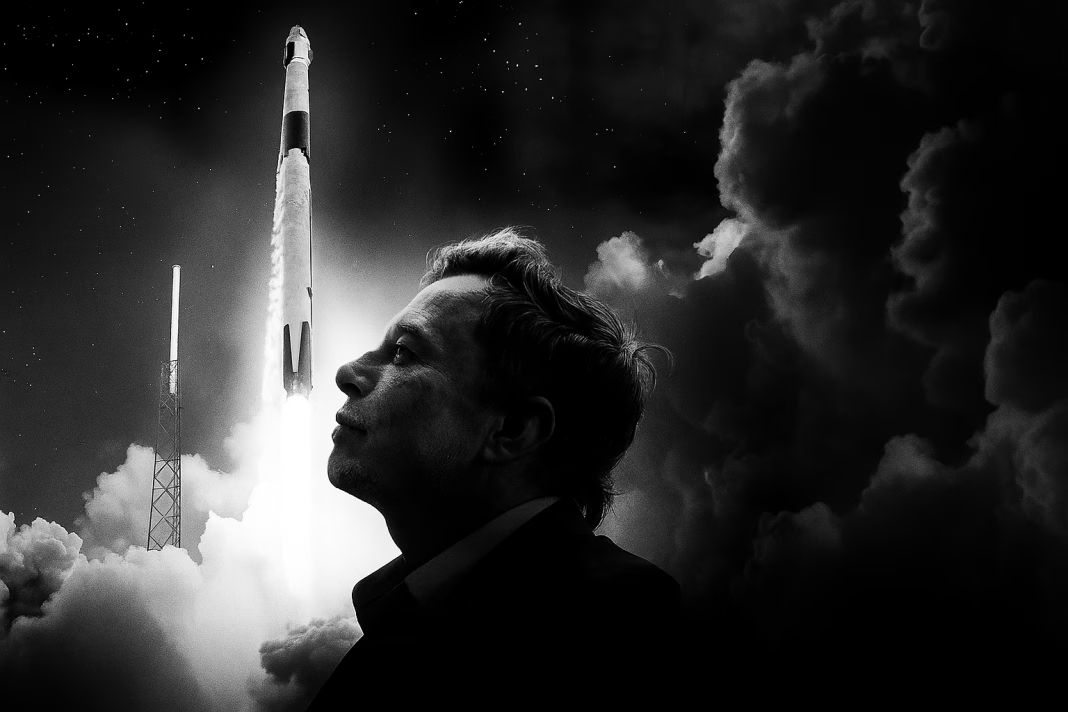

When Netflix released Return to Space, directed by Oscar-winning duo Jimmy Chin and Elizabeth Chai Vasarhelyi, it was clear the filmmakers were interested in more than just documenting a technical achievement. The film follows SpaceX’s landmark Dragon 2 mission, the first private spacecraft to carry astronauts into orbit. Yet the movie lands in a world where audiences are divided: some view the billionaire-led space race as a leap toward the future, others as a symbol of inequality in an age of urgent crises. This tension gives the documentary its peculiar gravity—it is both a celebration of innovation and an uncomfortable reminder of privilege.
The Narrative of Triumph vs. Reality on Earth
The film begins against the backdrop of recent history. In May 2020, as SpaceX prepared to send astronauts Doug Hurley and Bob Behnken to the International Space Station, global attention was riveted not on the skies, but on the streets. The murder of George Floyd days earlier had ignited worldwide protests, and the symbolism of a shiny new rocket cutting through the atmosphere while society burned below was impossible to ignore. Return to Space briefly acknowledges these competing realities but quickly shifts focus back to its central story: the dream of exploration.
At its core, the film is about risk, resilience, and vision. Chin and Vasarhelyi use archival footage and personal testimonies to build suspense, reminding viewers of past disasters like the 2003 Columbia tragedy. These reminders heighten the stakes for Hurley and Behnken, both fathers with families who must confront the possibility that their mission could end in catastrophe. The documentary invites empathy for the astronauts’ bravery, emphasizing the human cost that often gets lost in conversations about billionaires and budgets.
Still, the movie’s uplifting tone raises questions. Is this triumph merely a distraction from deeper injustices? Should audiences feel inspired by Elon Musk’s rhetoric about colonizing Mars, or should they remain skeptical of projects that often benefit a select few? The documentary doesn’t fully interrogate these contradictions, preferring instead to lean toward inspiration. That choice leaves room for criticism, even as the storytelling keeps viewers engaged.
Elon Musk, Vulnerability, and Public Image
Much of the film’s intrigue stems from its portrayal of Musk. The entrepreneur has long been a polarizing figure—admired for ambition, ridiculed for ego. Here, he appears in moments of rare vulnerability. His eyes well with tears when recalling the skepticism of space icons like Neil Armstrong, and he chokes up when considering the dangers faced by Hurley and Behnken, reflecting on his own role as a father. The film also acknowledges his public admission of having Asperger’s syndrome, which reframes aspects of his persona often criticized as arrogance.
Yet, for all its glimpses into Musk’s humanity, the documentary largely sidesteps critical examination of his privilege and wealth. The larger debate—whether ventures like SpaceX reinforce elitism by turning exploration into a billionaire’s playground—remains underexplored. The filmmakers seem intent on crafting a feel-good narrative rather than an investigative one. For some viewers, this may feel like missed opportunity. For others, it will be exactly what makes the documentary palatable.
What Return to Space does succeed in is framing Musk as one part of a larger story. The astronauts remain the emotional core. Their professionalism, integrity, and commitment ensure that the spectacle never drifts too far into personality cult. When their capsule returns to Earth after a nail-biting sequence of delayed parachute deployment, it is their courage, not Musk’s wealth, that leaves the strongest impression.
The Bigger Picture: Space Dreams in Troubled Times
Visually, the film is stunning. Sweeping views of Earth from orbit and the spectacle of rockets landing upright recall cinematic classics like 2001: A Space Odyssey. The editing maintains a brisk pace across its two-hour runtime, keeping tension alive even in moments of technical explanation. But as dazzling as these sequences are, they cannot fully obscure the ethical dilemmas that underpin the film’s subject.
The question remains: should humanity invest so much energy into leaving Earth while its own survival on the planet is under threat? Climate collapse, systemic racism, economic divides, and wars dominate the global landscape. In this context, SpaceX’s accomplishments risk appearing disconnected from the pressing realities of everyday people. The astronauts voice reflections about Earth’s fragility when seen from above, but the film does not linger long on whether these sentiments translate into meaningful action once back on the ground.
To its credit, Return to Space gestures toward these broader concerns without sinking into cynicism. It highlights the cost-effectiveness of reusable rockets, the vision of leaders like Gwynne Shotwell, and the potential for private innovation to accelerate progress. Still, the film leaves viewers to grapple with whether this future is being built for everyone—or only for those who can afford a seat on the next spacecraft.
Return to Space is an engaging, emotional, and visually striking documentary that captures one of the most significant space achievements of the 21st century. It humanizes its subjects—astronauts and even Musk—while delivering suspense worthy of a theatrical experience. Yet it is also a film that avoids confronting the deeper contradictions of modern space exploration, particularly its ties to privilege, inequality, and distraction from crises on Earth.
As a piece of storytelling, it succeeds in drawing audiences into the thrill of discovery. As a critical exploration of what spaceflight means in today’s fractured world, it leaves questions unresolved. Perhaps that is its ultimate strength and weakness—it inspires awe but demands skepticism, inviting viewers to marvel at what humanity can achieve, even while wondering who gets left behind in the process.