

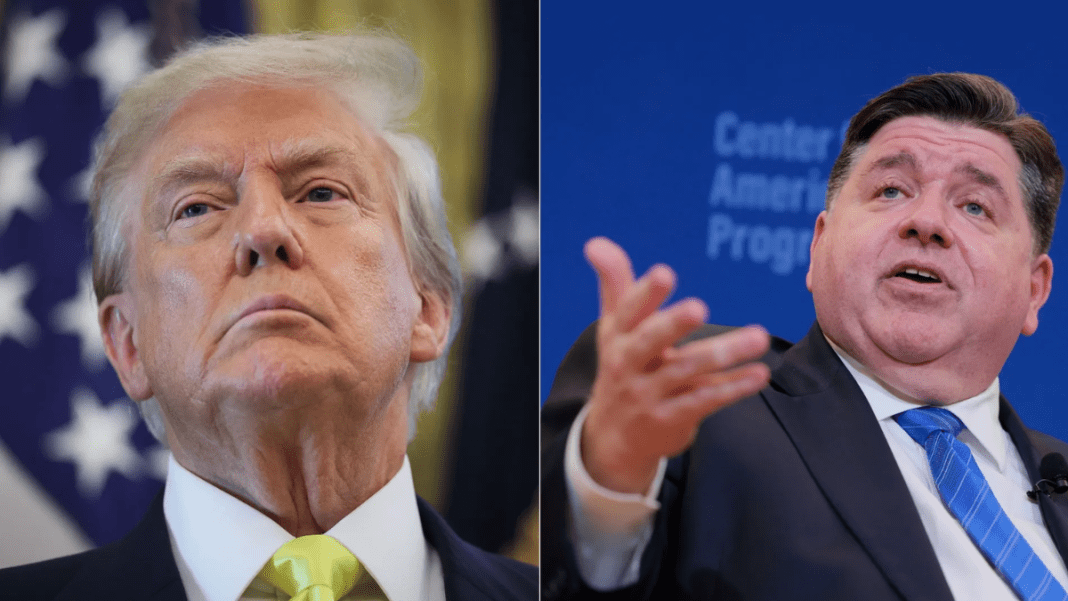

Trump deploys 400 Texas National Guard members to Illinois and Oregon — JB Pritzker calls it ‘a direct invasion’

A major federal order has sent shockwaves across multiple states. President Donald Trump has instructed the deployment of 400 members of the Texas National Guard to Illinois, Oregon, and other areas. This decision comes amid ongoing protests and security concerns at immigration-related facilities in these states.

Illinois Governor JB Pritzker has described the deployment as a serious federal intervention, calling it an “invasion”. The National Guard members are being sent to maintain order and provide additional security where tensions have escalated in recent weeks.

The deployment is unprecedented in scale, with troops being moved from Texas to several distant locations. The order reflects growing federal involvement in situations that local authorities have been managing on their own. Local and federal officials say that the goal is to protect federal properties and personnel, and to ensure public safety amid rising tensions.

Protests and Rising Tensions at Immigration Facilities

The deployment comes after a series of protests at immigration and enforcement facilities. In Illinois, crowds have gathered near federal buildings, demanding changes in policies and expressing anger at recent detentions. Demonstrations have drawn people from different communities, all voicing concerns over immigration enforcement practices.

U.S. Treasury’s Trump coin proposal for America’s 250th anniversary sparks fierce political backlash

These gatherings have at times resulted in confrontations between demonstrators and federal security personnel. Law enforcement has worked to keep protests peaceful, but clashes have occurred, increasing concerns about safety for both civilians and officials.

Oregon has also seen similar demonstrations. In Portland and other cities, protesters have marched and held rallies near immigration enforcement facilities. Some of these protests have grown large enough to disrupt normal city activities, prompting federal authorities to consider additional measures.

Officials say that National Guard members will help provide extra protection for federal facilities. Their responsibilities include securing entrances, monitoring crowds, supporting local law enforcement, and assisting with traffic management in areas affected by protests. The presence of troops is intended to reduce the risk of property damage, prevent escalation of violence, and ensure that federal buildings can continue operations without interruptions.

Legal Challenges and State Reactions

Governor JB Pritzker has strongly criticized the deployment, describing it as an overreach of federal authority. He emphasized that state officials should have a say in whether federal troops are sent to local areas. The situation highlights the tension that can occur when federal and state governments have differing approaches to handling protests and security issues.

Apple Bows to Trump Administration, Pulls ICEBlock App After DOJ and FBI Pressure

A federal judge recently blocked a portion of the deployment in Oregon, citing constitutional concerns. The court decision underscores the legal complexities involved when military forces are sent into civilian areas. Legal experts note that these challenges often involve balancing public safety with the protection of citizens’ rights to protest and assemble.

Authorities report that the deployment is ongoing, with National Guard members arriving in stages over the coming days. Troops are being stationed at key locations where federal officials believe there is a higher risk of unrest. Their mission focuses on maintaining security around federal properties and supporting local authorities when needed.

The deployment of 400 Texas National Guard members represents one of the largest federal mobilizations of its kind in recent years. Officials stress that the troops are there for security purposes and are not intended to engage directly with protesters. The operation has attracted significant attention, with debates about federal authority and state sovereignty continuing in public discussions.

Security measures are being coordinated closely with local law enforcement in each state to ensure a visible federal presence without unnecessarily escalating tensions. The National Guard deployment aims to provide stability while allowing local authorities to continue managing day-to-day community issues safely.


Pearl Croft
Pearl Crofthttps://newsinterpretation.com
I am Pearl Croft I give “News Interpretation” an insight into the most recent news hitting the “Consumer Goods” sector in Wall Street. I have been an independent financial adviser for over 11 years in the city and in recent years turned my experience in finance and passion for journalism into a full time role. I perform analysis of Companies and publicize valuable information for shareholder community. But writing about the political developments is my hobby.

TOP 10 TRENDING ON NEWSINTERPRETATION

Cyber Attacks on Space Infrastructure: Satellites, GPS and the Ground Systems Behind Them

From the Viasat KA-SAT hack to GPS jamming over the Baltic, a research guide to how attackers target satellites, navigation signals and ground stations, and why it matters on Earth.

How AI Agents Are Used in Cyber Attacks: From Assisted Hacking to AI-Orchestrated Espionage

Attackers now use AI agents to scan networks, write exploits and run extortion campaigns. A research guide to documented cases, including the first reported AI-orchestrated espionage campaign, and what defenders should do.

Cyber Attacks on AI and LLMs: How Attackers Target Large Language Models

Prompt injection, data poisoning, model theft and jailbreaks: a research guide to how attackers target AI systems and large language models, with real cases and defences.

French Supermarket Refrigeration Cyberattack: How Hacking the Cold Chain Can Endanger Lives

In October 2026 attackers heated refrigeration cabinets in hundreds of French supermarkets to as much as 50°C. No one was hurt, but the attack shows how hacking the cold chain can endanger lives through fire, food poisoning and spoiled medicines.

Cyberattacks on Nuclear Facilities: Stuxnet, Kudankulam and the Limits of Air Gaps

Stuxnet, the Davis-Besse worm and malware at India’s Kudankulam plant: what they show about cyber risk at nuclear facilities and the limits of air gaps.

Triton: When Hackers Target the Safety Systems That Prevent Industrial Disasters

The 2017 Triton attack targeted the safety systems that prevent industrial disasters. What happened, who was charged, and how plants protect their last line of defence.

Cybersecurity Risks in Smart Cities: When Connected Infrastructure Fails

How connecting traffic control, emergency alerts and utilities concentrates cyber risk in cities, what the Dallas and Atlanta incidents showed, and what governments recommend.

Weaponized Drones: Hijacking, GPS Spoofing and Emerging Cyber Warfare Risks

How drones can be hijacked, jammed or misled by GPS spoofing, what researchers have demonstrated, and why governments treat drone fleets as a security risk.

Ransomware Attacks on Hospitals: How Healthcare Cyberattacks Put Patients at Risk

How ransomware against hospitals and their suppliers delays care and endangers patients, what the Düsseldorf and WannaCry cases show, and what research says about deaths.

Operational blunder exposes massive Russian cyber espionage attack on Ukrainian prosecutors

A major cyberattack has compromised the email accounts of...

Cyber Attacks on Space Infrastructure: Satellites, GPS and the Ground Systems Behind Them

From the Viasat KA-SAT hack to GPS jamming over the Baltic, a research guide to how attackers target satellites, navigation signals and ground stations, and why it matters on Earth.

French Supermarket Refrigeration Cyberattack: How Hacking the Cold Chain Can Endanger Lives

In October 2026 attackers heated refrigeration cabinets in hundreds of French supermarkets to as much as 50°C. No one was hurt, but the attack shows how hacking the cold chain can endanger lives through fire, food poisoning and spoiled medicines.

Cyberattacks on Nuclear Facilities: Stuxnet, Kudankulam and the Limits of Air Gaps

Stuxnet, the Davis-Besse worm and malware at India’s Kudankulam plant: what they show about cyber risk at nuclear facilities and the limits of air gaps.

Triton: When Hackers Target the Safety Systems That Prevent Industrial Disasters

The 2017 Triton attack targeted the safety systems that prevent industrial disasters. What happened, who was charged, and how plants protect their last line of defence.

Cybersecurity Risks in Smart Cities: When Connected Infrastructure Fails

How connecting traffic control, emergency alerts and utilities concentrates cyber risk in cities, what the Dallas and Atlanta incidents showed, and what governments recommend.

Ransomware Attacks on Hospitals: How Healthcare Cyberattacks Put Patients at Risk

How ransomware against hospitals and their suppliers delays care and endangers patients, what the Düsseldorf and WannaCry cases show, and what research says about deaths.

FBI warns of AVrecon malware targeting outdated routers linked to proxy based cybercrime

A serious cybersecurity warning has been issued regarding commonly...

Related Articles

Popular Categories
