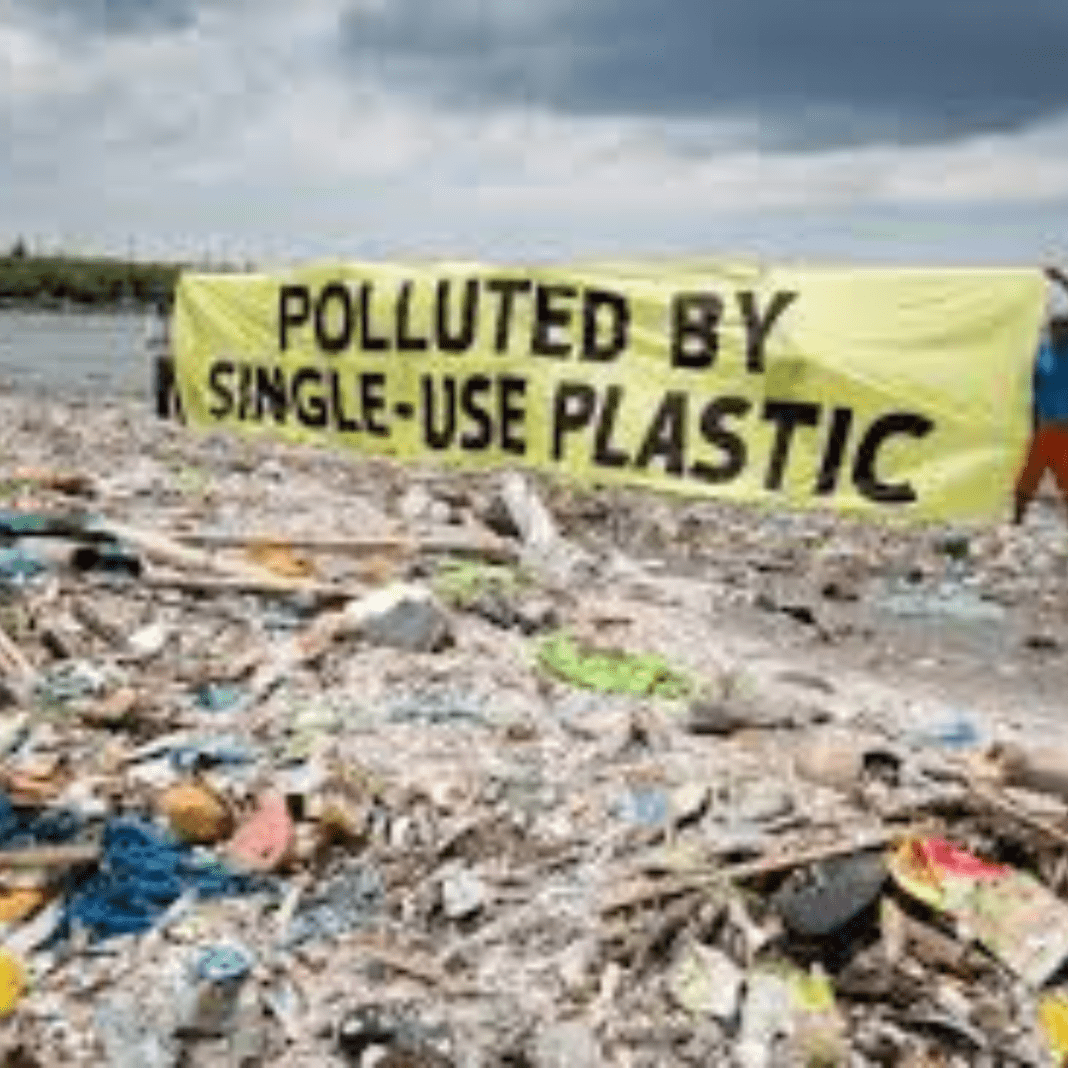

The world generates a total of 57 million tons of plastic pollution annually, and a substantial part ends up in the Global South. That’s enough to fill New York City’s Central Park to the height of the Empire State Building every year. That is the finding out of a new study by researchers at the University of Leeds and published in *Nature*. The study analyzed waste from over 50,000 cities globally.
The study cited that the Global South accounted for more than two-thirds of plastic pollution. It’s the region especially battling with poor waste management systems. According to the study, 15% of the world’s population experiences either very low or no provision of waste collection services. Waste collection is low in the Southeast Asia and Sub-Saharan Africa regions.
India is the single biggest source of plastic waste in the world, contributing about 10.2 million tonnes per year, which is more than twice the amount contributed by Nigeria and Indonesia together. China takes fourth place, though it is the country that gets most criticism for pollution. But on the opposite side, it also has far outrun others in making good and solid steps to reduce its waste. The countries following in the list of worst polluters are Pakistan, Bangladesh, Russia, and Brazil. These eight countries combined account for more than half the plastic pollution in the world.
Cities Facing Severe Plastic Pollution
Lagos, Nigeria, is the city that generates the most plastic pollution. New Delhi, Luanda, Karachi, and Cairo follow consecutively. In all these cities, according to the study, waste management is also extremely problematic.
The United States drops to 90th place with more than 52,500 tons, and the United Kingdom holds 135th place, producing close to 5,100 tons. These positions do little to change the generally alarming panorama.
This came after the historic 2022 global agreement to develop a legally binding treaty on plastic pollution. The treaty is expected to address pollution in oceans and other environments. Final negotiations will be held in South Korea in November.
The investigation employed artificial intelligence to estimate how much plastics are burned or otherwise inappropriately disposed of. This accounts for roughly 57% of the pollution. From these practices, microplastics and nanoplastics result, which pose grave health risks. They have invaded the most remote locations, from the top of Mount Everest to the bottom of the Mariana Trench, and now find their way into what we eat and drink.
Industry Reactions and Criticisms
The problem of microplastics does not relate only to a specific region, says Costas Velis, a study author. These tiny particles are distributed all over the globe, and consequently, the problem affects all of us. He said it should not be pointed out on behalf of specific regions as a problem.
The critics, for their part, consider that such a narrow focus on pollution has left out wider issues like those of plastic production. According to Neil Tangri at GAIA, an exclusively waste-management focus risks taking airtime away from the more important drive to reduce production. He warns it could undermine efforts to address the issue upstream.
The volume of plastic pollution worries Theresa Karlsson from the International Pollutants Elimination Network. In her opinion, it is a volume that reflects an unmanageable level of production. She also points out the global trade in plastic waste, which she insists appears on the increase despite China’s ban on the importation of waste.
The Path Forward
The study does, however, note that the quantity of plastic waste traded is relatively low. Kara Lavender Law, an oceanography professor, corroborates these views. She says that this study is one of the most comprehensive studies on plastic waste to date.
The results are being lauded by representatives of industry. “The study brings insights on how globally, the waste management practices need to be improved,” said Chris Jahn of the International Council on Chemical Associations, a chemical trade group. “While the growing concern of the public about plastic pollution is key, addressing uncollected waste should be the immediate focus of countries looking for a solution of the problem,” said Jahn. Yet the plastics industry has fought any limits on plastic production in treaty negotiations.
The United Nations warns that plastic production will go up several fold. It expects production of plastics to increase from 440 million tons annually to over 1,200 million tons. This will be terrible for the already suffering plastic crisis that the planet is in.
The findings of this study underline a pressing challenge that people all over the world are faced with. Plastic pollution is thus a problem that has reached literally every corner of the globe, and obviously requires comprehensive and collaborative efforts to solve. Improved waste management is only part of the solution in this crisis; concerted effort is needed to stem the tide of plastic production and consumption.