


Hezbollah Faces Crisis as Israeli Strikes Target Key Leaders

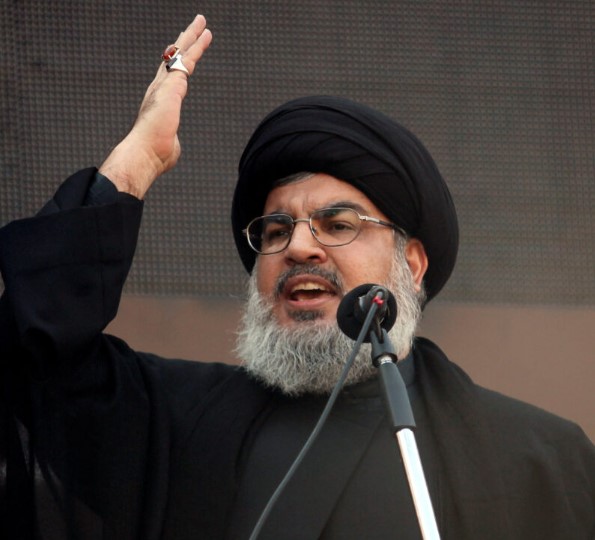
The recent events in Lebanon have sent shockwaves through the region, particularly within the ranks of Hezbollah, a powerful militant group. Just a week after a major attack that resulted in the death of a key leader, Israeli forces targeted Hachem Safieddine, who is believed to be the next potential leader of Hezbollah. This pattern of violence highlights the ongoing conflict between Israel and Hezbollah, raising concerns about the future stability of Lebanon.

Israel’s History of Targeted Strikes

Israel has a long-standing strategy of eliminating its adversaries through targeted strikes. This tactic has frequently resulted in civilian casualties, further complicating an already volatile situation. In the last few months, Israel has intensified its campaign against Hezbollah, taking out several high-ranking officials within the group. This marks a significant escalation in the ongoing conflict, as the Israeli military seeks to weaken Hezbollah’s leadership and military capabilities.

The recent airstrike in Beirut aimed at Hachem Safieddine underscores the dangers faced by Hezbollah leaders. As the presumed next leader, his elimination would represent a critical blow to the group’s structure. Such attacks are not new; Israel has previously killed numerous Hezbollah leaders. Among the victims is Ibrahim Aqil, a veteran member of Hezbollah’s military wing, who was reportedly killed in a separate airstrike earlier in September. Aqil had managed to survive for more than 40 years of conflict with Israel, making his loss significant for the organization.

Targeting Military Capabilities

Hezbollah’s military strength relies heavily on its leadership and the expertise of its commanders. In July, Fuad Shukur, who was responsible for developing advanced weaponry within the group, was killed in another Israeli airstrike. This included precise-guided missiles, cruise missiles, anti-ship missiles, long-range rockets, and unmanned aerial vehicles (UAVs). His death further weakened Hezbollah’s military capabilities, as he was considered crucial in providing advanced weapons systems for the group.

Additionally, the recent killing of Nabil Qaouk, a senior military commander who had started visiting Iran for support, reflects the deepening divide between Israel and Hezbollah. His loss, coupled with the targeting of other key figures such as Ali Karaki and Ibrahim Jazini, has created a significant leadership crisis within Hezbollah. Karaki managed military operations along the contested border with Israel, while Jazini oversaw internal security. An airstrike killed both leaders along with the former Hezbollah leader, exacerbating the group’s instability.

The Impact of Leadership Loss Amid Strikes

The death of the former leader has left Hezbollah in a precarious position. Leadership vacuums can lead to uncertainty and turmoil within organizations, and Hezbollah is no exception. The former leader was both praised and criticized in Lebanon. While some hailed him as a hero for expelling Israeli forces from southern Lebanon in 2000, others saw him as a puppet for Iranian interests.

The loss of these leaders has profound implications for Hezbollah’s operations and strategies. As the group grapples with the absence of experienced commanders, it faces challenges in maintaining its military effectiveness. The recent airstrikes have decimated not only the leadership but also the strategic planning capabilities that were once the backbone of Hezbollah’s military operations.

The drone unit has played a vital role in conducting operations deep within Israeli territory. However, it has now lost its chief. This loss adds to the growing sense of vulnerability within Hezbollah. These developments occur while the organization is also dealing with ongoing tensions with Israel. As a result, the recent attacks are particularly impactful for Hezbollah.

The Bottomline

The wave of assassinations targeting Hezbollah leaders has created a significant crisis within the organization. The continuous strikes by Israeli forces are part of a broader strategy to undermine Hezbollah’s influence and capabilities in the region. These attacks target key leaders to weaken the organization further. As Hezbollah navigates this turbulent period, it faces significant challenges ahead. The loss of such important figures has serious implications for its military operations. This could ultimately reshape Hezbollah’s strategies in Lebanon and beyond.

TOP 10 TRENDING ON NEWSINTERPRETATION

Cyber Attacks on Space Infrastructure: Satellites, GPS and the Ground Systems Behind Them

From the Viasat KA-SAT hack to GPS jamming over the Baltic, a research guide to how attackers target satellites, navigation signals and ground stations, and why it matters on Earth.

How AI Agents Are Used in Cyber Attacks: From Assisted Hacking to AI-Orchestrated Espionage

Attackers now use AI agents to scan networks, write exploits and run extortion campaigns. A research guide to documented cases, including the first reported AI-orchestrated espionage campaign, and what defenders should do.

Cyber Attacks on AI and LLMs: How Attackers Target Large Language Models

Prompt injection, data poisoning, model theft and jailbreaks: a research guide to how attackers target AI systems and large language models, with real cases and defences.

French Supermarket Refrigeration Cyberattack: How Hacking the Cold Chain Can Endanger Lives

In October 2026 attackers heated refrigeration cabinets in hundreds of French supermarkets to as much as 50°C. No one was hurt, but the attack shows how hacking the cold chain can endanger lives through fire, food poisoning and spoiled medicines.

Cyberattacks on Nuclear Facilities: Stuxnet, Kudankulam and the Limits of Air Gaps

Stuxnet, the Davis-Besse worm and malware at India’s Kudankulam plant: what they show about cyber risk at nuclear facilities and the limits of air gaps.

Triton: When Hackers Target the Safety Systems That Prevent Industrial Disasters

The 2017 Triton attack targeted the safety systems that prevent industrial disasters. What happened, who was charged, and how plants protect their last line of defence.

Cybersecurity Risks in Smart Cities: When Connected Infrastructure Fails

How connecting traffic control, emergency alerts and utilities concentrates cyber risk in cities, what the Dallas and Atlanta incidents showed, and what governments recommend.

Weaponized Drones: Hijacking, GPS Spoofing and Emerging Cyber Warfare Risks

How drones can be hijacked, jammed or misled by GPS spoofing, what researchers have demonstrated, and why governments treat drone fleets as a security risk.

Ransomware Attacks on Hospitals: How Healthcare Cyberattacks Put Patients at Risk

How ransomware against hospitals and their suppliers delays care and endangers patients, what the Düsseldorf and WannaCry cases show, and what research says about deaths.

Operational blunder exposes massive Russian cyber espionage attack on Ukrainian prosecutors

A major cyberattack has compromised the email accounts of...

Cyber Attacks on Space Infrastructure: Satellites, GPS and the Ground Systems Behind Them

From the Viasat KA-SAT hack to GPS jamming over the Baltic, a research guide to how attackers target satellites, navigation signals and ground stations, and why it matters on Earth.

French Supermarket Refrigeration Cyberattack: How Hacking the Cold Chain Can Endanger Lives

In October 2026 attackers heated refrigeration cabinets in hundreds of French supermarkets to as much as 50°C. No one was hurt, but the attack shows how hacking the cold chain can endanger lives through fire, food poisoning and spoiled medicines.

Cyberattacks on Nuclear Facilities: Stuxnet, Kudankulam and the Limits of Air Gaps

Stuxnet, the Davis-Besse worm and malware at India’s Kudankulam plant: what they show about cyber risk at nuclear facilities and the limits of air gaps.

Triton: When Hackers Target the Safety Systems That Prevent Industrial Disasters

The 2017 Triton attack targeted the safety systems that prevent industrial disasters. What happened, who was charged, and how plants protect their last line of defence.

Cybersecurity Risks in Smart Cities: When Connected Infrastructure Fails

How connecting traffic control, emergency alerts and utilities concentrates cyber risk in cities, what the Dallas and Atlanta incidents showed, and what governments recommend.

Ransomware Attacks on Hospitals: How Healthcare Cyberattacks Put Patients at Risk

How ransomware against hospitals and their suppliers delays care and endangers patients, what the Düsseldorf and WannaCry cases show, and what research says about deaths.

FBI warns of AVrecon malware targeting outdated routers linked to proxy based cybercrime

A serious cybersecurity warning has been issued regarding commonly...

Related Articles

Popular Categories
