

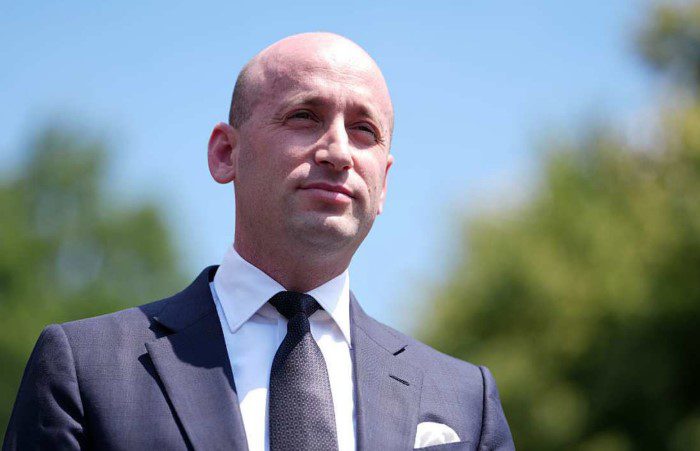

Stephen Miller fires back at AOC’s height jab — ‘We knew her brain didn’t work, now we know her eyes don’t’

White House Deputy Chief of Staff Stephen Miller responded strongly on Monday, October 6, following a public attack by Representative Alexandria Ocasio-Cortez. The congresswoman had mocked Miller’s height during a Sunday livestream, turning her comment into a broader critique of conservative figures.

Stephen Miller Responds to AOC’s Height Jab

Stephen, who stands 5 feet 10 inches tall, addressed the remarks on Fox News’ program The Ingraham Angle. He stressed that AOC’s attempt to belittle him was misplaced and reflected more on her than on him. “Well, we knew that her brain didn’t work. Now we know their eyes don’t work. I mean, she’s just a mess, right? What a train wreck,” Miller said.

He further clarified that his height is considerably taller than what AOC claimed during her livestream. By doing so, Miller sought to downplay her ridicule and shift the conversation from personal attacks to her broader perceived ineffectiveness in politics. His response framed the incident as an example of how AOC’s public behavior sometimes draws more attention than substantive issues.

Political firestorm erupts as Newsom warns Stephen Miller is weaponizing tragedy to attack democracy

Miller’s comments also highlighted the difference in approach between social media-based attacks and traditional media responses. While AOC used her platform to make a sharp, public jab, Miller chose to address it in a televised interview, giving him a more controlled environment to explain his perspective.

Miller Labels AOC a ‘Walking Nightmare’

Stephen Miller did not stop at merely defending his height. He expanded his critique, describing AOC as a liability to her own party. “I think the important point is that every time she’s on TV, Republican approval ratings go up. Democrat approval ratings go down. That lady is a walking nightmare,” he said.

Stephen’s statement underscores a sharp divide between some Republican leaders and the progressive wing of the Democratic Party. By highlighting the effect AOC’s media presence has on political approval ratings, he suggested that her public statements often backfire on her own party. Miller’s remarks painted her as someone whose actions, intentionally or not, create political difficulties for Democrats while energizing Republicans.

Trump’s $28 billion funding freeze for Democratic states raises constitutional red flags

The deputy chief of staff made these remarks outside the West Wing in Washington, D.C., a location where he frequently addresses reporters on ongoing political issues. In past statements, Miller has been vocal about high-profile national debates and the Trump administration’s policy priorities, making him a familiar figure for such rebuttals.

Context of AOC’s Remarks

The controversy began during a Sunday Instagram livestream, when Alexandria Ocasio-Cortez directly targeted Stephen Miller. She encouraged her followers to “laugh at” him, calling him a “clown” and mocking his stature. “I’ve never seen that guy in real life, but he looks like he’s, like, 4 feet, 10 inches tall. He looks like he is angry about the fact he’s 4 feet, 10 inches, and he has taken that anger out on any other population possible. Like, laugh at them,” she said.

This attack is part of a broader pattern of AOC engaging in public disputes with conservative figures. For example, in September, she criticized Charlie Kirk as “uneducated” and “ignorant” shortly after his death. She was also among 58 Democrats who voted against a resolution honoring Kirk as a “courageous American patriot” who “lived out his faith with conviction, courage, and compassion.”

Newsom office doubles down on fascist label for Miller citing his political actions and views

Observers note that AOC frequently uses social media platforms like Instagram and Twitter to share her political opinions and criticize opponents, often creating wide public attention and sparking debates across party lines. In contrast, Miller’s responses come through traditional media outlets, allowing him to deliver a structured rebuttal and present his side of the story clearly.

Stephen Miller’s response to AOC’s height mockery illustrates the ongoing tensions among prominent political figures in Washington. The exchange highlights the sharp contrasts in communication styles between the two—AOC leveraging social media to directly engage her followers, and Miller using televised interviews to respond thoughtfully and defend his reputation.


TOP 10 TRENDING ON NEWSINTERPRETATION

Cyber Attacks on Space Infrastructure: Satellites, GPS and the Ground Systems Behind Them

From the Viasat KA-SAT hack to GPS jamming over the Baltic, a research guide to how attackers target satellites, navigation signals and ground stations, and why it matters on Earth.

How AI Agents Are Used in Cyber Attacks: From Assisted Hacking to AI-Orchestrated Espionage

Attackers now use AI agents to scan networks, write exploits and run extortion campaigns. A research guide to documented cases, including the first reported AI-orchestrated espionage campaign, and what defenders should do.

Cyber Attacks on AI and LLMs: How Attackers Target Large Language Models

Prompt injection, data poisoning, model theft and jailbreaks: a research guide to how attackers target AI systems and large language models, with real cases and defences.

French Supermarket Refrigeration Cyberattack: How Hacking the Cold Chain Can Endanger Lives

In October 2026 attackers heated refrigeration cabinets in hundreds of French supermarkets to as much as 50°C. No one was hurt, but the attack shows how hacking the cold chain can endanger lives through fire, food poisoning and spoiled medicines.

Cyberattacks on Nuclear Facilities: Stuxnet, Kudankulam and the Limits of Air Gaps

Stuxnet, the Davis-Besse worm and malware at India’s Kudankulam plant: what they show about cyber risk at nuclear facilities and the limits of air gaps.

Triton: When Hackers Target the Safety Systems That Prevent Industrial Disasters

The 2017 Triton attack targeted the safety systems that prevent industrial disasters. What happened, who was charged, and how plants protect their last line of defence.

Cybersecurity Risks in Smart Cities: When Connected Infrastructure Fails

How connecting traffic control, emergency alerts and utilities concentrates cyber risk in cities, what the Dallas and Atlanta incidents showed, and what governments recommend.

Weaponized Drones: Hijacking, GPS Spoofing and Emerging Cyber Warfare Risks

How drones can be hijacked, jammed or misled by GPS spoofing, what researchers have demonstrated, and why governments treat drone fleets as a security risk.

Ransomware Attacks on Hospitals: How Healthcare Cyberattacks Put Patients at Risk

How ransomware against hospitals and their suppliers delays care and endangers patients, what the Düsseldorf and WannaCry cases show, and what research says about deaths.

Operational blunder exposes massive Russian cyber espionage attack on Ukrainian prosecutors

A major cyberattack has compromised the email accounts of...

Cyber Attacks on Space Infrastructure: Satellites, GPS and the Ground Systems Behind Them

From the Viasat KA-SAT hack to GPS jamming over the Baltic, a research guide to how attackers target satellites, navigation signals and ground stations, and why it matters on Earth.

French Supermarket Refrigeration Cyberattack: How Hacking the Cold Chain Can Endanger Lives

In October 2026 attackers heated refrigeration cabinets in hundreds of French supermarkets to as much as 50°C. No one was hurt, but the attack shows how hacking the cold chain can endanger lives through fire, food poisoning and spoiled medicines.

Cyberattacks on Nuclear Facilities: Stuxnet, Kudankulam and the Limits of Air Gaps

Stuxnet, the Davis-Besse worm and malware at India’s Kudankulam plant: what they show about cyber risk at nuclear facilities and the limits of air gaps.

Triton: When Hackers Target the Safety Systems That Prevent Industrial Disasters

The 2017 Triton attack targeted the safety systems that prevent industrial disasters. What happened, who was charged, and how plants protect their last line of defence.

Cybersecurity Risks in Smart Cities: When Connected Infrastructure Fails

How connecting traffic control, emergency alerts and utilities concentrates cyber risk in cities, what the Dallas and Atlanta incidents showed, and what governments recommend.

Ransomware Attacks on Hospitals: How Healthcare Cyberattacks Put Patients at Risk

How ransomware against hospitals and their suppliers delays care and endangers patients, what the Düsseldorf and WannaCry cases show, and what research says about deaths.

FBI warns of AVrecon malware targeting outdated routers linked to proxy based cybercrime

A serious cybersecurity warning has been issued regarding commonly...

Related Articles

Popular Categories
