
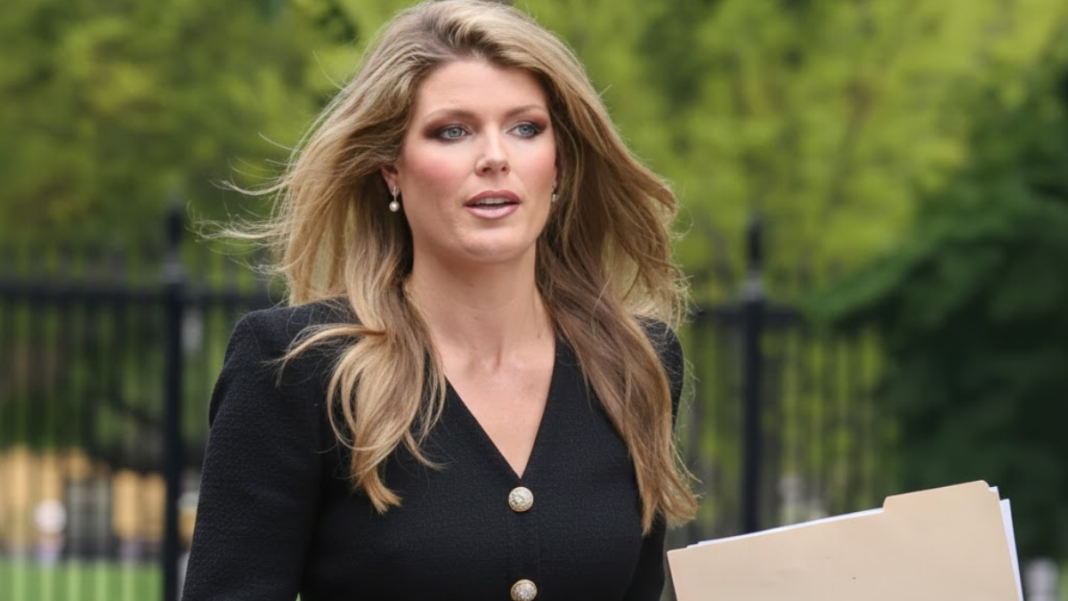

Lindsey Halligan has stepped down as interim U.S. attorney for the Eastern District of Virginia after a federal court ruled that her appointment was unconstitutional. The announcement was made by Attorney General Pam Bondi, who defended Halligan and criticized the legal rulings that forced her exit.
Halligan, appointed by President Donald Trump, had served in the role for about four months. During her time in office, she brought criminal charges against former FBI Director James Comey and New York Attorney General Letitia James. Those cases were later dismissed after a judge found that Halligan did not have the legal authority to hold the position.
The situation has sparked national attention because it involves the limits of executive power, the authority of courts, and the impact of improper appointments on the justice system.
Court Rulings Lead to Removal
The legal challenge began when U.S. District Judge Cameron McGowan Currie ruled in November that Halligan’s appointment violated the Constitution. The court found that she had not been confirmed by the Senate or appointed by the judiciary, both of which are required for someone to legally serve in that role.
Because of this ruling, the indictments Halligan secured against James Comey and Letitia James were dismissed. The court determined that actions taken by an unlawfully appointed official could not stand.
Trump Backs Pam Bondi in Public, but Private Anger Grows Over DOJ Handling of Epstein Files
Despite this decision, Halligan continued to use the title of U.S. attorney in court filings. This prompted U.S. District Judge David Novak to issue a formal order telling her to stop using the title. He warned that continued use could result in disciplinary action.
Judge Novak later criticized the Justice Department’s response, which was signed by Attorney General Pam Bondi and Deputy Attorney General Todd Blanche. He said the tone of the response was inappropriate and unprofessional for a federal court setting.
In his order, Judge Novak stated that it was unacceptable for the Department of Justice to ignore court orders while prosecuting others for violating the law. He warned that allowing officials to choose which rulings to follow would weaken the entire justice system.
Justice Department Defends Halligan
Attorney General Pam Bondi strongly defended Lindsey Halligan following her resignation. In a public statement, Bondi said Halligan served honorably and that her departure would be felt deeply. She also expressed confidence that Halligan would continue serving the country in other roles.
Bondi criticized the court’s decisions, calling the circumstances that led to Halligan’s removal deeply misguided. She argued that the rulings interfered with the ability of a democratically elected president to appoint key law enforcement leaders.
Trump amplifies false criminal claims against Don Lemon, igniting a fresh political backlash
Deputy Attorney General Todd Blanche supported Bondi’s position and joined her in signing the department’s court response. Both officials stated that the Justice Department would continue seeking review of decisions they believe limit their ability to keep the public safe.
However, the court maintained that constitutional rules must be followed regardless of political disagreement. Judges emphasized that no government official is above the law.
Vacancy and Legal Consequences
After Halligan stepped down, the U.S. attorney’s office for the Eastern District of Virginia posted a job listing to fill the vacancy created by her unlawful appointment. A spokesperson for the office declined to comment further.
The dismissal of the cases against James Comey and Letitia James added to the significance of the situation, as it showed how improper appointments can directly affect legal outcomes.
Legal experts note that interim appointments are often used to fill roles quickly, but they still must follow constitutional procedures. Failure to do so can result in court challenges, dismissed cases, and leadership disruptions.
Judges David Novak and Cameron McGowan Currie both emphasized that following the Constitution is essential to maintaining trust in the justice system. Their rulings reinforced that authority must be lawfully established before legal actions can proceed.
U.S. tightens noose on Maduro — sanctions target president’s nephews and secret oil shipping network
President Donald Trump’s role in appointing Halligan has also been part of the broader discussion about executive authority and judicial oversight. The case highlights the ongoing tension between branches of government over who has the power to appoint and remove top legal officials.
This development marks a major moment for federal law enforcement leadership and the justice system, as courts and the Department of Justice continue to clash over constitutional limits, authority, and accountability.