

Charlie Kirk Meme Token Skyrockets 85,000% Before Sudden Collapse

In the fast-moving world of cryptocurrency, even the darkest news stories can trigger wild trading frenzies. This week, a sudden and dramatic price spike occurred when dozens of new tokens referencing a high-profile shooting were launched on the trading platform Pump.Fun.

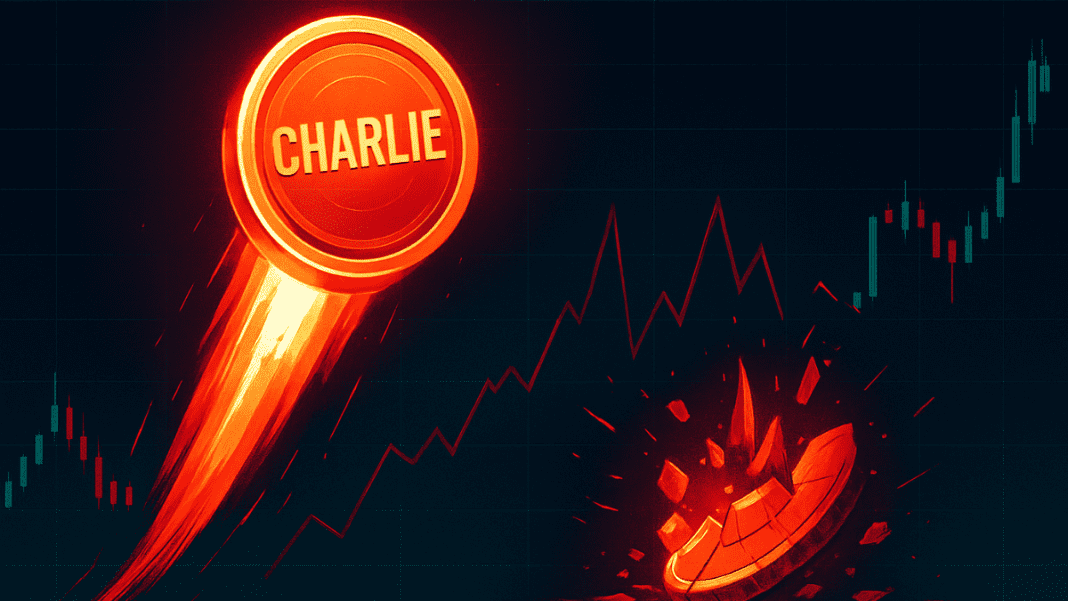
One token in particular, RIP CHARLIE KIRK (CHARLIE), became the most talked-about coin on the platform. Within hours of its creation, the token’s price exploded by more than 85,000%. Traders rushed in, chasing rapid gains as news of the incident spread across social media.

At its peak, the token reached a market cap of more than $5 million. Hourly trading volume soared past $3 million, showing just how quickly hype can fuel the rise of a memecoin. But like most sudden surges in this corner of crypto, the climb didn’t last long. Prices fell just as sharply as they had risen, leaving many latecomers with steep losses.

Dozens of Morbid Memecoins Appear

The token frenzy did not stop at just one coin. Within a few hours, at least 31 different memecoins tied to the incident were launched on Pump.Fun. Many carried variations of the same theme, using names like “Rest in Peace Charlie Kirk” or referencing the weapon linked to the attack.

Some traders also revived older tokens that had been created earlier but had little attention until now. The sudden interest brought fresh activity to those coins as well, though none reached the same viral status as the main CHARLIE token.

    Kirk is neither a martyr nor a hero, he is a cause who incited violence for years

The speed at which these tokens appeared highlights a unique part of the crypto world. On Pump.Fun and similar platforms, anyone can create a token within minutes. With such low barriers, new coins tied to breaking news often flood the market almost instantly.

This pattern is not new. When news headlines capture public attention, traders often rush to create or buy tokens that play on the story. The result is usually a short-lived spike in price, followed by an equally quick crash once the excitement fades.

A Pattern of Dark-Themed Tokens

The rise and fall of the CHARLIE token is the latest example in a long list of morbid memecoins that briefly capture trader attention. Earlier in September, a token called Justice for Iryna (IRYNA) surged to a market cap of $8.45 million after the fatal stabbing of a woman in Charlotte made national headlines.

Earlier this year, another coin gained traction under unusual circumstances when an online personality tragically livestreamed his own death. His final words urged viewers to “make it a memecoin.” Traders quickly launched a token in his name, which briefly reached a market cap of $2.1 million before fading.

Alexandria Ocasio Cortez cancels events as threats rise following Charlie Kirk killing on college campus

These examples show how quickly crypto communities seize on shocking events to create viral tokens. While the attention often pushes prices sky-high in the first few hours, the pattern is always the same: the gains vanish quickly, leaving traders who bought late with heavy losses.

In the case of the CHARLIE token, the numbers were dramatic. An 85,000% surge in such a short span is rare even in the wild world of memecoins. But the crash was just as swift. What looked like an opportunity for huge profit turned into another cautionary tale of how unpredictable and risky meme-driven tokens can be.


Renuka Bangale
Renuka Bangale
Renuka is a distinguished Chartered Accountant and a Certified Digital Threats Analyst from Riskpro, renowned for her expertise in cybersecurity. With a deep understanding of cybercrimes, malware, cyber warfare, and espionage, she has established herself as an authority in the field. Renuka combines her financial acumen with advanced knowledge of digital threats to provide unparalleled insights into the evolving landscape of information security. Her analytical prowess enables her to dissect complex cyber incidents, offering clarity on risks and mitigation strategies. As a key contributor to Newsinterpretation’s information security category, Renuka delivers authoritative articles that educate and inform readers about emerging threats and best practices.

TOP 10 TRENDING ON NEWSINTERPRETATION

Cyber Attacks on Space Infrastructure: Satellites, GPS and the Ground Systems Behind Them

From the Viasat KA-SAT hack to GPS jamming over the Baltic, a research guide to how attackers target satellites, navigation signals and ground stations, and why it matters on Earth.

How AI Agents Are Used in Cyber Attacks: From Assisted Hacking to AI-Orchestrated Espionage

Attackers now use AI agents to scan networks, write exploits and run extortion campaigns. A research guide to documented cases, including the first reported AI-orchestrated espionage campaign, and what defenders should do.

Cyber Attacks on AI and LLMs: How Attackers Target Large Language Models

Prompt injection, data poisoning, model theft and jailbreaks: a research guide to how attackers target AI systems and large language models, with real cases and defences.

French Supermarket Refrigeration Cyberattack: How Hacking the Cold Chain Can Endanger Lives

In October 2026 attackers heated refrigeration cabinets in hundreds of French supermarkets to as much as 50°C. No one was hurt, but the attack shows how hacking the cold chain can endanger lives through fire, food poisoning and spoiled medicines.

Cyberattacks on Nuclear Facilities: Stuxnet, Kudankulam and the Limits of Air Gaps

Stuxnet, the Davis-Besse worm and malware at India’s Kudankulam plant: what they show about cyber risk at nuclear facilities and the limits of air gaps.

Triton: When Hackers Target the Safety Systems That Prevent Industrial Disasters

The 2017 Triton attack targeted the safety systems that prevent industrial disasters. What happened, who was charged, and how plants protect their last line of defence.

Cybersecurity Risks in Smart Cities: When Connected Infrastructure Fails

How connecting traffic control, emergency alerts and utilities concentrates cyber risk in cities, what the Dallas and Atlanta incidents showed, and what governments recommend.

Weaponized Drones: Hijacking, GPS Spoofing and Emerging Cyber Warfare Risks

How drones can be hijacked, jammed or misled by GPS spoofing, what researchers have demonstrated, and why governments treat drone fleets as a security risk.

Ransomware Attacks on Hospitals: How Healthcare Cyberattacks Put Patients at Risk

How ransomware against hospitals and their suppliers delays care and endangers patients, what the Düsseldorf and WannaCry cases show, and what research says about deaths.

Operational blunder exposes massive Russian cyber espionage attack on Ukrainian prosecutors

A major cyberattack has compromised the email accounts of...

Cyber Attacks on Space Infrastructure: Satellites, GPS and the Ground Systems Behind Them

From the Viasat KA-SAT hack to GPS jamming over the Baltic, a research guide to how attackers target satellites, navigation signals and ground stations, and why it matters on Earth.

French Supermarket Refrigeration Cyberattack: How Hacking the Cold Chain Can Endanger Lives

In October 2026 attackers heated refrigeration cabinets in hundreds of French supermarkets to as much as 50°C. No one was hurt, but the attack shows how hacking the cold chain can endanger lives through fire, food poisoning and spoiled medicines.

Cyberattacks on Nuclear Facilities: Stuxnet, Kudankulam and the Limits of Air Gaps

Stuxnet, the Davis-Besse worm and malware at India’s Kudankulam plant: what they show about cyber risk at nuclear facilities and the limits of air gaps.

Triton: When Hackers Target the Safety Systems That Prevent Industrial Disasters

The 2017 Triton attack targeted the safety systems that prevent industrial disasters. What happened, who was charged, and how plants protect their last line of defence.

Cybersecurity Risks in Smart Cities: When Connected Infrastructure Fails

How connecting traffic control, emergency alerts and utilities concentrates cyber risk in cities, what the Dallas and Atlanta incidents showed, and what governments recommend.

Ransomware Attacks on Hospitals: How Healthcare Cyberattacks Put Patients at Risk

How ransomware against hospitals and their suppliers delays care and endangers patients, what the Düsseldorf and WannaCry cases show, and what research says about deaths.

FBI warns of AVrecon malware targeting outdated routers linked to proxy based cybercrime

A serious cybersecurity warning has been issued regarding commonly...

Related Articles

Popular Categories
