

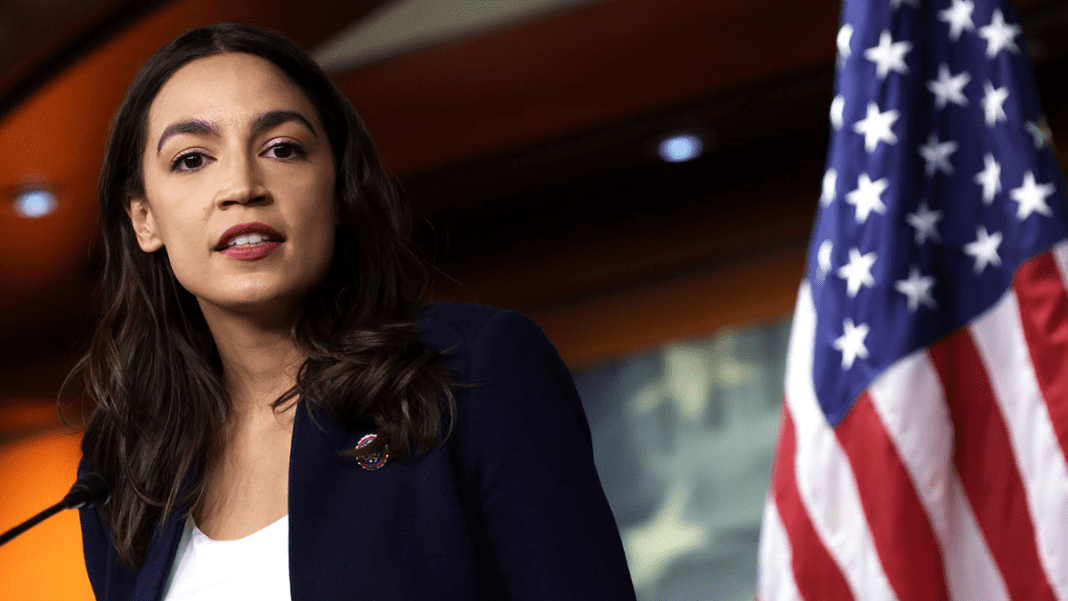
Alexandria Ocasio Cortez cancels events as threats rise following Charlie Kirk killing on college campus

The killing of conservative activist Charlie Kirk has shaken lawmakers across the country. Members of Congress from both parties are openly admitting that they fear for their lives. Many, including Alexandria Ocasio-Cortez and Nancy Mace, have now canceled events, moved gatherings indoors, or taken other safety steps. Some are even considering carrying weapons for personal protection.

Lawmakers Cancel Events and Boost Security

The attack comes during a period of rising political violence in the United States. The shooting has raised alarms in Washington, in state capitals, and in communities where elected officials meet with voters.

Soon after the assassination, Ocasio-Cortez postponed public events in North Carolina, including a planned rally in Raleigh. She explained that the current security system for members of Congress was “for a bygone time” and is not designed to meet today’s digital threats.

On the Republican side, Nancy Mace, who is running for governor in South Carolina, said she has canceled all outdoor and public events for now. She revealed that she has asked local police to patrol her district office and plans to carry a firearm at all times.

Other lawmakers are taking similar steps. Jared Moskowitz, a Democrat from Florida, confirmed that he has already stopped holding outdoor events due to earlier threats. He said that “people are scared to death in this building,” noting that many members, especially Republicans, are privately pressing for stronger protections.

House Speaker Mike Johnson said he has been fielding calls from worried lawmakers since Kirk’s killing. He promised a review of security but also admitted that it would be impossible to provide a personal security detail to all 535 members of Congress.

Capitol Police Report Rising Threats

The U.S. Capitol Police revealed that threats against members of Congress are already at record levels. By the end of this year, the agency expects to handle nearly 14,000 threat cases, compared to about 9,000 last year. That sharp increase shows how dangerous the environment has become for public officials.

Tim Burchett, a Republican from Tennessee, warned that leadership has woefully ill-prepared members for the risks they face. He argued that leaders often leave lawmakers outside their circles without proper support after violent incidents.

Newsom draws Megyn Kelly’s ire after sharing old Trump clips to boost online trolling campaign

Capitol Police officials stressed that, while there are security measures at homes, offices, and on Capitol Hill, it is impossible to cover every angle. They noted that even the president of the United States cannot be protected from every threat.

The agency said it has been on high alert since January 6, 2021, and continues to work around the clock with federal, state, and local partners. The day after Kirk’s assassination, security outside the Capitol was visibly stepped up, with officers patrolling heavily during votes.

Shockwaves After a Deadly Attack

Charlie Kirk, 31, was the co-founder of Turning Point USA. He was known for helping boost youth support for Donald Trump’s 2024 comeback. Kirk was shot while speaking to a large crowd at Utah Valley University. The gunman is still free. The FBI said it has found the weapon and shared photos of a person of interest.

The killing has revived memories of a similar attack just three months earlier, when an assassin killed Melissa Hortman, a former state House Speaker in Minnesota, along with her husband. That same attack wounded another lawmaker and his wife, leaving public officials nationwide on edge.

Senator Tim Kaine said the Minnesota attack was so serious it led to the first all-senators security briefing he could remember in more than a decade. He admitted he will continue to meet constituents but added that the dangers are growing.

Kirk is neither a martyr nor a hero, he is a cause who incited violence for years

In South Carolina, Jim Clyburn confirmed that his staff canceled public events in Columbia and Charleston after Kirk’s killing. However, he said he still planned to attend an upcoming church gathering.

Other lawmakers are also limiting public access. Some hold only private, invitation-only meetings to protect their families from harm.

Meanwhile, some Republican figures are urging colleagues not to retreat. Senator Josh Hawley argued that “you can’t give into the violence” and insisted that members should keep meeting people even when it feels risky.

Across Washington and beyond, the message is clear: the assassination has left lawmakers shaken, fearful, and more determined than ever to reassess how they conduct public life in an increasingly hostile climate.


Renuka Bangale
Renuka Bangale
Renuka is a distinguished Chartered Accountant and a Certified Digital Threats Analyst from Riskpro, renowned for her expertise in cybersecurity. With a deep understanding of cybercrimes, malware, cyber warfare, and espionage, she has established herself as an authority in the field. Renuka combines her financial acumen with advanced knowledge of digital threats to provide unparalleled insights into the evolving landscape of information security. Her analytical prowess enables her to dissect complex cyber incidents, offering clarity on risks and mitigation strategies. As a key contributor to Newsinterpretation’s information security category, Renuka delivers authoritative articles that educate and inform readers about emerging threats and best practices.

TOP 10 TRENDING ON NEWSINTERPRETATION

Cyber Attacks on Space Infrastructure: Satellites, GPS and the Ground Systems Behind Them

From the Viasat KA-SAT hack to GPS jamming over the Baltic, a research guide to how attackers target satellites, navigation signals and ground stations, and why it matters on Earth.

How AI Agents Are Used in Cyber Attacks: From Assisted Hacking to AI-Orchestrated Espionage

Attackers now use AI agents to scan networks, write exploits and run extortion campaigns. A research guide to documented cases, including the first reported AI-orchestrated espionage campaign, and what defenders should do.

Cyber Attacks on AI and LLMs: How Attackers Target Large Language Models

Prompt injection, data poisoning, model theft and jailbreaks: a research guide to how attackers target AI systems and large language models, with real cases and defences.

French Supermarket Refrigeration Cyberattack: How Hacking the Cold Chain Can Endanger Lives

In October 2026 attackers heated refrigeration cabinets in hundreds of French supermarkets to as much as 50°C. No one was hurt, but the attack shows how hacking the cold chain can endanger lives through fire, food poisoning and spoiled medicines.

Cyberattacks on Nuclear Facilities: Stuxnet, Kudankulam and the Limits of Air Gaps

Stuxnet, the Davis-Besse worm and malware at India’s Kudankulam plant: what they show about cyber risk at nuclear facilities and the limits of air gaps.

Triton: When Hackers Target the Safety Systems That Prevent Industrial Disasters

The 2017 Triton attack targeted the safety systems that prevent industrial disasters. What happened, who was charged, and how plants protect their last line of defence.

Cybersecurity Risks in Smart Cities: When Connected Infrastructure Fails

How connecting traffic control, emergency alerts and utilities concentrates cyber risk in cities, what the Dallas and Atlanta incidents showed, and what governments recommend.

Weaponized Drones: Hijacking, GPS Spoofing and Emerging Cyber Warfare Risks

How drones can be hijacked, jammed or misled by GPS spoofing, what researchers have demonstrated, and why governments treat drone fleets as a security risk.

Ransomware Attacks on Hospitals: How Healthcare Cyberattacks Put Patients at Risk

How ransomware against hospitals and their suppliers delays care and endangers patients, what the Düsseldorf and WannaCry cases show, and what research says about deaths.

Operational blunder exposes massive Russian cyber espionage attack on Ukrainian prosecutors

A major cyberattack has compromised the email accounts of...

Cyber Attacks on Space Infrastructure: Satellites, GPS and the Ground Systems Behind Them

From the Viasat KA-SAT hack to GPS jamming over the Baltic, a research guide to how attackers target satellites, navigation signals and ground stations, and why it matters on Earth.

French Supermarket Refrigeration Cyberattack: How Hacking the Cold Chain Can Endanger Lives

In October 2026 attackers heated refrigeration cabinets in hundreds of French supermarkets to as much as 50°C. No one was hurt, but the attack shows how hacking the cold chain can endanger lives through fire, food poisoning and spoiled medicines.

Cyberattacks on Nuclear Facilities: Stuxnet, Kudankulam and the Limits of Air Gaps

Stuxnet, the Davis-Besse worm and malware at India’s Kudankulam plant: what they show about cyber risk at nuclear facilities and the limits of air gaps.

Triton: When Hackers Target the Safety Systems That Prevent Industrial Disasters

The 2017 Triton attack targeted the safety systems that prevent industrial disasters. What happened, who was charged, and how plants protect their last line of defence.

Cybersecurity Risks in Smart Cities: When Connected Infrastructure Fails

How connecting traffic control, emergency alerts and utilities concentrates cyber risk in cities, what the Dallas and Atlanta incidents showed, and what governments recommend.

Ransomware Attacks on Hospitals: How Healthcare Cyberattacks Put Patients at Risk

How ransomware against hospitals and their suppliers delays care and endangers patients, what the Düsseldorf and WannaCry cases show, and what research says about deaths.

FBI warns of AVrecon malware targeting outdated routers linked to proxy based cybercrime

A serious cybersecurity warning has been issued regarding commonly...

Related Articles

Popular Categories
