

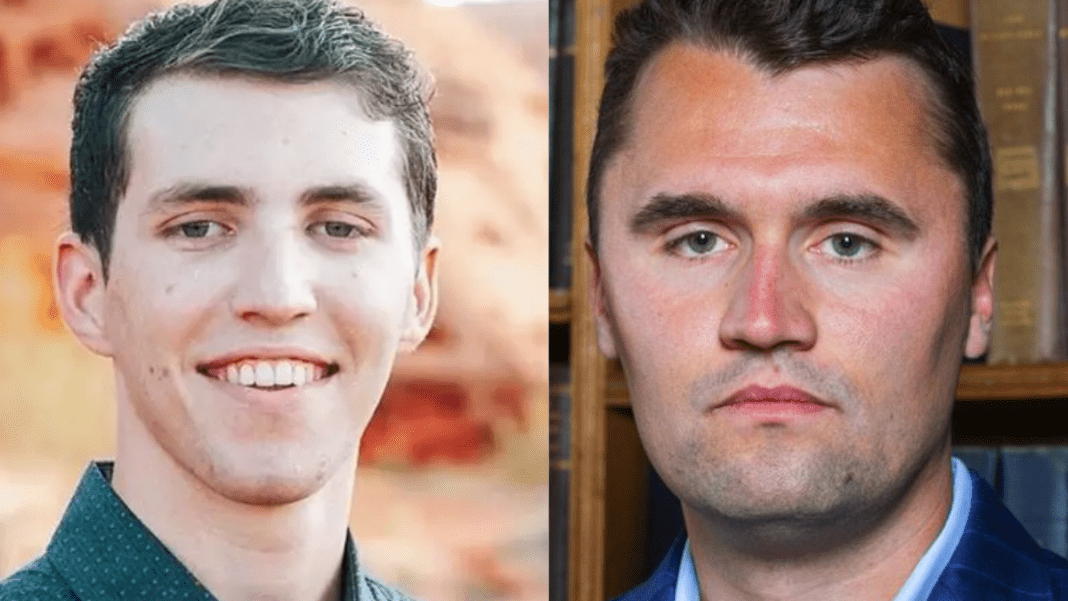
Tyler Robinson accused of shooting Charlie Kirk after once being praised as a model student

A Quiet Student With a Promising Start

In the conservative city of St. George, Utah, Tyler Robinson, now accused of shooting Charlie Kirk, was once known as a bright and disciplined student. Friends and teachers remembered him as respectful, hardworking, and always on time.

Jaida Funk, who studied with him in elementary and middle school, remembered him as a “teacher’s pet” type of student who excelled in academics. She said he was smart, polite, and always chosen for group projects. He graduated from middle school with a perfect 4.0 grade point average and later balanced advanced courses, including AP calculus, during high school.

Robinson’s mother proudly shared moments from his school years online. In 2021, she celebrated his achievement of receiving a presidential scholarship worth $32,000 to attend Utah State University. At the time, many believed Robinson had the potential to become a successful engineer or businessman.

Keaton Brooksby, a former classmate, recalled Robinson being quiet but knowledgeable. He remembered how, at just 14, Robinson explained the Benghazi attacks in detail during lunch, surprising classmates with how much he knew.

From Campus Life to Isolation

Robinson’s university life did not last long. He only stayed for one semester at Utah State before leaving. Later, he joined an electrical apprentice program at Dixie Technical College in St. George.

During his teenage years, Robinson shared common hobbies with his peers. He loved playing video games such as Halo, Call of Duty, and Minecraft. Adrian Rivera, who was in a woodworking class with him, said Robinson was a “massive Halo guy” and often spent time near the Junior ROTC area with students interested in military activities.

But over the years, Robinson grew distant from friends. Sam New, who knew him from a game club, said the news of his arrest shocked their group. Robinson had gradually stopped talking to them, becoming more isolated.

Charlie Kirk Meme Token Skyrockets 85,000% Before Sudden Collapse

Neighbors at his apartment complex in St. George also described him as withdrawn. Josh Kemp, who lived across from him, said Robinson never spoke much and mostly kept to himself, walking to and from his gray Dodge Challenger with loud music playing.

Another neighbor, 11-year-old Oliver Holt, remembered Robinson acting nervous when asked if he needed help with odd jobs. Holt said Robinson kept glancing back into his apartment, which made him uneasy.

Family photos over the years showed Robinson and his brothers posing with guns, reflecting their outdoor and hunting lifestyle. Relatives also noticed he had grown more political in recent years, sometimes speaking about national figures and controversial issues.

The Shooting and the Manhunt

The turning point came when Robinson was accused of fatally shooting conservative activist Charlie Kirk during an event at Utah Valley University. Authorities described the attack as a political assassination.

According to a police affidavit, Robinson had spoken with a family member about Kirk’s upcoming visit to Utah and expressed dislike for his viewpoints. After the shooting, police launched a 33-hour manhunt across southern Utah.

Robinson eventually surrendered near his hometown of Washington, Utah. Investigators later revealed that the rifle he left behind was found with unfired ammunition engraved with internet slang, memes, and phrases like “hey fascist! CATCH!”

Charlie Kirk unmasked as billionaire-fueled meme-maker, not the GOP hero they worship

Friends and classmates struggled to connect the person they remembered with the suspect now in custody. Brooksby said he last saw Robinson at a Walmart and noticed he had become even more reserved, avoiding conversation.

From a scholarship-winning teenager praised by teachers to a withdrawn young man accused of political violence, Robinson’s transformation has left many who knew him deeply unsettled.

Renuka Bangale
Renuka Bangale
Renuka is a distinguished Chartered Accountant and a Certified Digital Threats Analyst from Riskpro, renowned for her expertise in cybersecurity. With a deep understanding of cybercrimes, malware, cyber warfare, and espionage, she has established herself as an authority in the field. Renuka combines her financial acumen with advanced knowledge of digital threats to provide unparalleled insights into the evolving landscape of information security. Her analytical prowess enables her to dissect complex cyber incidents, offering clarity on risks and mitigation strategies. As a key contributor to Newsinterpretation’s information security category, Renuka delivers authoritative articles that educate and inform readers about emerging threats and best practices.

TOP 10 TRENDING ON NEWSINTERPRETATION

Cyber Attacks on Space Infrastructure: Satellites, GPS and the Ground Systems Behind Them

From the Viasat KA-SAT hack to GPS jamming over the Baltic, a research guide to how attackers target satellites, navigation signals and ground stations, and why it matters on Earth.

How AI Agents Are Used in Cyber Attacks: From Assisted Hacking to AI-Orchestrated Espionage

Attackers now use AI agents to scan networks, write exploits and run extortion campaigns. A research guide to documented cases, including the first reported AI-orchestrated espionage campaign, and what defenders should do.

Cyber Attacks on AI and LLMs: How Attackers Target Large Language Models

Prompt injection, data poisoning, model theft and jailbreaks: a research guide to how attackers target AI systems and large language models, with real cases and defences.

French Supermarket Refrigeration Cyberattack: How Hacking the Cold Chain Can Endanger Lives

In October 2026 attackers heated refrigeration cabinets in hundreds of French supermarkets to as much as 50°C. No one was hurt, but the attack shows how hacking the cold chain can endanger lives through fire, food poisoning and spoiled medicines.

Cyberattacks on Nuclear Facilities: Stuxnet, Kudankulam and the Limits of Air Gaps

Stuxnet, the Davis-Besse worm and malware at India’s Kudankulam plant: what they show about cyber risk at nuclear facilities and the limits of air gaps.

Triton: When Hackers Target the Safety Systems That Prevent Industrial Disasters

The 2017 Triton attack targeted the safety systems that prevent industrial disasters. What happened, who was charged, and how plants protect their last line of defence.

Cybersecurity Risks in Smart Cities: When Connected Infrastructure Fails

How connecting traffic control, emergency alerts and utilities concentrates cyber risk in cities, what the Dallas and Atlanta incidents showed, and what governments recommend.

Weaponized Drones: Hijacking, GPS Spoofing and Emerging Cyber Warfare Risks

How drones can be hijacked, jammed or misled by GPS spoofing, what researchers have demonstrated, and why governments treat drone fleets as a security risk.

Ransomware Attacks on Hospitals: How Healthcare Cyberattacks Put Patients at Risk

How ransomware against hospitals and their suppliers delays care and endangers patients, what the Düsseldorf and WannaCry cases show, and what research says about deaths.

Operational blunder exposes massive Russian cyber espionage attack on Ukrainian prosecutors

A major cyberattack has compromised the email accounts of...

Cyber Attacks on Space Infrastructure: Satellites, GPS and the Ground Systems Behind Them

From the Viasat KA-SAT hack to GPS jamming over the Baltic, a research guide to how attackers target satellites, navigation signals and ground stations, and why it matters on Earth.

French Supermarket Refrigeration Cyberattack: How Hacking the Cold Chain Can Endanger Lives

In October 2026 attackers heated refrigeration cabinets in hundreds of French supermarkets to as much as 50°C. No one was hurt, but the attack shows how hacking the cold chain can endanger lives through fire, food poisoning and spoiled medicines.

Cyberattacks on Nuclear Facilities: Stuxnet, Kudankulam and the Limits of Air Gaps

Stuxnet, the Davis-Besse worm and malware at India’s Kudankulam plant: what they show about cyber risk at nuclear facilities and the limits of air gaps.

Triton: When Hackers Target the Safety Systems That Prevent Industrial Disasters

The 2017 Triton attack targeted the safety systems that prevent industrial disasters. What happened, who was charged, and how plants protect their last line of defence.

Cybersecurity Risks in Smart Cities: When Connected Infrastructure Fails

How connecting traffic control, emergency alerts and utilities concentrates cyber risk in cities, what the Dallas and Atlanta incidents showed, and what governments recommend.

Ransomware Attacks on Hospitals: How Healthcare Cyberattacks Put Patients at Risk

How ransomware against hospitals and their suppliers delays care and endangers patients, what the Düsseldorf and WannaCry cases show, and what research says about deaths.

FBI warns of AVrecon malware targeting outdated routers linked to proxy based cybercrime

A serious cybersecurity warning has been issued regarding commonly...

Related Articles

Popular Categories
